How to Disable a Boiler: A Practical Guide
Learn how to safely disable a boiler for maintenance or seasonal shutdown. This educational guide covers gas, electric, and oil boilers, safety checks, a practical step-by-step process, and professional guidance. Boiler Hub provides practical guidance for homeowners and facility managers seeking reliable boiler troubleshooting tips.


Disabling a boiler involves safely cutting power and isolating fuel supplies, plus securing controls to prevent restart. This guide covers gas, oil, and electric boilers, with essential safety checks and clear re-enabling steps. You’ll need the right tools, a clean work area, and a plan for reactivation when maintenance is complete.
Understanding what 'disable' means for boilers
According to Boiler Hub, disabling a boiler means temporarily stopping the unit from operating while keeping it in a safe, restorable state. It is not the same as permanently decommissioning or removing a system. The approach varies by boiler type: gas, electric, or oil-fired, and by whether you’re handling a seasonal shutdown, maintenance, or power loss. The primary goal is to ensure nobody can unintentionally restart the unit while you’re working on it. For homeowners and facility managers, recognizing the distinction between a safe shutdown and a full service outage prevents confusion during emergency or planned work. In practice, a safe disablement typically involves cutting electricity, isolating the fuel supply, and securing control interfaces. Always refer to your boiler’s manual for model-specific instructions and warnings. If you’re unsure, treat the situation with caution and seek professional guidance. By understanding the system layout and the safe shutdown sequence, you reduce risk and protect your property.
Boiler Hub emphasizes that every shutdown plan should start with identifying the specific model and its controls, followed by a stepwise approach tailored to the energy source and usage. This foundational knowledge helps prevent accidental restarts and ensures you have a documented process for future maintenance.
Understanding the shutdown landscape also means differentiating between temporary power loss, a controlled shutoff, and a complete deactivation for service. With the right information, you can choose the correct course of action without compromising safety or compliance.
Safety-first considerations when disabling a boiler
Safety should drive every decision to disable a boiler. If you smell gas, hear a hissing sound, or notice a flame abnormality, evacuate immediately and call the gas emergency number. Do not operate valves or attempt to test for leaks if you suspect a problem. For electric boilers, ensure the main power is fully disconnected before touching wiring or controls to avoid electric shock. Wear appropriate PPE such as insulated gloves and eye protection when handling components near hot surfaces or exposed wiring. If you’re working in a building with shared equipment or a heating system that serves multiple zones, coordinate with the facility manager to minimize risk to occupants. Boiler outages can affect domestic hot water and space heating, so plan for temporary temperature control and communicate the expected downtime. In all cases, a calm, methodical approach reduces risk. Boiler Hub analysis suggests creating a written shutdown plan that includes who is responsible, when to re-activate, and how to notify occupants. This ensures accountability and helps with compliance during inspections.
Preparation checklist before you start
Preparation sets the foundation for a safe, efficient shutdown. First, verify your boiler type and locate the user manual. Identify all power sources — the breaker or fuse box for electricity, and any gas or oil shutoffs that feed the boiler. Clear the workspace of flammable materials and keep a flashlight and a fire extinguisher nearby. Gather required tools such as a voltage tester, a screwdriver, and a wrench, along with a notepad to record times and actions. If the boiler provides domestic hot water, understand how long the shutoff might affect supply. Notify occupants if you’re in a multi-tenant building to avoid confusion. Double-check that you have contact information for a licensed technician and the utility provider in case of an unexpected issue. A written plan improves accuracy and speeds reactivation when work is finished.
Common, safer methods to disable a boiler (non-destructive)
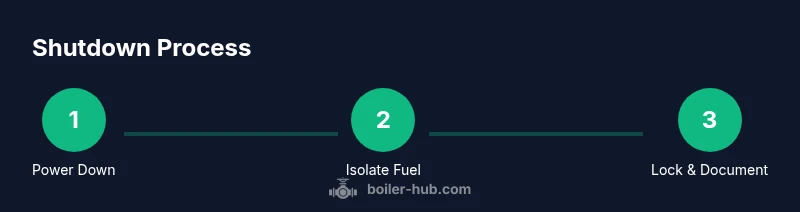
Safely disabling a boiler involves systematic isolation of power and fuel sources, followed by securing the control interfaces to prevent automatic restart. For electric boilers, switch off the circuit breaker dedicated to the unit and, if safe, remove fuses to prevent accidental re-energization. For gas boilers, shut the gas valve at the supply line and confirm that no gas is reaching the boiler. For oil-fired boilers, close the fuel shutoff valve and ensure the line is depressurized in accordance with the manufacturer’s protocol. After power and fuel are disconnected, set thermostats to the OFF position and remove any keys or remotes from control panels to avoid inadvertent restart. If you’re in a shared facility, use a lockout/tagout device so others cannot re-energize the system. Finally, document the shutdown status and ensure the area remains accessible for checks.
Note: Do not attempt to bypass safety interlocks or override controls, and never perform work if you’re unsure of the system’s status. If unusual symptoms appear, pause, reassess, and call a professional.
What happens after you disable and maintenance plan
After disabling a boiler, plan for safe storage of equipment and a clear reactivation pathway. Keep a written log of the shutdown date, reason, and the personnel involved. Review any energy or safety implications, especially in buildings with multiple boilers or integrated controls. If the shutdown is seasonal, verify that the space will remain protected from freezing temperatures and that domestic hot water remains available where needed. Re-test the system before reactivation using the manufacturer’s guidelines and local safety standards. Document the results and any corrective actions so future maintenance cycles proceed smoothly.
Re-enabling and future maintenance reminders
Re-enabling a boiler should be done methodically, matching the manufacturer’s sequence for startup and ensuring all safety interlocks function as intended. Begin by restoring power and then gradually reintroducing fuel supply, verifying that pressure, temperature, and venting conditions are within safe limits. Reset any timers or controls that may have been altered during the shutdown, and recheck the heating zones to ensure consistent operation. Create a brief maintenance plan that includes a schedule for periodic inspections, filter changes, and system audits. By maintaining a documented routine, you minimize downtime and extend the life of your boiler system.
Tools & Materials
- Insulated gloves(Heat-resistant, rated for high temperatures; ANSI/ESD or equivalent)
- Non-contact voltage tester(Confirm power is off before touching wiring)
- Screwdrivers (flat and Philips)(For panel access and terminal covers)
- Wrench or adjustable spanner(To loosen isolation valves and fittings)
- Flashlight(Ensure good visibility in the boiler area)
- Boiler manual(Model-specific shutdown procedure)
- Lockout/tagout device(Optional for shared systems to prevent re-energizing)
- Notepad and pen(Record actions, times, and observations)
Steps
Estimated time: 15-25 minutes
- 1
Power down and secure the electrical supply
Locate the boiler’s dedicated circuit in the main breaker panel and switch it OFF. If available, remove the fuse from the boiler’s circuit path to prevent accidental re-energization. Use a voltage tester to confirm there is no live voltage before touching any wiring. This step reduces the risk of electric shock during subsequent actions.
Tip: Always verify power is off with a non-contact tester before handling panels or wiring. - 2
Isolate the fuel supply appropriate to your boiler type
For gas boilers, close the gas shutoff valve on the supply line and listen for a decrease in gas flow. For oil boilers, close the fuel valve. If you can safely access the shutoffs, ensure there is no residual flow to the boiler. Do not attempt to operate fuel valves if you smell gas or suspect a leak.
Tip: If you smell gas, evacuate and call emergency services immediately. - 3
Close any isolation valves on boiler inlet/outlet lines
Identify and close any isolation or service valves that feed the boiler’s water or steam circuits. This prevents backflow and makes it safer to work on the system while it’s off. Confirm that all associated valves are fully closed and secured.
Tip: Do not force valves; if they resist, consult a professional." - 4
Disable control systems to prevent restart
Set all thermostats to OFF and, if safe, disconnect or remove control fuses from the boiler’s control board to prevent automatic restart. If you must lock the controls in a shutdown state, apply a lockout/tagout device and document the arrangement for future reference.
Tip: Lockout/tagout is highly recommended for shared facilities to prevent accidental re-energization. - 5
Verify the boiler won’t restart and inspect safety signals
Attempt a minimal restart check only if you are fully confident the power and fuel are isolated. Check for any residual heat, pressure, or venting concerns. Confirm that safety switches and indicators show a non-operational state.
Tip: If any warning lights or unusual noises appear, pause and consult a professional." - 6
Document shutdown and plan reactivation
Record the shutdown date, rationale, responsible person, and any conditions for reactivation. Keep all notes accessible to authorized personnel and schedule a re-check before the next heating cycle. This helps ensure a smooth reactivation when maintenance is complete.
Tip: Maintain a clear reactivation plan to minimize downtime.
Questions & Answers
Is it safe for a homeowner to disable a boiler themselves?
It can be safe for a straightforward shutdown if you are confident in identifying power and fuel sources and following basic safety practices. For gas or complex systems, contact a licensed technician to avoid hazardous conditions.
If you’re unsure about the boiler’s fuel type or fed utilities, it’s best to call a licensed technician for safety.
What is the difference between turning off power and shutting the gas valve?
Turning off power stops electricity to the boiler’s controls, while shutting the gas valve isolates the fuel supply. Both actions are crucial for a safe shutdown, but they affect different parts of the system and require different safety checks.
Power off stops the electronics; gas valve shutoff stops the fuel flow. Do both for a complete shutdown.
Will disabling a boiler affect home insurance or building codes?
In most cases, a temporary shutdown for maintenance or seasonal reasons does not void coverage, but always check policy terms and local codes. Documenting the shutdown and following manufacturer recommendations helps maintain compliance.
Check your policy; keep records and follow the manufacturer’s instructions to stay compliant.
What should I do if I smell gas while attempting to disable?
If you smell gas, evacuate immediately and call your gas emergency number from a safe location. Do not use electrical switches or create any sparks.
Leave the area and call for help right away.
How do I re-enable a boiler after a shutdown?
Follow the manufacturer’s startup procedure in the reverse order of shutdown, verify safety indicators are normal, power is restored, and gradually resume heating. If you’re unsure, consult a technician before restarting.
Follow the safe startup procedure and verify everything is normal before turning heating back on.
Are there safer temporary shutdown options for very old boilers?
Older boilers may require special handling due to age and venting configurations. A professional assessment is advised to ensure safety and compliance before any shutdown steps.
Older systems need specialized checks—better to involve a pro for safety.
Watch Video
Key Points
- Plan ahead with a written shutdown plan
- Identify and isolate power and fuel sources first
- Verify non-operational status before leaving area
- Re-enable only after a professional confirms safe conditions