Is It Okay to Turn Off Your Boiler? A Practical Guide
Learn when it's safe to turn off a boiler, how to do it correctly, and what to watch for. Boiler Hub provides step-by-step guidance for homeowners and facility managers.


is it ok to turn boiler off? In many situations you can safely shut down the heating, but you must know when it’s appropriate and how to do it safely. If you’re unsure, this guide covers safe conditions, the right steps, and restart checks. Always align with manufacturer guidance and local safety rules.
Why Turning Off a Boiler Is a Contextual Question
According to Boiler Hub, turning off a boiler is not a one-size-fits-all action. The decision depends on the boiler type (gas, oil, or electric), whether you rely on domestic hot water, how long you’ll be away, and the season. For many homes, turning heating off during heat waves or extended absences saves energy and reduces wear. However, the same action can create risks if not done correctly, especially with boilers that also serve hot water or have automatic safety interlocks. This section frames the core idea: there are legitimate reasons to switch off, but you must follow safe, model-specific guidance and avoid improvisation. Boiler Hub analysis shows that understanding your system’s controls is the single best predictor of a safe shutdown.
When You Might Consider a Shutdown
There are several practical scenarios where turning off the boiler makes sense: long vacations, seasonal end-of-winter pauses in mild climates, or when the boiler is malfunctioning and you’re awaiting service. If you notice odd noises, leaks, or error codes that persist after a shutdown, it’s wise to contact a qualified technician. For homeowners, the goal is to minimize risk while preserving convenience and comfort. Keep in mind that a short, planned shutdown differs from a complete power cut, and the approach varies by system type.
Understanding What 'Off' Means on Different Boilers
Boilers vary in how they interpret the term off. A thermostat set to “Off” typically stops heat calls, but does not remove power from the unit. A separate power switch or circuit breaker can cut the electrical supply, and some systems allow a controlled shutdown via the boiler’s own interface. Gas-fired boilers add another layer: the gas valve should not be manually shut off by untrained homeowners. Understanding the distinction between turning off heat, power, and gas supply helps prevent accidental restart issues or unsafe conditions. Always consult the model manual for exact definitions of “off” for your unit.
Safety First: What Not to Touch
Never attempt to shut off a gas supply at the street meter or property gas valve unless you are trained and authorized. Gas handling carries serious risks, including fire or carbon monoxide exposure. When in doubt, contact your gas utility or a qualified HVAC professional. In general, you should avoid tampering with internal boiler components beyond basic thermostat and power-disconnect actions. If you smell gas or hear hissing, evacuate and call emergency services. Safety detectors (CO alarms) should be installed and functional in boiler rooms.
Short-Term Shutdown: Vacation or Work Weeks
For short breaks, you can usually set the thermostat to a minimal comfortable temperature or turn the boiler off at the power switch if the unit supports it. This approach avoids running the boiler unnecessarily while preventing rapid reheat when you return. After powering down, check that the dwelling remains protected from cold weather, especially if you have piped systems or frost-prone zones. When you come back, restart progressively to avoid thermal stress on piping.
Long-Term Shutdown: Seasonal and Extended Absences
Seasonal shutdowns require careful planning, particularly if your home uses a hot-water cylinder or has a combi-boiler that supplies DHW. Draining or isolating piping is rarely necessary for modern boilers, but you should verify whether your system requires a boiler purge or a specific restart procedure after long outages. Boiling components may suffer from condensation or corrosion without periodic operation; a professional check before the first start can prevent costly damage and avoid warranty issues. Boiler Hub emphasizes coordinating long-term shutdowns with seasonal maintenance schedules.
Restarting Safely: What to Inspect Before Relighting
When you’re ready to turn the boiler back on, inspect the following: verify the thermostat is set to your desired temperature, ensure the power is restored (or the breaker is on), and confirm that any DHW settings align with your needs. Observe the system during the initial heat call for unusual noises, leaks, or leaks. If the boiler fails to start or trips the breaker, stop and seek professional service. Proper restart minimizes the risk of airlocks, cold-water shocks, or improper venting.
Energy Savings and Practical Considerations
Turning down or off the boiler during periods of inactivity can reduce energy use, but the actual savings depend on how you live in the space, climate, and how quickly you rewarm the home. If you rely on a smart thermostat, you can program adaptive schedules that optimize comfort while minimizing waste. For homes with DHW, ensure hot water supply remains available where needed and that you understand how a shutdown affects domestic hot water delivery. Boiler Hub notes that the best approach balances comfort, safety, and efficiency.
Common Mistakes and How to Avoid Them
Common mistakes include turning off the boiler abruptly without addressing the thermostat, forgetting to switch back on, or attempting to shut off gas valves without training. Another pitfall is assuming a cold start is always safe; some systems could experience cavitation, corrosion, or pressure shifts if shut down improperly. Always follow the model-specific restart flow and avoid improvising. If uncertain, consult a professional rather than taking risky shortcuts.
When to Call a Professional
If you observe persistent leaks, unusual noises, error codes, or a boiler that won’t restart after a shutdown, it’s time to call a licensed technician. Routine maintenance plans can reduce the likelihood of emergencies and help you understand the safe shutdown-restart sequence for your particular unit. The Boiler Hub team recommends scheduling an annual inspection and obtaining clear instructions from the installer about safe shutoff procedures.
Tools & Materials
- Thermostat set to off(Ensure the thermostat is in the 'Off' position to stop heat calls.)
- Boiler power switch or circuit breaker access(Use the dedicated switch or the service panel to cut power if your model supports it.)
- Owner's manual or model number(Have the manual handy for model-specific shutdown and restart steps.)
- Flashlight (optional)(Use if you need to inspect panels or indicators in a dim space.)
- Note pad and pen (optional)(Record restart times, alert family members, or document any codes.)
Steps
Estimated time: 15-25 minutes
- 1
Identify boiler type and current settings
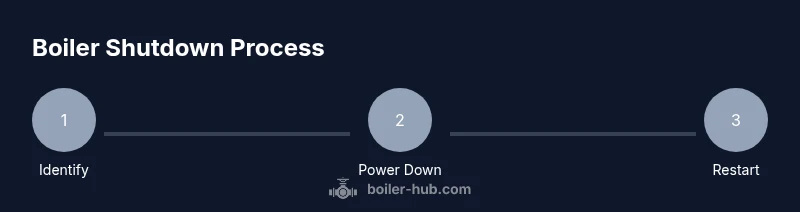
Locate the boiler and confirm whether it is gas, electric, or oil-fired. Check the current thermostat setting and any status indicators. Read the manual to understand what 'off' means for your unit and whether a power disconnect is required.
Tip: Having the manual on hand reduces guesswork and protects warranty terms. - 2
Set the thermostat to off or a minimal temperature
If your system uses a thermostat to control heating, switch it to 'Off' or the lowest safe setting. This stops heat calls while you assess the need for a shutdown. Confirm the thermostat display shows no heat requests.
Tip: For programmable thermostats, consider enabling an energy-saving schedule instead of a full shutdown if you will need heat later. - 3
Power down the boiler if your model allows
Use the boiler’s power switch or the circuit breaker to cut electrical power to the unit. This ensures the boiler fully stops running, not just ceasing heat calls. Do not tamper with gas lines during this step.
Tip: If the boiler is outdoors or in a cramped space, ensure you have safe access and lighting. - 4
Isolate domestic hot water (DHW) if applicable
If your boiler also supplies hot water, make sure DHW settings align with your needs for the coming days. In some systems, you can leave DHW on while turning off space heating, but verify this with the manual.
Tip: Shutting off DHW unnecessarily can lead to cold showers; plan accordingly. - 5
Do not touch gas supply valves unless trained
Gas valves and lines require professional handling. If you suspect a gas issue, do not operate valves; contact the utility or a licensed technician immediately.
Tip: Gas safety alarms or CO detectors should be present and tested regularly. - 6
Wait a few minutes and inspect for signs of operation
After power-down, listen and look for any residual operation indicators. If there is still heat call or pilot issues, stop and consult a professional.
Tip: Keep a flashlight handy to check indicator lights and panels. - 7
Prepare for restart
When you’re ready to restart, return power first, then set the thermostat to your desired temperature. Monitor the system for smooth ignition and proper heating.
Tip: Do not rush the restart; give the system a moment to settle before loading heat demand. - 8
Test hot water delivery after restart
Run hot water from a tap to confirm DHW is functioning and up to temperature. If DHW is delayed, check the system status or consult a professional.
Tip: If there’s a cold-water delay after re-start, it may be air in the lines—bleed with care or call a pro. - 9
Document the shutdown and any codes
Record when you shut down, what settings were used, and any codes observed. This helps future troubleshooting and communicates with technicians.
Tip: Keep notes in a dedicated home-maintenance file for quick reference. - 10
Schedule periodic maintenance
Plan an annual inspection to ensure safe shutdown and restart procedures remain valid for your unit. Regular maintenance reduces risk and can prolong boiler life.
Tip: Maintenance plans often include checklists for shutdown procedures and start-up calibration.
Questions & Answers
Is it safe to turn off a boiler during the summer?
Yes, it is generally safe to turn off the boiler during summer when heat is not required. However, ensure hot water delivery is maintained if needed and avoid repeated shutdowns that could cause condensation or mineral buildup over time.
Yes, it's usually safe to turn off the boiler in summer, just plan for hot water needs and avoid frequent shutdowns.
What’s the difference between turning off heat and turning off power?
Turning off heat stops the boiler from calling for warmth via the thermostat, while turning off power cuts electrical supply to the unit. The latter is more definitive for a complete shutdown but may require restarts in a specific sequence.
Heat off stops calls for warmth; power off stops electrical supply. Restarting may need the right sequence.
Can turning off the boiler affect hot water supply?
If your boiler also provides hot water, shutting the unit down may affect DHW availability. Plan for hot water use when restarting and verify DHW is delivering at the correct temperature.
Yes, DHW can be affected if the boiler also heats water. Check hot water after restart.
Should I call a professional to shut down my boiler?
If you are unsure about the shutdown procedure or the boiler shows error codes, contact a licensed HVAC technician. Gas safety or potential leaks require professional assessment.
If in doubt, contact a licensed professional, especially for gas-related or error-code situations.
How often should I have my boiler serviced?
Annual professional maintenance is recommended for most residential boilers to ensure safe operation, proper restart, and optimal efficiency.
Have yearly service to keep the boiler safe and efficient.
Is it safe to turn off a boiler with frost-prone pipes nearby?
If you shut down during cold weather, ensure pipes are protected and consider leaving a minimal heat setting to prevent freezing, unless your climate and system require full shutdown.
In cold weather, protect pipes; don't rely on a full shutdown unless advised by a professional.
Watch Video
Key Points
- Know your boiler type and controls before turning off.
- Different shutdown methods exist: heat off, power off, and gas considerations.
- Never touch gas valves unless trained; contact professionals for gas-related issues.
- Restart gradually and verify hot water after the first heat cycle.
- Schedule annual maintenance to ensure safe shutdowns and efficient restart.