Is It OK to Switch Boiler Off at Mains? A Practical Guide
Learn when it's safe to switch a boiler off at the mains, how to do it correctly, and what to avoid. This practical guide from Boiler Hub helps homeowners and facility managers understand safety, restart steps, and best practices.


Switching a boiler off at the mains is appropriate in specific situations, such as long absences, maintenance, or a suspected fault, but not as a routine habit. It will stop the heating cycle and may reset timers or frost protection settings. The decision should be guided by your boiler type and the manual. If uncertain, consult a qualified professional before altering the power supply.
How switching off at mains interacts with boiler types
The question is is it ok to switch boiler off at mains hinges on the boiler type and how your heating system is wired. A combi boiler relies on mains power to heat water on demand, while a system or heat-only boiler stores hot water in cylinders. When you switch the mains off, you interrupt the boiler's electrical supply, which stops the heating cycle and can reset controls. In most homes, doing this is safe for short periods or during maintenance, but it may also reset timers and frost protections if the boiler or thermostat relies on power to operate.
According to Boiler Hub, the safest approach is to understand your model's requirements before turning the power off. If you’re uncertain, consult your manual or contact a qualified professional before making changes to the power supply.
Safety and risk considerations
Switching off at the mains removes electrical power to the boiler, but it does not alter the gas supply. If you have a gas boiler, be mindful of gas safety and carbon monoxide risk. Do not rely on turning off power as a substitute for addressing a gas smell, unusual condensation, or a CO alarm. If you notice any signs of a fault (strange noises, leakage, pressure drops, or error codes), call a heating engineer rather than attempting to diagnose it yourself.
Keep children and pets away from the boiler when cutting power, and never operate the mains switch with wet hands.
Boiler Hub’s guidance emphasizes safety first; if you’re ever unsure, stop and seek professional advice.
Scenarios when it’s sensible to switch off
Extended absences (vacations, business trips) are common reasons to switch off for energy savings and to reduce standby heat. Maintenance tasks such as filter cleaning, servicing, or venting a system also warrant a temporary power cut. If you suspect a fault or you smell gas, switch off power only if you can do so safely and contact a professional immediately. Do not delay professional help in potential CO or gas safety incidents.
For owners with frost protection needs, some boilers require a minimum temperature; turning off completely might risk frozen pipes in uninsulated spaces. Review your system’s frost protection settings before turning off.
How to re-activate safely after turning off
When you’re ready to restart, switch the mains back on, then allow the boiler to reboot as the controls regain power. Expect a brief delay while the program clock reinitializes and any safety interlocks are cleared. If your boiler doesn’t light or maintain heat after reboot, consult the manual and consider scheduling a service; persistent failures may indicate a control or valve fault.
If you use smart thermostats or RBC controls, you may need to re-pair them with the boiler after power is restored.
Practical tips for safety and efficiency
Never switch off at the mains during active fault conditions without professional guidance. Use this option mainly for absence or maintenance. When turning back on, check that the radiator temperature returns to comfortable levels and that hot water is available. For energy efficiency, plan outages to occur during milder weather and adjust programming to avoid overheating when the boiler reboots.
Remember: safety first. If you smell gas, hear hiss or see bubbling flames, evacuate the property and call emergency services immediately.
Common misconceptions and clarifications
Some people think turning off the mains will permanently disable the boiler. In reality, it only cuts power; many boilers will reset or re-ignite automatically when power is restored. Others may require a manual reset on the control panel. Always follow the manufacturer’s reset procedure and never bypass safety features.
Quick safety checklist before turning off or restarting
- Locate the correct mains switch or fused spur before touching anything.
- Ensure you can reach the switch safely and dry hands are used.
- Keep the gas shut-off valve in its normal position unless instructed otherwise by a professional.
- Have the manual handy and know the model type (combi, system, or heat-only).
- If in doubt, pause and call a qualified heating engineer.
Tools & Materials
- Electrical mains switch or fused spur(Located near boiler or in the consumer unit; ensure it actually cuts power.)
- Boiler user manual(Reference model-specific safety and restart procedures)
Steps
Estimated time: 10-15 minutes
- 1
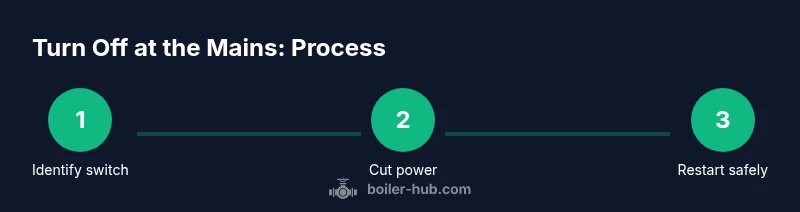
Identify the correct power switch
Locate the mains switch or fused spur that powers the boiler. Confirm you can reach it safely and that turning it off actually cuts the boiler's electrical supply.
Tip: Use the manual if you’re unsure which switch controls the boiler. - 2
Assess the reason for turning off
Determine whether you’re turning off for holiday absence, maintenance, or a suspected fault. If you smell gas or hear gas hissing, do not proceed—evacuate and call the gas emergency line.
Tip: Never rely on a thermostat or timer as the sole reason to cut power. - 3
Switch off the boiler at the mains
Flip the mains switch or fuse spur to the OFF position to cut electrical power to the boiler. This stops heating cycles and resets the power-dependent controls.
Tip: Ensure hands are dry and you are standing on a dry surface. - 4
Isolate related controls
If your system uses separate programmers, thermostats, or smart controllers, switch these to OFF or disconnect them to avoid backflow of signals when power returns.
Tip: Note that some thermostats retain settings; you may need to re-enter them after reboot. - 5
Wait briefly before re-powering
Give the system a short rest time (a few minutes) before turning power back on so that any internal capacitors discharge safely.
Tip: Avoid touching the boiler while it’s powered down. - 6
Turn power back on and monitor restart
Restore power at the mains and observe the boiler as it reboots. Listen for ignition tones and check for normal radiator warmth and hot water readiness.
Tip: If the boiler fails to start, consult the manual or contact a professional.
Questions & Answers
Is it safe to switch off a boiler at the mains?
Yes, in certain circumstances such as long absences, maintenance, or suspected faults. It stops the boiler's electrical supply and heating cycle, but should not be used as a routine habit. Always follow the manual and seek professional guidance if unsure.
Yes, it can be safe in planned situations, but not for routine use. Always check the manual and get professional advice if unsure.
Will turning off at the mains affect hot water supply?
For a combi boiler, turning off the mains will stop hot water heating. For systems with a hot water cylinder, hot water may remain available for a short period but will stop heating when power is cut. Restart may require controls to reset.
Yes, it can affect hot water depending on your boiler type. Expect a restart to restore heating and hot water.
Will turning off at the mains void my boiler warranty?
Most boiler warranties are not voided merely by turning the boiler off at the mains. However, safety devices and gas safety features should not be bypassed. Always follow the manufacturer's terms and contact the installer if you have concerns.
Usually not, but check your warranty terms and avoid bypassing safety features.
What should I do if I smell gas or detect carbon monoxide while the boiler is off?
Leave the area immediately, call the gas emergency line, and do not switch anything back on. CO detectors and gas safety are critical; professional intervention is required.
If you smell gas or CO, evacuate and call emergency services right away.
How do I restart after turning the boiler off at the mains?
Turn the power back on at the mains, then allow the boiler to reboot. If it doesn’t light or heat properly, consult the manual or contact a professional.
Power it back on and wait for a safe reboot; if it fails, seek professional help.
Should I switch off the boiler at the mains during winter weather?
Only if you plan an extended absence or a maintenance task. Prolonged power-down in cold weather can risk frozen pipes in uninsulated areas. Review frost protection settings before turning off.
Only do it if you have a clear reason and understand the frost protections; otherwise, keep some heat on.
Watch Video
Key Points
- Turn off at the mains only when necessary and safe
- Know your boiler type before turning off
- Restart carefully to avoid faults
- Use proper safety steps for gas systems
- If in doubt, contact a professional