When to Reset Boiler: A Practical Guide
Learn when to reset boiler safely, how to verify fault codes and pressure, and what to do if a reset won’t fix the issue. Practical boiler guidance from Boiler Hub for homeowners and facility managers.


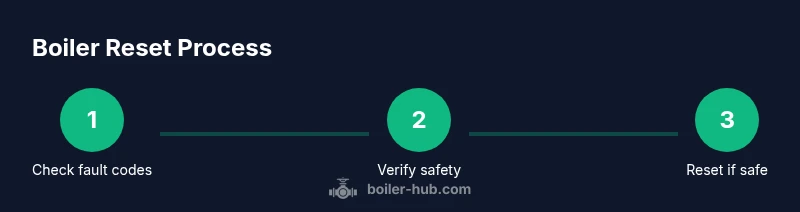
According to Boiler Hub, you should reset a boiler only after confirming no safety risks and traditional fault indicators are present. This quick, actionable flow helps you decide when a reset is appropriate and when you should contact a professional. Follow these steps to determine if a reset is warranted and what to do next.
Assessing the symptoms that merit a reset
Understanding when to reset boiler begins with identifying indicators that point to an electrical fault, a sensor error, or a temporary blip in system pressure. The goal is to distinguish between a transient error and a persistent fault that signals a deeper problem. Look for fault codes on the control panel or blinking indicator lights, unusual burner behavior, inconsistent heating, or a sudden loss of hot water. While a reset can clear some glitches, it should not be used as a bandaid for issues like gas smells, hissing sounds near gas lines, or evident water leaks. The Boiler Hub team emphasizes safety first—if there’s any gas odor, CO alarm activation, or a strong suspect of gas-related danger, evacuate and call the utility or emergency services. If you’re confident the issue is a simple reset candidate, proceed to the checks below. When you search for guidance on when to reset boiler, prioritize criteria such as recent maintenance, controller warnings, and pressure readings before attempting a restart.
In many homes, the question "when to reset boiler" arises after a brief, non-recurring fault. The right approach is to collect information first: note the fault code, check the boiler’s age, and review the last service date. A reset can resolve temporary glitches caused by digital cache, sensor misreads, or a power hiccup, but it won’t fix mechanical wear, clogged heat exchangers, or a failing circulator pump. Always balance the potential benefit of a reset against the risk of concealing an underlying fault. A cautious homeowner or facility manager will document what happened, what was checked, and whether a reset was performed. This practice also helps when you consult a technician later.
note*:null
Tools & Materials
- Owner’s manual for your boiler model(Locate the proper reset procedure and safety warnings specific to your unit.)
- Personal protective equipment(Gloves and eye protection when inspecting the unit and handling controls.)
- Non-contact thermometer or pressure gauge (if available)(For quick checks of surface temperature and system pressure guidance.)
- Flashlight(Illumination for hard-to-see components inside the enclosure.)
- Screwdriver set and basic tools(Only if you need to access panel screws per the manual.)
- Safety risk assessment checklist(A simple checklist helps record safety considerations before any reset.)
Steps
Estimated time: 30-60 minutes
- 1
Identify symptoms and fault indicators
Inspect the control panel for fault codes or blinking lights and note any abnormal burner behavior. Confirm that the issue is not a temporary power blip or a sensor hiccup. This step is about gathering facts before taking action, not about performing a reset yet.
Tip: Document the exact fault code, the time it appeared, and any recent changes to the system (like weather or fuel supply). - 2
Check boiler pressure and safety indicators
If your boiler has a pressure gauge, verify it falls within the manufacturer’s recommended cold-range (often around 1–1.5 bar for many residential boilers). Also inspect for any unusual pressure fluctuations or boiler leaks. Do not attempt a reset if pressure is outside the safe zone until you address the cause.
Tip: Low or high pressure can indicate a separate fault; a reset won’t fix this alone. - 3
Review safety conditions and ventilation
Ensure there’s adequate ventilation and no gas odors or CO alarms active. If you smell gas or CO indicators are alarming, evacuate and contact the gas utility or emergency services rather than attempting a reset.
Tip: Gas safety always trumps a potential reset—safety first. - 4
Decide whether reset is appropriate
If fault codes are transient, the pressure is within safe limits, and there’s no safety risk, you may proceed with a controlled reset per the manual. If you’re unsure or the fault code recurs, stop and consult a professional.
Tip: When in doubt, err on the side of safety and professional advice. - 5
Execute the reset on the control panel
Access the boiler’s control panel and initiate the reset following the exact sequence in your manual (often a button press or on-screen option). After the reset, observe the unit’s startup sequence and listen for normal operation. If the boiler does not start or immediately returns to fault codes, discontinue and seek service.
Tip: Do not repeatedly reset; repeated faults suggest an underlying issue.
Questions & Answers
What does resetting a boiler actually do?
Resetting a boiler clears temporary faults that can cause momentary shutdowns or error codes. It’s typically used to recover from a non-safety fault after basic checks. If the fault recurs, there’s likely a deeper issue that requires a professional diagnosis.
Resetting clears temporary faults. If the fault comes back, you should call a technician.
Is it safe to reset a boiler by myself?
Resetting can be safe if you’ve verified there’s no gas smell, CO alarm activation, and the unit’s basic safety indicators are normal. Always follow the manufacturer’s reset procedure and avoid repeated resets if the fault persists.
It’s generally safe if you’ve checked safety indicators and followed the manual.
What should I do if the fault code returns after a reset?
If the fault code reappears, stop resetting and schedule a professional inspection. Recurring faults often indicate sensor, circulation, or burner issues that require diagnostic equipment and expertise.
If it comes back, don’t keep trying the reset—get it checked by a pro.
Can resets prevent further problems long-term?
Resets don’t prevent future problems; they address a symptom. Regular maintenance, proper venting, and timely parts replacement are essential for long-term reliability.
Resets are a quick fix, not a substitute for maintenance.
When should I contact a professional immediately?
Call a professional immediately if you detect gas odors, a CO alarm, visible leaks, high system pressure, or if the boiler has failed to ignite after a reset.
If you smell gas or see leaks, contact the utility or a technician right away.
What maintenance helps reduce resets?
Annual professional service, cleaning of components, checking for leaks, and verifying venting and safety controls reduce the likelihood of resets and extend boiler life.
Regular servicing is the best defense against unexpected resets.
Watch Video
Key Points
- Know the safety-first rule before any reset
- Use a reset only after confirming safe conditions and transient fault indicators
- Do not ignore persistent faults or safety warnings
- Record what you checked and the outcome for future reference