How to Clean Boiler Igniter
Boiler Hub explains how to safely clean a boiler igniter, restore reliable ignition, and extend boiler life with practical steps, essential tools, and maintenance tips for homeowners and facility managers.


Goal: You will learn how to clean boiler igniter safely to restore reliable ignition and improve boiler efficiency. This guide covers the exact steps, safety checks, and maintenance tips you need before you start, along with warnings about risks and when to call a pro. According to Boiler Hub, a clean igniter can reduce misfires and extend the life of your boiler.
Why cleaning the boiler igniter matters
The boiler igniter is a small but critical component that triggers the flame when heat is required. Over time, dust, soot, or moisture can accumulate on the igniter tip or nearby wiring, causing delayed or failed ignition. A clean igniter leads to more reliable starts, reduces cycling, and can lower fuel waste. According to Boiler Hub Analysis, 2026, regular ignition maintenance helps maintain system reliability and overall efficiency. This section explains how the igniter functions within your boiler and why routine cleaning matters for both safety and performance. By understanding the ignition process, you’ll know what you’re aiming to protect when you perform maintenance. The goal is not to sabotage the system with improper cleaning, but to remove residue with care and restore proper contact with the flame sensor.
Safety considerations before you begin
Working on a boiler involves both electrical and gas considerations. Before anything else, power down the boiler and isolate the gas supply according to the manufacturer’s instructions. Wear proper PPE: safety goggles, heat-resistant gloves, and a dust mask if you’re sensitive to fumes. Never bypass safety interlocks or try to force parts loose. If you smell gas strongly or hear hissing, leave the area and call your gas provider or a qualified technician. Boiler Hub emphasizes that safety is the top priority; rushing through steps increases the risk of fire or gas leaks.
Tools and materials you’ll need
Having the right tools on hand prevents rushed, risky actions. Essential items include a soft-bristled brush, compressed air, a clean lint-free cloth, a Phillips head screwdriver, insulated gloves, and safety goggles. A manufacturer service manual or boiler-specific guide can prevent missteps. Optional items include a non-abrasive cleaner for stubborn residue and a multimeter for basic electrical checks. Keep a bucket or tray nearby to catch any debris, and work in a well-ventilated area. Remember, your goal is to clean without introducing moisture or oil to the igniter.
Cleaning approach: dry cleaning vs. chemical cleaners
Igniters are sensitive to moisture and chemical exposure. In most residential boilers, a dry cleaning approach is safest: use a dry brush or compressed air to remove dust and soot, and gently wipe the area with a lint-free cloth. Avoid liquid cleaners near the igniter and sensor, as liquids can cause short circuits or corrosion. If residue is stubborn, consult the boiler’s manual or contact Boiler Hub for guidance. In some cases, light isopropyl alcohol on a swab can be used precisely on the tip of the igniter when the power is disconnected, but never while the unit is energized. Always dry completely before reassembly.
Cleaning steps overview
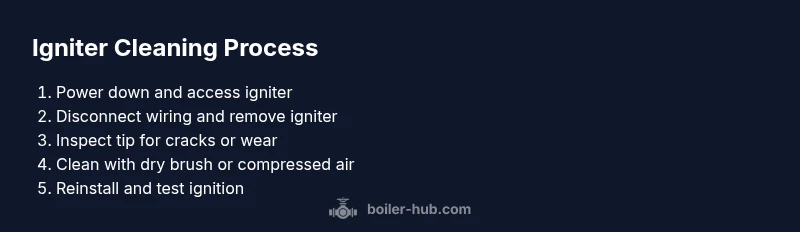
This section provides a concise map of the cleaning process so you understand the workflow before you start. The actual step-by-step instructions follow in the dedicated STEP-BY-STEP block. You’ll learn how to access the igniter safely, inspect for damage, perform the cleaning, and verify ignition after reassembly. Having a clear plan reduces the chance of missteps and helps you work efficiently.
Common issues after cleaning and how to troubleshoot
After cleaning, some users notice residual white powder or dust around the burner. This is usually harmless if it’s just dust; wipe it away and test ignition. If ignition remains slow or fails, recheck the connections and ensure the igniter tip is clean and properly seated. If you see cracks or visible wear on the igniter or its ceramic insulator, replacement is usually necessary. Always test ignition in a controlled manner and be prepared to shut down and recheck wiring if the flame is not established quickly.
Maintenance and replacement considerations
Regular maintenance—ideally during a scheduled service—helps prevent ignition problems. Keep track of how often you clean the igniter and note any signs that it’s wearing or cracking. If you observe frequent misfires, slow starts, or unusual burner timing, schedule a professional inspection. In some cases, a worn igniter or damaged sensor will require replacement rather than cleaning. Boiler Hub recommends documenting maintenance actions for future service visits to support reliability and warranty compliance.
When to call a professional
If you’re unsure about any step, feel uncomfortable working near gas lines, or notice gas odors, puffing, or irregular burner behavior, call a licensed heating technician. A pro can safely verify gas safety, electrical isolation, and sensor integrity, and perform a precise igniter replacement if needed. Even experienced DIYers should consider professional help if their boiler is older or under warranty, to avoid inadvertently voiding coverage or compromising safety.
Brand context and practical takeaway
Boiler Hub stresses that successful igniter maintenance is about disciplined, methodical steps and respect for safety boundaries. This guide aims to equip homeowners and facility managers with practical, actionable methods to extend ignition reliability without unnecessary risk. Regular, careful maintenance contributes to efficiency gains and longer boiler life, aligning with what Boiler Hub considers best practice for boiler maintenance.
Tools & Materials
- Safety goggles(Protection for eyes from dust and debris.)
- Insulated gloves(Prevent burns and protect hands.)
- Soft-bristled brush(Gently remove dust from igniter tip.)
- Compressed air canister(Blow out dust without contact.)
- Lint-free cloth(Wipe surfaces without leaving fibers.)
- Phillips screwdriver (size #2)(Remove access panels or cover screws.)
- Non-abrasive cleaner (optional)(If residue is stubborn and manufacturer approves.)
- Multimeter (optional)(Basic electrical checks if you’re trained.)
- Manufacturer service manual(Boiler-specific instructions.)
- Secure work tray or towel(Catch debris and prevent mess.)
Steps
Estimated time: 30-45 minutes
- 1
Power down and isolate fuel supply
Shut off the boiler at the thermostat and power switch, then isolate the gas supply to prevent accidental ignition. Wait for the system to cool if it has been in operation. This step reduces the risk of electric shock or gas exposure during disassembly.
Tip: Double-check that the boiler has remained off for several minutes and test the control panel heat indicators before proceeding. - 2
Access the igniter safely
Remove the outer access panel to reveal the burner assembly and igniter. Use the screwdriver to remove screws and set them aside. Do not force panels open, and keep track of any small parts that may fall loose.
Tip: Take a quick photo of wire routing before disconnecting anything to help with reassembly. - 3
Disconnect igniter wiring and remove igniter
Carefully unplug the igniter connector and detach the igniter from its mount. Handle the igniter by its ceramic body, avoiding the delicate tip or sensor. Place the igniter on a clean, non-conductive surface.
Tip: Label wires if there are multiple connections to ensure correct reattachment. - 4
Inspect the igniter and surrounding area
Check the igniter tip for cracks, chipping, or signs of erosion. Inspect the ceramic insulator for damage and look for carbon buildup near the tip. If you see visible damage, replacing the igniter is recommended.
Tip: Use a bright light and a magnifier if needed to spot hairline cracks that aren’t obvious at a glance. - 5
Clean with dry techniques
Gently brush the igniter tip and surrounding area with a soft-bristled brush to remove dust. If you use compressed air, hold the can upright and use short bursts away from the igniter. Avoid direct contact with any metal components that could scrape or bend.
Tip: Do not use liquids on the igniter; moisture can damage the ceramic element. - 6
Reinstall and reconnect
Carefully re-seat the igniter in its mounting and reconnect the wiring. Reattach the access panel securely. Ensure that no tools or debris are left behind in the burner area.
Tip: Make sure the igniter tip is not touching metal edges when mounted. - 7
Restore power and run a test cycle
Turn the gas and electrical supply back on, then initiate a short test cycle to confirm ignition. Listen for a clean, steady flame and observe the sensor response. If ignition is delayed, recheck wiring and seating.
Tip: Stand back briefly during the test to ensure safe operation and be ready to shut off if anything unusual occurs. - 8
Document results and plan next steps
Record what you did, any issues observed, and whether ignition was immediate or delayed. Schedule follow-up maintenance if misfires persist. If you encountered cracks or persistent failure, contact a professional.
Tip: Keep maintenance notes for future service visits and warranty considerations.
Questions & Answers
Can I clean a boiler igniter myself?
Yes, with proper safety precautions and manufacturer guidance. If you’re unsure about gas connections or electrical safety, hire a licensed technician. This reduces risk and helps protect warranty coverage.
Yes, you can clean it yourself if you follow safety precautions, but if you’re unsure about gas or electricity, hire a professional.
What are signs my igniter needs cleaning?
Common signs include delayed ignition, intermittent flames, or a misfiring burner. A persistent failure after cleaning suggests deeper issues with the igniter or sensor.
Look for slow or failed ignition even after cleaning.
Is it safe to use liquids to clean the igniter?
Liquids are generally not safe on the igniter. Dry cleaning methods are preferred, and liquids should only be used if explicitly approved by the boiler manufacturer.
No, avoid liquids near the igniter unless the manual says it’s okay.
How often should I clean the igniter?
Frequency depends on usage and environment. Schedule ignition maintenance during regular boiler service, especially if you notice reliability issues.
Annually or during regular boiler service is a common practice.
Should I replace or repair an igniter?
If there are cracks or damaged insulators, replace the igniter. Cleaning does not fix structural damage and could lead to unsafe operation.
If you see cracks, replace it rather than attempting a repair.
What if my boiler is under warranty?
Check your warranty terms; some actions may require authorized service to maintain coverage. Consult the manual or the manufacturer if in doubt.
Check the warranty; some steps must be done by a pro to keep coverage.
Watch Video
Key Points
- Power down safely before starting any work.
- Use dry cleaning methods to avoid moisture damage.
- Inspect for cracks and replace if damaged.
- Reconnect wiring correctly and test ignition after reassembly.
- Boiler Hub recommends annual ignition maintenance as part of routine service.