How to Clean Boiler Flame Sensor: A Practical Guide
Learn to safely clean a boiler flame sensor to restore ignition reliability and efficiency. This expert guide from Boiler Hub covers tools, steps, safety tips, testing, and when to call a pro.


Goal: clean a dirty boiler flame sensor to restore reliable ignition and prevent unnecessary shutdowns. You will need basic tools, proper PPE, and access to the boiler. This quick guide covers inspection, cleaning, testing, safety reminders, and guidance on when professional service is recommended.
Why the flame sensor matters
The flame sensor is a small, metal probe located near the burner. It detects whether a flame is present and sends a signal to the control board to keep the boiler running. A dirty or coated sensor can fail to detect flame, triggering the safety shutdown and leaving you with cold water and hot water outages. According to Boiler Hub, regular inspection and careful cleaning of the flame sensor are essential for reliable ignition and energy efficiency. A clean sensor improves ignition reliability, reduces cycling, and can lower gas usage over time. In this section, we’ll explain how the flame sensor works, what it looks like, and why even small deposits can cause big problems. Understanding the sensor helps you assess whether cleaning is appropriate and how to perform it safely.
Signs of a dirty flame sensor
If the flame sensor is dirty or coated, you may notice symptoms: the boiler takes longer to ignite, or it repeatedly locks out with an ignition failure error. You might hear a brief flame then a rapid shutoff, or see flickering or yellow flame color indicating incomplete combustion. A common correlation reported by Boiler Hub analysis is that ignition faults are frequently linked to a dirty flame sensor rather than a failed gas valve. If you experience frequent restarts or unexplained shutdowns, inspect the sensor face for residue, mineral deposits, or oxidation. Cleaning often resolves these issues without replacing parts, but persistent problems may require professional service.
Safety prerequisites and planning
Before touching any boiler parts, ensure you follow strict safety steps. Power off the boiler and disconnect the electrical supply at the service panel. If you can safely isolate the gas supply, do so according to local codes; never work on live gas lines. Ventilate the area, and keep a carbon monoxide detector visible nearby. Put on PPE: safety glasses and heat-resistant gloves. Never bypass safety interlocks or operate a boiler with a damaged flame sensor. When in doubt, consult a licensed technician. These precautions protect you from burns, electrical shock, and CO exposure, and they align with general industry safety standards from trusted sources. The Boiler Hub team emphasizes adhering to safety protocols to minimize risk during maintenance.
Cleaning principles: what to clean and what to avoid
The flame sensor face is delicate: clean only the sensor tip with a soft, lint-free cloth dampened with isopropyl alcohol (at least 70%). Avoid abrasive pads, steel wool, or harsh solvents that could scratch or corrode the sensor. Do not spray cleaner directly into the burner or burner housing. If the sensor is magnetized or misaligned, do not attempt re-alignment; consult a pro. When cleaning, support the sensor gently to avoid bending the probe. After cleaning, wipe dry with a lint-free cloth and inspect for corrosion. The goal is to remove mineral deposits and grease that block flame detection without altering sensor alignment. These steps help reduce future deposits and improve response time.
Aftercare and testing
Reinstall the sensor, reconnect any wiring, and reassemble panels. Restore power and gas following safe procedures; power the boiler and watch the ignition sequence. If possible, run a test cycle to verify that the flame is detected within a few seconds and that the boiler remains running without fault codes. If an error persists after cleaning, perform a more thorough inspection or contact a technician. Consider recording the process for future maintenance. For ongoing reliability, schedule periodic checks and keep a small cleaning kit handy. The Boiler Hub team recommends integrating sensor cleaning into your regular maintenance schedule and consulting a professional for complex issues. Authorities and further reading can be found from reputable safety sources to support ongoing upkeep.
Tools & Materials
- Phillips head screwdriver(Typically #2 size; used for access panel screws)
- Nut driver or socket set(For securing mounting screws)
- Isopropyl alcohol (70%+)(Cleans sensor without leaving residue)
- Lint-free cloths or foam swabs(Gently wipe the sensor face)
- Soft-bristled brush(Helpful for stubborn deposits)
- Safety glasses(Protect eyes from debris)
- Heat-resistant gloves(Protect hands from heat and sharp edges)
- Multimeter (optional)(Verify no stray voltages if needed)
- Replacement flame sensor (optional)(Have on hand in case of damage)
Steps
Estimated time: 45-60 minutes
- 1
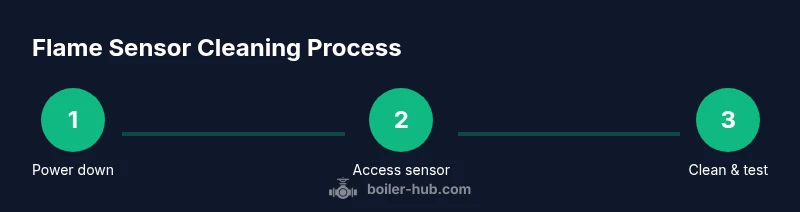
Power down and secure
Turn off the boiler at the switch and at the service panel. If possible, shut off the gas supply following manufacturer guidelines and local codes. Verify power is off with a non-contact tester before touching any wires.
Tip: Double-check power is truly off; never rely on a single switch for verification. - 2
Locate the flame sensor access
Open the burner access panel and identify the flame sensor probe near the flame port. Take a quick photo or sketch of wires and connectors before you disconnect anything.
Tip: Use a bright flashlight to clearly see the sensor and its mounting. - 3
Disconnect and remove sensor
Carefully disconnect the sensor’s wiring harness and unscrew or unclip the sensor from its mount. Support the sensor to avoid bending the probe and keep track of screws and connectors.
Tip: Label connectors if there are multiple wires to prevent miswiring later. - 4
Clean the sensor tip
Dampen a lint-free cloth with isopropyl alcohol and gently wipe the sensor tip. Do not scrub or use solvents that could corrode the probe. If deposits persist, use a soft brush with light pressure.
Tip: Never apply cleaner directly to the sensor; apply to the cloth instead. - 5
Reinstall and align
Reinstall the sensor in its original position and reconnect wiring. Ensure the sensor is properly aligned with the burner and that mounting screws are snug but not overtightened.
Tip: Check for any visible misalignment before reclosing panels. - 6
Power up and test
Restore power and gas, then run a test ignition. Observe that the flame appears quickly and the boiler stays on without fault codes. If issues persist, power down and seek professional help.
Tip: If you notice abnormal flame color or smoke, stop and call a technician immediately.
Questions & Answers
What is a boiler flame sensor and what does it do?
A flame sensor detects flame presence and signals the boiler control system to continue firing. It helps prevent unburned gas from accumulating and reduces safety risks.
A flame sensor detects flame presence to keep the boiler operating safely.
Is it safe to clean the flame sensor yourself?
Yes, if you follow proper safety steps: power off, disconnect gas if safe, use non-abrasive cleaners, and avoid touching hot components. If in doubt, hire a professional.
Yes, with proper safety steps. If unsure, hire a professional.
What tools do I need to clean the flame sensor?
You’ll typically need a screwdriver, isopropyl alcohol, lint-free cloths, eye protection, gloves, and a soft brush. Have a replacement sensor on hand in case you damage the old one.
Screwdrivers, isopropyl alcohol, cloths, protection gear, and a soft brush.
How often should I clean the flame sensor?
Clean the sensor as part of routine boiler maintenance or if ignition issues arise. Do not wait for repeated failures before inspecting.
As part of routine maintenance or when ignition problems appear.
What if cleaning doesn’t fix ignition issues?
The sensor may be damaged or misaligned. Replacement or professional service is usually required to restore safe operation.
If cleaning fails, replacement or professional service is needed.
Are there safety codes I should follow when cleaning a boiler?
Follow local codes and manufacturer instructions. Ensure the area is ventilated and that CO detectors are functional before and after maintenance.
Follow local codes and keep safety devices like CO detectors active.
Watch Video
Key Points
- Inspect the flame sensor regularly as part of boiler maintenance.
- Use non-abrasive cleaning methods to avoid sensor damage.
- Test ignition after cleaning and monitor for fault codes.
- If problems persist, consult a professional and consider sensor replacement.