What Causes Boiler Flame Failure: Troubleshooting Guide
Urgent troubleshooting guide to diagnose what causes boiler flame failure, from dirty burners to gas supply and sensor faults. Learn safe steps, when to call a pro, and how to prevent future flame failures.


The most common cause of boiler flame failure is a clogged or dirty burner, improper gas supply, or faulty thermocouple. Start by turning off power and gas, inspect gas supply, clean the burner, check ignition, and verify safety shutoff. If flame still won’t light, contact a licensed technician.
Understanding what causes boiler flame failure
What causes boiler flame failure can be traced to a few core areas: the combustion process, the fuel delivery system, ignition and sensing components, and the venting/air supply that feeds the burner. What is especially critical for homeowners is recognizing how these systems interact under heat stress and seasonal changes. According to Boiler Hub, understanding what causes boiler flame failure is essential for safe, fast repairs and to minimize downtime. When a flame fails to form or stays lit only briefly, the root cause often lies in dirt, gas delivery irregularities, or a faulty sensor. Proactive maintenance—clean burners, test ignition, and verify gas pressure—greatly reduces the likelihood of flame failure. Throughout this guide, we’ll connect the dots between symptoms and causes, so you can act quickly yet safely when faced with a flame that won’t cooperate.
The keyword what causes boiler flame failure recurs here to anchor the topic and guide diagnostics. It’s important to separate symptoms from root causes: a flame that makes noise or smells fuel differently can signal issues beyond ignition alone. In many homes, a mini-crisis is a simple fix, while in others a professional assessment is prudent due to gas safety concerns. The ensuing sections break down common culprits, practical checks, and step-by-step procedures you can follow with proper precautions. By focusing on the interplay between air, fuel, ignition, and environmental conditions, you’ll better understand how what causes boiler flame failure manifests and how to address it effectively.
Common causes of boiler flame failure
Boiler flame failure is rarely caused by a single fault. More often, multiple factors align to prevent stable ignition or cause the flame to extinguish. Below are the most frequent culprits tied to what causes boiler flame failure, along with quick checks you can perform. Regular cleaning and inspection of these areas can dramatically reduce the risk of a future failure. Dirt and debris in the burner and jets disrupt the precise air-fuel mix the boiler relies on. A clogged or dirty burner is a leading reason behind what causes boiler flame failure because small particles can smother the flame or alter flame geometry, reducing heat transfer and triggering an automatic shutdown.
Gas supply issues—such as a partially closed valve, a faulty regulator, or inconsistent gas pressure—are another major contributor. If the supply is interrupted or pressure is unstable, ignition can fail or the flame can go out shortly after forming. Faulty ignition components, including the spark electrode and flame sensor, are also common. A weak spark or a sensor that doesn’t detect a flame promptly can prevent the boiler from sustaining ignition, which is a classic example of what causes boiler flame failure.
Venting problems and condensate drainage play a role as well. Blocked flues or condensate traps can restrict air flow or flood the combustion chamber, complicating ignition and flame stability. Finally, issues with air-to-fuel balance, improper commissioning after maintenance, or a malfunctioning control board can collectively manifest as what causes boiler flame failure. If any of these items appear in your diagnostic flow, address them in logical order starting with easy, observable fixes and moving toward more technical checks.
Safety-related factors should never be overlooked. Electrical lockouts, blown fuses, or tripped safety switches can cut power to the burner, causing a flame failure scenario even when fuel and air systems are otherwise sound. Understanding what causes boiler flame failure in practical terms means separating symptoms (noise, odor, or poor flame quality) from root causes (fuel, air, ignition, or safety controls). This separation helps you target repairs effectively and safely.
Safe troubleshooting steps you can perform
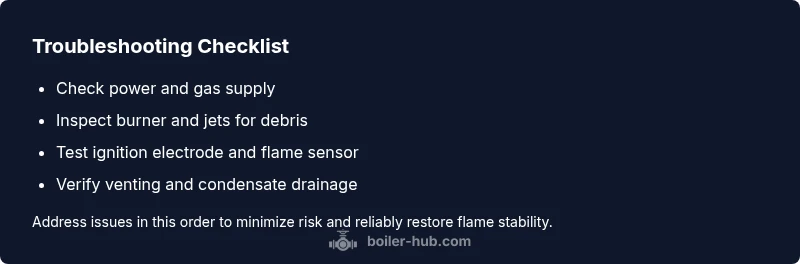
If your boiler flame fails, start with the simplest, safest checks first. These steps align with what causes boiler flame failure in everyday settings and are designed to reduce risk while you assess the situation. Always prioritize safety; if you smell gas, evacuate and call emergency services.
-
Power down and secure gas supply: Turn off the boiler at the thermostat and the main power switch if accessible. Close the gas supply valve to the boiler to prevent further fuel flow while you inspect.
-
Check basic controls: Ensure the thermostat is set correctly, confirm the boiler is not in a frost protection mode, and verify that any safety switches or fuses are not tripped. Even small misadjustments can contribute to a flame failure scenario.
-
Inspect the burner area: Look for visible debris, dust, or corrosion in the burner and jets. Gently clean with an appropriate brush or compressed air if safe access is available. A dirty burner is a surprisingly common factor in what causes boiler flame failure.
-
Test ignition components: Remove the burner cover to access the ignition electrode and flame sensor. Inspect for soot buildup or moisture, clean gently, and re-seat. If ignition still fails to produce a strong spark, the electrode or sensor may need replacement.
-
Examine venting and condensate: Check the exhaust vent for obstruction and verify the condensate drain is clear. Condensation or a blocked vent reduces air supply and can cause flame instability that resembles what causes boiler flame failure.
-
Restore power and test: Reassemble the access panels, restore the gas supply, and turn the boiler back on. Observe the ignition sequence and flame stability for a few cycles to determine whether the issue recurs. If the flame still fails, do not push further—this is a sign to call a qualified technician, especially if gas-related components or safety devices are involved.
When to call a professional and what to expect
If the flame failure persists after performing the basic checks and simple fixes, it is time to involve a professional. Intermittent ignition problems, weak sparks, abnormal gas pressure, or venting blockages can require specialized tools and expertise. A qualified technician will typically perform a thorough safety assessment, verify gas pressures, inspect the combustion chamber and heat exchanger, test ignition systems, and evaluate venting and condensate drainage. During service, you can expect diagnostic checks, component testing (ignition electrodes, flame sensors, control boards), and potentially part replacements if wear or damage is identified. Timely professional intervention not only resolves the immediate flame failure but also helps prevent future safety incidents and costly damage.
Steps
Estimated time: 25-40 minutes
- 1
Power down and isolate fuel source
Turn off the boiler at the wall switch and the thermostat, then close the gas supply to the unit. Wait several minutes to allow any residual gas to dissipate and ensure the area is safe before touching internal components.
Tip: If you detect a gas smell, evacuate and call emergency services immediately. - 2
Verify basic controls and safety devices
Check that the thermostat is set correctly and that safety switches, fuses, and circuit breakers are intact. A tripped breaker or a mis-set thermostat can mimic a flame failure scenario.
Tip: Take a photo of control settings before changing anything so you can revert later. - 3
Inspect burner and jets
Remove access panels and visually inspect the burner for dirt, rust, or debris. Clean carefully with a soft brush or compressed air; avoid bending or damaging delicate metal parts.
Tip: Never use metal tools that could short or damage the burner. - 4
Test ignition and flame sensor
Check the ignition electrode for carbon buildup and clean if needed. Ensure the flame sensor is clean and correctly positioned to detect flame presence.
Tip: If spark is weak, replacement of the electrode may be required. - 5
Evaluate venting and condensate drainage
Inspect the exhaust vent for blockages and confirm condensate drainage paths are clear. Poor venting or condensate buildup can recreate a flame failure condition.
Tip: A blocked vent can be dangerous; proceed with caution and do not run the boiler if you suspect a blockage. - 6
Reload fuel and test cycle
Reassemble panels, restore power and gas, and run the boiler through a full ignition cycle. Observe flame quality, duration, and any repeating fault codes.
Tip: Document any codes or unusual sounds for the technician.
Diagnosis: Boiler flame fails to ignite or goes out after ignition
Possible Causes
- highPower or gas supply interrupted
- highDirty burner or clogged jets
- mediumFaulty ignition or flame sensor
- mediumIncorrect gas pressure or venting issues
- lowCondensate trap blocked or drainage issues
- lowWater leak causing boiler lockout
Fixes
- easyCheck power to boiler and ensure gas valve is fully open; restore power if tripped or blown
- easyClean burner jets and burner housing; remove debris and ensure proper air intake
- mediumTest ignition electrode and flame sensor; replace if damaged or worn
- mediumCheck gas pressure at the meter/regulator and inspect venting for blockages; correct as needed
- easyClear condensate trap and verify drainage; inspect for blockages or freezing
- easyInspect for leaks and verify boiler pressure/expansion tank condition
Questions & Answers
What are the common signs of a boiler flame failure?
Typical signs include the flame going out, irregular flame color, unusual noises, or frequent lockouts. If you notice a gas smell or a yellow flame, stop and call a professional.
Look for a flame that goes out or changes color. If you smell gas, leave the area and call for help.
Is it safe to troubleshoot boiler flame failure myself?
You can perform basic, non-invasive checks like confirming power and gas supply and inspecting the burner area, but avoid opening gas lines or testing pressure yourself. If in doubt, contact a licensed technician.
Basic checks are okay, but don’t experiment with gas lines. Call a pro if you’re unsure.
What should I check first if the flame goes out?
Check power, thermostat settings, and gas supply valves. Then inspect the burner area for dirt and test ignition components if accessible. If the flame still won’t light, it’s time to call a professional.
Start with power, gas, and burner cleanliness before moving to sensors.
How can I prevent boiler flame failure in the future?
Schedule regular maintenance, clean burners and jets periodically, test ignition components, and ensure proper venting. Preventive care reduces the likelihood of sudden flame failure.
Keep a maintenance routine so problems don’t catch you off guard.
When should I replace a boiler due to flame-related issues?
If flame failures occur frequently despite service, or the boiler is old and inefficient, replacement may be more cost-effective than ongoing repairs. A technician can assess the cost-benefit.
If problems keep coming back, it might be time for a replacement.
Will flame failure affect boiler efficiency long-term?
Repeated flame failures can reduce efficiency and increase fuel use. Ongoing issues often indicate worn components or poor combustion that may require professional adjustment.
Frequent failures usually mean efficiency drops unless fixed.
Watch Video
Key Points
- Identify root causes early to prevent safety risks
- Regular maintenance reduces flame-failure odds
- Follow a safe, step-by-step diagnostic flow
- Know when to seek a licensed technician
- Document fault codes for quicker service