High Boiler Pressure: Troubleshooting & Prevention
Boiler Hub's concise, urgent guide to diagnosing and fixing high boiler pressure safely. Learn quick checks, diagnostic flow, step-by-step fixes, safety tips, and prevention strategies to protect your boiler and home.


High boiler pressure is usually caused by an expansion vessel fault, an overfilled boiler, or a stuck pressure relief valve. Quick fixes: power down the boiler and allow it to cool, consult the manual, and avoid forcing valves. If pressure stays high or the relief valve vents, contact a qualified technician immediately.
What "high pressure in boiler" really means and why it matters
High pressure in boiler readings indicate the system is under abnormal stress. In most homes, the safe operating range is defined by the boiler manufacturer, but a quick rule of thumb is that sustained pressure outside the normal band signals a fault. If you notice a rising gauge, unusual banging, or repeated relief valve venting, treat it as urgent. Prolonged high pressure can strain seals, cause leaks, and shorten the life of your heat exchanger. According to Boiler Hub, addressing pressure anomalies early protects both safety and comfort. If you rely on boilers for heat, this issue isn’t something to ignore.
Primary causes of elevated boiler pressure
"High pressure in boiler" commonly stems from three main areas. First, an expansion vessel that has lost its charge or is physically failing, which prevents proper pressure buffering. Second, an overfilled boiler with too much water can push pressure higher as the system heats. Third, a faulty or stuck pressure relief valve may vent or fail to relieve pressure when needed. In some cases, an open or malfunctioning filling loop or automatic feed valve can continuously add water, compounding the problem. Identifying the root cause is essential before attempting fixes. Boiler Hub analyses highlight expansion vessel faults as the leading cause in many homes.
Quick checks you can perform safely (no tools required beyond common sense)
Begin with the simplest checks that don’t require disassembly. Verify the boiler is switched off and cooled before touching anything. Look at the pressure gauge and note if it remains abnormally high after cooling. If safe and outlined in your manual, ensure the filling loop is closed and there are no external water feeds pushing the system. Do not attempt to manually reset or bypass safety valves. If the gauge remains high after these checks, stop and seek professional guidance. These steps reduce risk while you assess the situation.
Diagnostic flow at a glance (symptom → diagnosis → action)
When you see a high reading or frequent relief valve venting, start with the simplest explanation (overfill or empty expansion vessel) and move toward safety-critical components. If the gauge stays high after cooling and the relief valve vents repeatedly, the likely diagnosis is expansion vessel fault or relief valve sticking. Action: follow the step-by-step guide or contact a professional. Boiling down the process helps homeowners stay safe while narrowing down the exact cause. Boiler Hub suggests documenting water level and gauge behavior for a rapid service visit.
STEP-BY-STEP: Fix for the most common cause (expansion vessel fault)
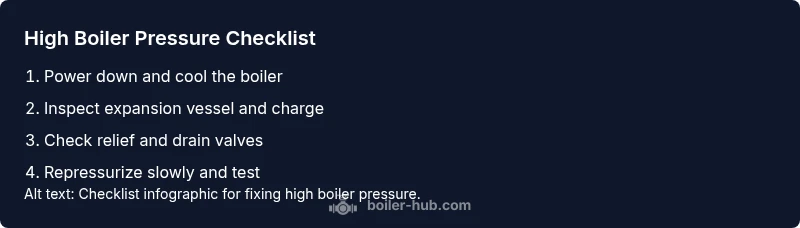
- Power down the boiler and disconnect the electrical supply; allow it to cool completely. Tip: Keep your hands and face away from hot surfaces. 2) Locate the expansion vessel and check its air charge with a compatible gauge; if it’s low, recharge according to the manufacturer’s spec or replace the vessel if it shows signs of failure. Tip: If you don’t know the correct charge, skip refilling and call a pro. 3) Inspect for leaks around fittings and the vessel connection; tighten fittings if you are confident and safe to do so. Tip: Don’t overtighten aluminum threads. 4) Refill the system slowly as directed in the boiler manual and monitor the gauge as pressure returns toward the normal range. Tip: Do not rush this step. 5) After repressurization, run the system and listen for abnormal sounds; check for leaks and ensure the relief valve does not vent. If pressure climbs again, stop and call a technician. Tip: Keep records of readings for service.
Safety reminders and when to call a pro
Even during troubleshooting, safety comes first. If you smell gas, hear hissing from valves, or notice hot water leaks, exit the area and call emergency services or a licensed professional. Do not disable safety devices or bypass relief valves. If you’re unsure about any step, or if the pressure remains high after attempting the simple fixes, a licensed boiler technician should evaluate the system immediately. Regular professional servicing helps prevent these issues from recurring.
Prevention: maintenance to avoid future high pressure
Schedule annual boiler service, check the expansion vessel periodically, and ensure the automatic fill valve operates correctly. Keep the system clean of mineral buildup and bleed radiators only as needed to release trapped air. Consider installing a pressure gauge accessible for routine checks and remind occupants to report any pressure changes promptly. Proactive maintenance reduces the chances of sudden pressure spikes and costly repairs.
Steps
Estimated time: 30-60 minutes
- 1
Power down and cool the boiler
Switch off the boiler and disconnect power to eliminate any risk while you inspect. Allow at least 15–20 minutes for components to cool before handling. This step reduces the chance of burns and accidental valve engagement.
Tip: Use a non-contact thermometer to ensure surface temperature has dropped before touching parts. - 2
Check the water fill and vents
Confirm the filling loop is fully closed and there are no external feeds adding water. If safe, inspect visible vents and connections for obvious leaks or loose fittings. Do not force any valves; mismanaging water could worsen the problem.
Tip: Take photos of valve positions before adjusting for service records. - 3
Inspect the expansion vessel
Locate the expansion vessel; check the air charge with the correct gauge. If the charge is low or the vessel shows signs of wear, recharge or replace per the manufacturer’s instructions.
Tip: Only perform air-charge checks if you’re comfortable with low-pressure systems. - 4
Relieve pressure safely (per manual)
If the manual allows, slowly release a controlled amount of water through the drain valve to bring pressure back toward normal. Do not bypass safety devices or vent excessively.
Tip: Never open pressure relief devices manually unless explicitly guided by the manufacturer. - 5
Refill, repressurize, and test
Refill the system gradually, watch the gauge, and look for leaks after repressurization. Run the boiler briefly and listen for unusual noises. If the pressure stabilizes, monitor for a day; if it rises again, schedule service.
Tip: Keep a log of readings to show the technician when you call.
Diagnosis: Boiler pressure gauge reads abnormally high or relief valve vents frequently
Possible Causes
- highExpansion vessel failure or loss of charge
- mediumOverfilled boiler with excess water
- highStuck or faulty pressure relief valve
- lowFilling loop valve left open or automatic fill valve malfunction
Fixes
- easyPower down the boiler and allow it to cool; do not touch hot components.
- mediumCheck expansion vessel for correct air charge; recharge or replace as needed.
- hardTest and replace the pressure relief valve if defective; verify operation after replacement.
- mediumIf pressure remains high after basic checks, shut down and call a licensed technician.
Questions & Answers
What is considered safe boiler pressure for most residential boilers?
Most boilers have a recommended pressure range in the user manual. If readings stay outside that range, or the relief valve vents, treat it as urgent and seek service. Do not rely on guesswork.
Most boilers have a specified safe pressure in the manual; readings outside that range should prompt immediate service.
Can high pressure in boiler damage components?
Yes. Prolonged high pressure can stress seals, gaskets, heat exchangers, and valves, increasing the risk of leaks and system failure. Timely diagnosis and repair protect the boiler and home.
Yes, high pressure can damage critical boiler parts, so address it promptly.
Is it safe to reduce pressure by draining water from the drain valve?
Only if your boiler’s manual explicitly allows it and you know the correct procedure. Improper draining can cause scalding and system imbalance. When in doubt, stop and call a pro.
Only do drain-valve steps if the manual says so and you know the right method.
When should I call a professional if pressure stays high after basic checks?
If the pressure remains high after the initial checks, or if the relief valve vents repeatedly, stop and call a licensed boiler technician. Do not continue troubleshooting without guidance.
If pressure won’t drop after safe checks, it’s time to call a licensed boiler technician.
How often should the boiler be serviced to prevent high pressure?
Annual professional servicing is recommended to catch issues before they become unsafe. Regular inspection of expansion vessel, valves, and fittings helps maintain safe operation.
Have the boiler serviced at least once a year to prevent pressure problems.
What are signs the expansion vessel is failing besides high pressure?
Look for persistent water hammer, frequent pressure fluctuations, or visible leaks around the vessel. These can indicate a failing expansion vessel and may require replacement.
Watch for water hammer or fluctuating pressure as signs the expansion vessel may be failing.
Watch Video
Key Points
- Identify high pressure early to prevent damage
- Follow the diagnostic flow to isolate causes
- Don’t bypass safety valves or force components
- Call a pro if pressure returns after basic steps
- Maintain yearly service to minimize future spikes