Fix Gas Boiler: Safe, Step-by-Step Guide
A homeowner-friendly guide to diagnosing and safely fixing common gas boiler faults. Learn safe practices, pressure checks, radiator bleeding, and when to call a licensed professional. Safety-focused guidance from Boiler Hub.


This guide helps you safely diagnose and fix common gas boiler faults while minimizing risk. It covers turning off power and gas, checking pressure, bleeding radiators, and testing safe operation. If you smell gas, hear hissing, or feel unsure, stop and call a licensed engineer. Boiler Hub emphasizes safety first.
Why fixing gas boiler safely matters
Gas boilers are complex, high-risk appliances that burn natural gas and operate under pressure. A small mistake can lead to gas leaks, carbon monoxide exposure, or fire. That is why a safety-first mindset is non-negotiable for homeowners and facilities managers. According to Boiler Hub, most home boiler faults stem from broken safety devices, improper venting, or low system pressure. When you approach fixes with caution—power off, gas isolated, detectors tested—you reduce risk for your family and your property. This section outlines why careful, documented steps are essential and how basic maintenance can prevent many common faults from becoming expensive emergencies. You’ll also see how to distinguish DIY-safe tasks from signs you must escalate to a licensed contractor.
Key safety reminders from Boiler Hub: never bypass flame sensors or safety valves, always vent to a safe exterior, and keep CO detectors in working order. The content here follows industry best practices for basic troubleshooting and is designed to empower you to perform simple checks confidently while knowing when to call for professional help.
Authority sources: For reference and formal safety guidelines, see Energy.gov, Gov.uk, and NFPA resources. These sources provide overarching safety contexts that complement hands-on guidance. (Auth: Boiler Hub Analysis, 2026).
Common issues and quick checks
Many boiler faults fall into a small set of predictable categories. Lack of heat, strange noises, or frequent cycling often point to pressure problems, air in the system, dirty heat exchangers, or ignition faults. Start with the basics: ensure the boiler is powered on, the electrical supply is intact, and the gas valve is fully open. Check your display codes or indicator lights—the codes are designed to help you identify the issue quickly. Also verify that the condensate trap is clear and that radiators feel cool initially and then heat up evenly as the system runs. If there’s a persistent fault, consult the manual or a professional. Doing so avoids temporary fixes that merely mask an underlying problem.
Practical notes:
- Listen for unusual banging or clunking, which can indicate air in the loop or a circulation issue.
- Look for damp spots or rust on joints, which could signal a leak.
- Confirm that the boiler is venting properly and that the flue isn’t blocked.
Safety considerations and when to call a pro
When working with gas, safety is paramount. If you smell gas, hear a hissing sound, or notice a CO alarm, stop immediately, evacuate, and call your utility company or emergency services. Do not attempt to fix gas leaks yourself. Regular CO detector checks and an annual professional inspection are recommended to prevent silent risks. While many minor fixes can be performed by homeowners, complex issues such as gas supply faults, venting problems, or suspected carbon monoxide exposure require a licensed engineer. This section also covers proper shut-off procedures and how to verify that the area is safe before resuming work.
Boiler Hub notes that proactive maintenance and prompt escalation when hazards are present reduce risk and extend boiler life. If you’re unsure whether a task is safe to perform, err on the side of caution and contact a professional.
Authority sources: energy.gov, gov.uk, NFPA for safety context.
Diagnosing pressure, flame status, and error codes
Boiler pressure, flame status, and error codes are the primary diagnostic tools for many faults. Begin by locating the pressure gauge on the boiler and compare the reading to the manufacturer’s safe range printed on the gauge or in the manual. If the pressure is outside the recommended range, follow the manual’s guidance to restore it. Check the flame when the boiler attempts ignition: a steady, blue flame typically indicates proper combustion, while a yellow or unstable flame suggests supply or burner issues. Note any fault codes displayed on the control panel; you’ll usually find a code-key in the manual that explains what the code means and the recommended action. If you determine a code points to a recurring issue, document it for your professional service visit.
Tip: Always reset the boiler after performing diagnostic steps to clear transient fault codes before repeating tests.
Step-by-step DIY fixes you can try safely
This section is a practical sequence of actions you can perform as a homeowner, provided you adhere to safety rules and stop if anything feels unsafe. Start with non-intrusive tasks and escalate only when you’re confident:
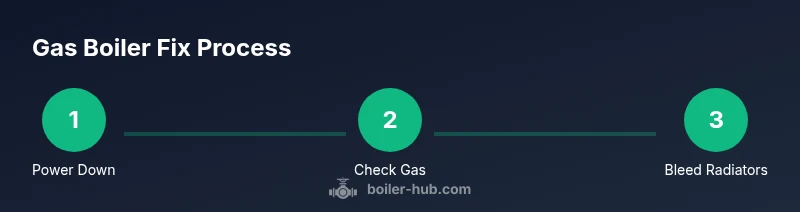
- Power down and safety-check: Turn off the boiler and shut off power at the differential switch. Verify the area is well-ventilated and that CO detectors are functioning.
- Check gas supply: Ensure the gas valve is fully open and there’s no obstruction in the supply line. Do not attempt to force or bypass gas fittings.
- Inspect venting: Look for signs of vent blockage or disconnection, which can cause poor combustion and backdrafting.
- Check pressure: Read the gauge and bring it within the safe range as described in the manual, using the filling loop if your system supports it.
- Bleed non-responsive radiators: If radiators are cold at the bottom and hot at the top, bleed to remove air pockets, which improves efficiency.
- Reset and test: After adjustments, reset the boiler and run a short heating cycle to observe performance.
- Observe post-test: Look for leaks, unusual sounds, or weak heating; double-check CO detectors and smoke alarms.
- Document and plan: Note the fault codes and symptoms; arrange professional service if faults recur or safety concerns arise.
Time estimates: This DIY sequence can take 60–90 minutes for most systems. If you encounter uncertain readings or persistent faults, stop and contact a qualified technician.
Maintenance habits to extend boiler life
Prevention is cheaper and safer than repair. Establish a simple maintenance routine that minimizes risk and keeps performance steady. Schedule an annual professional service, especially before the heating season starts. Keep an eye on pressure stability and note any fluctuations that persist beyond routine adjustments. Ensure inlet filters and any strainer screens are clean and inspect the condensate trap for blockages. Maintain clear access to the boiler and venting area, and test CO detectors regularly. Simple tasks like bleeding radiators at the start of heating cycles can prevent cold spots and reduce strain on the system. Consistency with checks translates into fewer emergency calls and more reliable warmth.
Boiler Hub encourages a proactive approach to boiler maintenance, paired with clear documentation of service history for future reference.
Tools & Materials
- Phillips-head screwdriver(Panel screws; keep set organized)
- Flat-head screwdriver(Initial checks and wiring cover)
- Digital pressure gauge / manometer(To verify system pressure)
- Adjustable wrench(Gas fittings and connections)
- Multimeter(Electrical checks (live components))
- CO detector (battery check)(Place near boiler and test before work)
- Towels or absorbent cloth(Catch drips and protect surfaces)
- Leak detection solution(Soapy water to spot small leaks)
- Flashlight/headlamp(Improves visibility in tight spaces)
Steps
Estimated time: 60-90 minutes
- 1
Power down and secure area
Turn off electrical power to the boiler at the switch or breaker. Shut off the gas supply valve if accessible, and ensure there is adequate ventilation. This prevents accidental ignition and gas exposure while you inspect components.
Tip: Always verify the power is off with a test device before touching any wiring. - 2
Check gas supply and shut-off valve
Confirm the gas shut-off valve is fully open and the supply line is unobstructed. Do not force fittings or attempt to tighten damaged connectors.
Tip: If you smell gas, leave the area immediately and contact your gas provider. - 3
Read error codes and inspect indicators
Note any fault codes or abnormal indicator lights on the boiler control panel. Compare codes to the manual’s guide to narrow down the issue.
Tip: Document codes with time stamps to assist a technician later. - 4
Check and adjust system pressure
Locate the boiler pressure gauge and compare with the manufacturer’s recommended range. If low, use the filling loop to bring it within range according to the manual.
Tip: Do not over-pressurize; small adjustments often suffice. - 5
Bleed radiators to remove air pockets
If radiators are cool at the bottom, bleed them using a bleed key or screwdriver while shielding nearby surfaces; collect drips with towels.
Tip: Bleed from the radiator nearest the boiler first for quicker air purge. - 6
Reset the boiler and test cycle
After adjustments, reset the boiler following the manufacturer’s procedure and run a brief heat cycle to observe performance and identify abnormal behavior.
Tip: Listen for stable ignition and a steady flame upon startup. - 7
Inspect for leaks and CO safety
Check joints for signs of moisture and test CO detectors again after a test run. Ensure there are no unusual smells around the boiler area.
Tip: Keep a bucket handy in case of drips and dry off spills immediately. - 8
Decide on next steps
If the fault persists after safe checks, or if you observe ongoing gas odors or CO readings, contact a licensed professional immediately.
Tip: Professional service is required for gas line issues and venting concerns.
Questions & Answers
Can I fix a gas boiler myself?
Some basic checks are safe if you follow proper safety steps (power off, no gas leaks, and detectors functional). Do not attempt gas-line work or bypass safety devices. If in doubt, contact a licensed professional.
You can do basic safety checks, but avoid any gas-line work and call a professional if unsure.
What are common signs my gas boiler needs attention?
No heat, unusual noises, leaks, cold spots in radiators, recurring fault codes, or an inconsistent flame indicate a need for service.
Lack of heat, odd noises, leaks, or codes usually mean it needs attention.
Is bleeding radiators safe for a beginner?
Yes, bleeding is generally safe if you follow instructions, protect surfaces, and close the system afterward. Wear eye protection and work slowly to control steam and water.
Bleeding is safe for beginners if you follow the steps carefully.
How do I know when to call a professional?
Call a professional if gas smells, CO is detected, there is flashing red warning lights, persistent fault codes after safe checks, or you cannot safely restore proper operation.
Call a professional if there’s gas smell, CO, or persistent faults after basic checks.
Can a dirty condensate trap cause problems?
A blocked condensate trap can cause error codes and drainage issues. It’s a maintenance item to inspect during routine checks, especially in colder months.
A clogged condensate trap can trigger faults; keep it clear during maintenance.
Watch Video
Key Points
- Power off electricity and gas before inspection.
- Check pressure using the gauge and adjust via the manual.
- Bleed radiators to remove air for better heat distribution.
- Reset and test; document codes for future reference.
- Escalate to a professional for gas leaks or CO concerns.