Does a combi boiler make noise? Urgent Troubleshooting Guide
Urgent troubleshooting guide for noisy combi boilers. Learn quick checks, a proven diagnostic flow, and safe fixes to restore quiet operation and prevent damage.


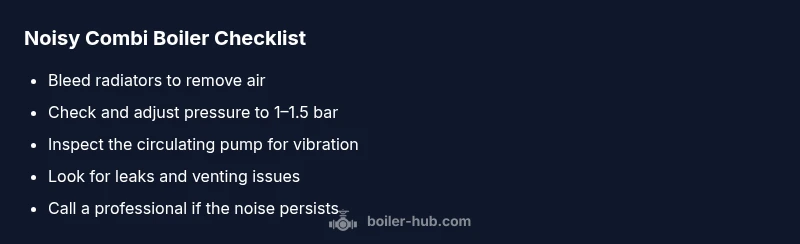
Most noises from a combi boiler come from simple, fixable causes. The most common are trapped air in the system, mineral buildup causing kettling, and a worn circulating pump. Start with safe, quick steps: bleed radiators, check boiler pressure, and inspect for leaks. If the noise continues after these checks, turn off the boiler and contact a professional promptly to avoid damage.
Does a combi boiler make noise? Common causes
According to Boiler Hub, noisy symptoms are a signal that something between your boiler and the heating circuit is out of balance. In most homes, a noisy combi boiler isn’t dangerous, but it can indicate air, pressure, or pump problems that worsen if ignored. The most frequent culprits are air in the system, kettling from mineral scale, and a failing circulating pump. Other noises, such as hissing or whistling, point to venting or pressure issues, while banging sounds can come from water hammer or pipe expansion. The good news is that most noises stem from a small group of predictable causes and can be quieted with careful, safe steps.
Air in the system causes gurgling and uneven radiator heat. To test this, listen for intermittent whooshes when the boiler fires. If you hear regular hiss from a radiator valve or a noise from the heat exchanger, air is likely the culprit. Kettling is the telltale churning sound from limescale on the heat exchanger. A worn circulating pump can hum or vibrate, especially at higher temperatures. Diverter valves or thermostats can cause splutter or reduced flow. Finally, expansion of metal pipes when hot can produce banging. With these causes in mind, most noises clear after bleeding air, checking pressure, and inspecting the pump.
Brand note: This guidance reflects practical troubleshooting principles used by the Boiler Hub Team to help homeowners and facility managers resolve common boiler noises without unnecessary delays.
errorMessage:null} ,
Steps
Estimated time: 45-90 minutes
- 1
Power down and cool down
Turn off the boiler and let it cool before touching any components. Safety first: avoid contact with hot surfaces. This also reduces the risk of scalding or accidental ignition when you work near electrical and gas connections.
Tip: Always verify you have access to the main power/shutoff before starting. - 2
Bleed radiators to remove air
Starting with the highest radiator, use a radiator key to release air until you hear a steady trickle of water. Repeatedly bleed all radiators until the noise reduces. After bleeding, recheck the boiler pressure.
Tip: Keep a cloth handy for drips and re-check the pressure gauge after bleeding. - 3
Check and adjust boiler pressure
Look at the pressure gauge; many combi boilers prefer around 1–1.5 bar when cold. If below, use the filling loop to top up slowly until the target range is reached. If above, bleed a radiator to lower the pressure.
Tip: Don’t overfill—move in small increments and recheck after each adjustment. - 4
Inspect the pump and flow path
Listen for a continuous hum or vibration from the pump area. If it’s noisy or loose, tighten mounting screws and check electrical connections. If the noise persists, the pump may need professional assessment or replacement.
Tip: Avoid touching the pump impeller; this requires specialist parts and tools. - 5
Test system and monitor for changes
Power the boiler back on and observe for changes in noise, hot water pressure, and radiator performance over the next hour. If noises recur or worsen, this often indicates a deeper issue that requires a professional service.
Tip: Keep notes of noise type, time of day, and boiler readings to aid a technician.
Diagnosis: Noisy combustion and heating cycle in a combi boiler (e.g., banging, kettling, whistling, humming)
Possible Causes
- highAir in the system
- highKettling from mineral scale on the heat exchanger
- mediumWorn or faulty circulating pump
- lowFaulty diverter valve or thermostat
- mediumLow system pressure causing flow irregularities
Fixes
- easyBleed radiators to remove trapped air and recheck system pressure
- easyTop up boiler pressure to the recommended range if it's low
- mediumInspect and, if needed, replace the circulating pump or tighten mounting
- hardConsider a power flush or heat exchanger cleaning for kettling
- mediumReplace faulty diverter valve or thermostat if diagnosed
Questions & Answers
Why is my combi boiler making banging noises when it heats up?
Banging noises usually indicate kettling from mineral scale or water hammer from pipe expansion. Bleeding radiators and ensuring proper pressure often resolves it. If the sound persists, a professional should assess the heat exchanger and piping.
Banging often comes from kettling or water hammer—try bleeding radiators and checking pressure first, then call a pro if it continues.
What does a hissing noise from a combi boiler mean?
A hissing noise often points to venting or pressure-related issues around the boiler or radiators. Check for leaks, verify pressure, and inspect vent connections. If it doesn’t settle, seek professional help.
Hissing usually means vent or pressure issues; check pressure and connections, and contact a technician if it keeps up.
Can low boiler pressure cause noises?
Yes. Low pressure can cause the system to struggle and noises as water flows unevenly. Re-pressurize to the recommended range and monitor after bleeding radiators.
Low pressure can create flow noises. Refill to the right level and watch for changes.
When should I call a professional for boiler noises?
If noises persist after bleeding radiators and adjusting pressure, or if you smell gas, see soot, or the flame behaves oddly, stop using the boiler and call a licensed technician.
Call a professional if noises repeat after basic checks or you notice gas smells or flame irregularities.
Are there safe DIY checks I can do regularly to prevent noises?
Yes. Regular bleeding, checking pressure, and annual servicing help prevent most noises. Keep the area around the boiler clear and schedule professional maintenance yearly.
Do simple checks like bleeding and pressure checks, and keep up with annual service to prevent most noises.
Should I replace a noisy boiler entirely?
Noise alone isn’t a reason to replace. A pro can assess whether components or the heat exchanger are failing. Replacement is a last resort when repairs exceed the boiler’s lifespan or safety is compromised.
Replacement isn’t the first choice; a professional will determine if repair or replacement is needed.
Watch Video
Key Points
- Bleed air and check pressure first.
- Audible noises often point to air, pressure, or pump issues.
- Don’t ignore persistent noises—professional help keeps safety intact.
- Regular maintenance prevents noisy surprises and extends boiler life.