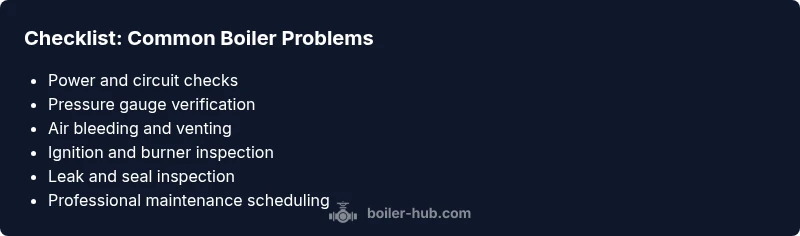
Common Boiler Problems: Troubleshooting Guide
Urgent, practical guide to diagnose and fix common boiler problems. Step-by-step checks, safety reminders, and prevention tips for homeowners and facility managers.


Most common boiler problems stem from power, ignition, or pressure issues. Start with quick, safe checks: ensure the boiler is powered, reset the thermostat, verify the pressure gauge, and bleed any air from radiators. If you smell gas or the boiler won’t ignite, shut off power and gas and call a licensed professional immediately.
What causes boiler problems and why they happen
According to Boiler Hub, many boiler problems arise from simple, overlooked issues like low power supply, a tripped circuit, air in the system, or a misadjusted thermostat. When a boiler misbehaves, it’s often signaling something straightforward yet critical: the system needs attention before a minor fault becomes a major safety or reliability risk. Homeowners and facility managers should treat any unusual behavior—odd noises, frequent cycling, or sudden loss of heat—as a warning sign rather than a nuisance. Regular maintenance and timely checks reduce the odds of a dramatic breakdown and keep energy use efficient.
In busy buildings, the complexity of controls increases the chance of misconfiguration. The Boiler Hub team emphasizes that documenting symptoms, times of occurrence, and recent changes helps diagnose issues faster and safer. Always reference the boiler model and service history when seeking help. Remember: when in doubt, prioritize safety and professional consultation.
The most common boiler problems and quick checks
No heat or hot water is the most frequent complaint and is often caused by a low system pressure, a faulty thermostat, or a failed ignition sequence. Strange banging, popping, or whistling noises typically indicate air in the system, mineral buildup, or a failing pump. Leaks around valves or the boiler cabinet point to worn seals, corrosion, or failed gaskets. A pilot light that won’t stay lit can be due to draft, dirty thermocouple, or clogged gas supply. Each scenario has safe, progressive checks you can perform before calling for help.
To stay proactive, verify power at the outlet, inspect the display for error codes, and confirm the gas supply valve is open. Bleed radiators to remove air pockets and restore proper pressure. If the boiler cycles on and off rapidly, the issue may be an over-firing thermostat or a pressure problem. Keep a notebook of symptoms to guide the diagnostic flow when you contact a technician.
Understanding boiler pressure, ignition, and controls
Pressure is the lifeline of most residential boilers. If the pressure gauge reads too low, the boiler may fail to heat or produce inadequate warmth. If it’s too high, the relief valve may vent, risking pressure-related damage. Ignition problems—whether a pilot light or electronic ignition—are common culprits for no-heat scenarios. In modern boilers, the control board interprets sensor data to determine burner operation; any misread can lead to cycling or lockouts.
Thermostat settings influence boiler behavior as well. An overly aggressive thermostat can cause frequent cycling, while a miscalibrated one may fail to trigger heat when needed. In the case of gas-powered units, a clogged burner or dirty sensor can mimic ignition failures. Maintenance should include regular visual checks of gas supply lines, vent safety, and proper clearance around the unit to ensure safe combustion and venting.
A practical diagnostic mindset: symptoms to diagnosis mapping
Develop a simple symptom-to-diagnosis map to avoid scrambling through unrelated fixes. Start with safety-critical checks: power, gas supply, and obvious leaks. If the unit powers up but delivers little or no heat, investigate pressure, thermostat, and circulator pump. If odd noises accompany heating, focus on air removal, mineral buildup, or pump faults. If there are error codes on the display, consult the manual or the Boiler Hub knowledge base before attempting pinhole fixes.
Keep a log of dates, codes, and observed conditions. Many issues cluster around three root causes: power/controls, ignition/gas, and water pressure. Prioritize fixes that restore safe operation and verify each fix with a test run. When a symptom persists after two or three checks, escalate to a licensed technician rather than continuing with risky DIY steps.
Safe, effective fixes you can try now
Begin with the safest, simplest steps:
- Ensure the boiler is plugged in and the circuit breaker is on. If a fuse keeps tripping, address the electrical circuit with caution and consult a pro.
- Reset the thermostat and the boiler’s control panel. Sometimes a simple reboot clears sensor glitches.
- Check the pressure gauge. If it’s low, add water to bring it to the recommended range using the filling loop according to the manual.
- Bleed radiators to remove trapped air. A quick bleed often restores heat and improves system efficiency.
- Inspect for visible leaks or corroded components. Tighten accessible connections and replace worn gaskets if you have the right tools.
If none of these fixes restores proper operation, shut down the boiler safely and schedule professional service. Do not attempt gas line adjustments, burner disassembly, or vent modifications yourself. Preventive maintenance is your best defense against costly emergencies.
When to call a professional
Professional help is warranted whenever the problem involves gas safety, high pressure, persistent leaks, or persistent failures after basic checks. If you smell gas, hear hissing near connections, or notice soot around the boiler, evacuate the area and call emergency services. A licensed technician can verify gas integrity, perform combustion analysis, and ensure venting meets current safety standards. In facilities with complex systems, a service contract ensures regular inspections and faster response to issues that could disrupt operations.
For homeowners, a professional is recommended for any ignition problems, significant pressure changes, or water leakage beyond simple gasket seals. In all cases, ensure the technician is certified for your boiler type and can provide a written estimate and a post-service warranty. Regular maintenance agreements improve reliability and extend equipment life.
Maintenance habits to prevent future problems
Proactive maintenance reduces the chances of sudden boiler failures. Schedule annual service with a licensed technician to inspect burner assembly, heat exchanger, pumps, and venting. Replace worn seals and tighten fittings according to the manufacturer’s schedule. Regularly flush the system to remove mineral buildup that reduces efficiency and causes noisy operation. Check expansion tanks, safety valves, and pressure relief devices for proper operation.
Keep salvation records for service visits, parts replaced, and any code alerts. Clean the external cabinet to prevent dust ingress and ensure clear access to the service panel. If your building has multiple boilers or zones, verify that controls are harmonized and that sequencing is correct to minimize cycling and wear. Adopting a preventive maintenance calendar helps avoid common boiler problems in the long run.
Common mistakes to avoid during DIY troubleshooting
Avoid bypassing safety devices or attempting gas or electrical work beyond your competence. Don’t ignore warning codes or take shortcuts to restore heat without verifying safety. Relying on outdated manuals or conflicting online advice can lead to incorrect fixes and expensive damage. Do not repeatedly reset the boiler without addressing the underlying issue, as this can mask a fault that will worsen over time.
Always shut off power and gas before inspecting or draining, and wear protective gear when handling hot surfaces or steam. If you are unsure, pause and contact a qualified technician. Finally, never operate a boiler with a known leaking pipe or damaged vent system without professional assessment.
Safety first: essential precautions for homeowners and facilities
Safety is non-negotiable in boiler troubleshooting. Always shut off electrical power before touching exposed components and never work on gas lines without appropriate certification. Maintain clear, dry working space around the boiler. Use a carbon monoxide detector in the affected area and ensure proper ventilation when testing combustion-related issues. If you’re responsible for a facility, implement a policy for immediate shutdown during suspected gas leaks or fire risk and train staff on emergency procedures.
In summary, treat any boiler problem as potentially serious. Prioritize safety, document symptoms, and contact professionals when in doubt. A calm, methodical approach reduces risk and speeds up a safe resolution. Boiler Hub’s guiding principle remains: safety first, then precise diagnosis, then reliable fixes.
Steps
Estimated time: 45-90 minutes
- 1
Check power and safety switches
Verify the boiler is receiving power. Look at the control panel, reset breakers if needed, and ensure any safety switches or relays are engaged. Clear the area of obstructions and ensure ventilation is adequate.
Tip: If the breaker trips again, do not reset repeatedly—this signals an electrical fault needing a professional. - 2
Verify gas supply and ignition
Ensure the gas valve is open and there is a gas supply. If you hear a click but no ignition, the burner or thermocouple may need cleaning or replacement by a pro.
Tip: Do not attempt gas line work if you smell gas; evacuate and call the utility or emergency services. - 3
Check boiler pressure
Read the pressure gauge and compare to the manufacturer’s recommended range. If pressure is low, use the filling loop to restore to the correct level; if too high, seek professional assessment.
Tip: Low pressure often mimics no-heat symptoms; correcting pressure can restore operation. - 4
Bleed radiators and remove air
With the boiler off, bleed each radiator to release trapped air. This helps restore circulation and improves heating efficiency.
Tip: Start from the radiator farthest from the boiler to ensure full system bleed. - 5
Inspect for visible leaks or corrosion
Look for damp spots or corrosion around joints, valves, and seals. Tighten accessible connections and replace worn gaskets if you have the tools and skills.
Tip: Only attempt gasket replacement if you have a proper sealant and the right sizes.
Diagnosis: Boiler won't fire or produce heat
Possible Causes
- highPower issue
- highGas supply or ignition problem
- mediumLow system pressure or faulty pressure relief
Fixes
- easyCheck power at outlet and circuit breaker; reset if tripped
- easyInspect gas supply valve and clean/adjust ignition components
- easyBleed air and top up pressure to manufacturer spec
Questions & Answers
What is the most common boiler problem homeowners face?
No heat or no hot water is the most frequent issue, often caused by low pressure, thermostat faults, or ignition problems. A quick check can often restore basic operation.
No heat or hot water is the most common boiler problem; try checking pressure, thermostat, and ignition first.
Can I fix a boiler leak myself?
Small, easily accessible leaks may be addressed by tightening fittings or replacing gaskets if you have the right tools. Persistent or large leaks require a professional to prevent water damage and ensure safe operation.
Tighten accessible fittings if you’re trained, but for persistent leaks, call a pro.
Should I reset my boiler to fix issues?
Resetting can clear minor sensor glitches, but it’s not a fix for hardware faults. If problems persist after a reset, stop and seek professional assessment.
Resetting can help with a minor hiccup, but don’t rely on it as a cure for ongoing problems.
When is it unsafe to DIY?
If you smell gas, see a leak, hear unusual noises near gas lines, or if there’s evidence of water damage, stop immediately and contact a licensed technician.
Gas leaks or signs of damage require immediate professional help.
What maintenance can prevent boiler problems?
Annual professional inspection, regular pressure checks, bleed radiators, clean burners, and inspect venting to prevent mineral buildup and ensure efficient operation.
Regular maintenance by a pro plus simple checks at home can prevent many common issues.
How long does it take to fix common boiler problems?
Repair timelines vary, but simple fixes may be completed in under an hour, while more complex problems can require a scheduled service visit.
Most common fixes can be done in a day, though some issues need scheduling with a professional.
Watch Video
Key Points
- Identify root cause early to prevent escalation
- Prioritize safety before DIY fixes
- Regular maintenance reduces sudden failures
- Document symptoms for faster service
- Call a pro for gas or electrical concerns