Boiler Treat: A Step-by-Step Guide to Safe Maintenance
Learn how to safely perform a boiler treat to remove buildup, protect heat exchangers, and extend boiler life. This Boiler Hub guide covers prep, dosing, circulation, flushing, and post-checks with practical tips.


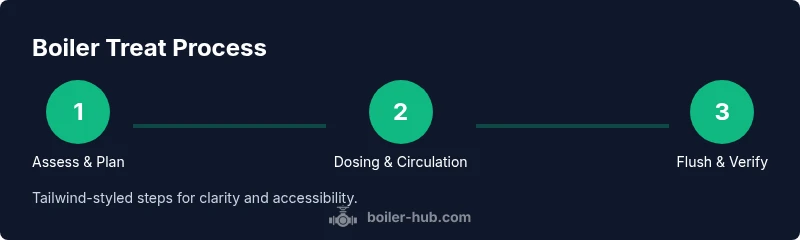
This guide shows you how to safely perform a boiler treat to remove mineral buildup and protect heat exchangers. You’ll need the boiler model info, compatible treatment, PPE, and basic tools. The steps include prep, dosing, circulation, flushing, and post-checks to verify performance and safety.
What is a boiler treat and why it matters
A boiler treat is a targeted maintenance procedure aimed at reducing mineral scale, rust, and corrosion inhibitors within a boiler system. When water chemistry isn’t balanced, deposits can form on heat exchangers, reducing heat transfer efficiency and potentially shortening boiler life. A well-executed boiler treat helps restore efficiency, slows corrosion, and can improve reliability during cold snaps or peak usage. According to Boiler Hub, aligning treatment with your specific boiler type and water chemistry yields the best long-term results. The exact products and dosing depend on whether you operate a hot-water boiler or a steam boiler, the local water hardness, and the system’s load. This guide emphasizes safety, manufacturer guidance, and best-practice scheduling to keep your boiler performing reliably for years to come.
Safety first: prerequisites and PPE
Before you begin any boiler treat, safety must come first. Ensure the boiler is shut down and cooled, follow lockout/tagout procedures if needed, and verify that all isolation valves are accessible. Personal protective equipment (PPE) is non-negotiable: wear chemical-resistant gloves, splash goggles, and a long-sleeve layer to protect skin from splashes. If you’ll be working in cramped spaces or near electrical components, consider a face shield and respiratory protection as required by the product label. Ventilate the area if you’re working in a utility room with poor air exchange. Always read the product label for any additional safety instructions specific to the chemical you’re using. Boiler Hub’s guidance emphasizes never bypassing safety devices or pressurized components during treatment.
Choosing the right chemical treatment and compatibility notes
Materials available for boiler treats vary in chemistry and purpose. Some products are designed to inhibit corrosion, while others target mineral scale. The key is compatibility: verify that the treatment is approved for your boiler type (hot-water vs. steam) and compatible with your system materials (cast iron, steel, copper, or aluminum components). Do not mix treatments or use an incompatible product, as this can create harmful reactions or void warranties. Always consult the boiler manufacturer’s guidance and, if in doubt, contact a qualified technician before proceeding. For best results, ensure the chosen product is appropriate for the water chemistry (hardness, pH) of your locality and the boiler’s operating conditions.
Step-by-step prep and planning (system assessment)
Preparation sets the stage for a successful boiler treat. Start by documenting the boiler model, age, and any existing issues (leaks, unusual noises, or pressure fluctuations). Check the current pressure, water level, and any recent service notes. Inspect for signs of corrosion, scale buildup, or blocked vents. Gather all tools and materials in a clean workspace, and review the product label to confirm dosing amounts and contact times. A well-planned approach minimizes surprises and ensures you can complete the process in one session.
Dosing, circulation, and time windows (active treatment)
The core of a boiler treat is dosing the chemical into the feed or boiler water, then circulating the solution so it contacts internal surfaces. After dosing, run the boiler or use an external pump to circulate the liquid for the recommended contact time. Avoid heating beyond the product’s specified temperature range, and monitor the system for any abnormal pressure changes. The goal is to achieve uniform distribution without creating stagnant pockets that could harbor deposits. Keep the area well-ventilated and maintain a steady, controlled pace to prevent splashes or spills.
Flushing, rinse, and post-treatment checks
Flushing is essential to remove spent chemical and dissolved contaminants. Drain the system according to the manufacturer’s instructions, then rinse with clean water until test strips show neutral or target readings on pH and alkalinity (as specified by the product). Refill the system and recheck pressure, ensuring it returns to normal operating range. Inspect for leaks and confirm that safety devices (pressure relief valves, low-water cutoffs) function correctly. Document the process, including product used, timing, and observed outcomes, so future maintenance can reference previous treatments.
Maintenance strategy to minimize buildup
A proactive maintenance plan reduces the need for frequent boiler treats. Schedule periodic water tests, monitor boiler performance, and adjust chemistry as needed. Implement a routine that includes annual or semi-annual checks, depending on usage and water quality. Consider upgrading water treatment downstream of the boiler if your water supply is consistently hard. Boiler Hub’s guidance highlights that consistent maintenance and choosing compatible treatments are the best defenses against efficiency loss and unexpected downtime.
Brand guidance and practical notes
Across our guidance, the aim is practical, repeatable steps that homeowners and facility managers can follow. Always start from the boiler manufacturer’s manual, use products designed for your system type, and maintain a clear safety protocol. If you encounter persistent issues like persistent leaks or repeated loss of pressure after a boiler treat, it’s time to call a licensed technician. Boiler Hub’s overall verdict is that a well-executed boiler treat, combined with regular checks, helps ensure reliability and efficiency.
Tools & Materials
- Personal protective equipment (PPE)(Chemical-resistant gloves, splash goggles, long sleeves; consider a face shield if splashes are possible)
- Boiler-compatible chemical treatment(Product labeled for your boiler type (hot-water or steam) and water chemistry)
- Diagnostic test strips or pH strips(For pre- and post-treatment water quality checks)
- Bucket, funnel, and clean rags(For handling and cleanup of spills)
- Non-sparking tools and brushes(Only if recommended by the manufacturer for cleaning components)
- Water supply hose or circulation pump(Used to circulate or flush the system as directed)
- Waste containment and disposal plan(Have a plan per local regulations for disposing spent solution)
- System pressure gauge or manometer(Helpful to monitor pressure changes during flushing)
- Notebook or digital log(Record readings, product used, and steps taken)
Steps
Estimated time: 60-90 minutes
- 1
Assess system and plan
Review boiler type, age, and any known issues. Check current pressure and water level. Gather materials and confirm the product label’s dosing guidance. Create a checklist to track tasks and timing.
Tip: Document baseline readings before starting; this helps evaluate post-treatment results. - 2
Shut down and isolate boiler
Power down the boiler and lock out any electrical controls as required. Close supply valves and isolate the system from any feed lines to prevent unintended flow during dosing.
Tip: Never work on a live boiler; ensure the system is cool and depressurized before handling chemicals. - 3
Add boiler treat to feed/water line
Dose the chemical according to the product label for your boiler type. Add it to the feed water or as directed by the manufacturer, ensuring proper mixing and avoiding direct splashes to skin.
Tip: Pour slowly and use a funnel to minimize spills; never mix products in a shared container. - 4
Circulate the solution
Run the boiler or a circulating pump to ensure even contact with all internal surfaces. Maintain a safe operating temperature within the product’s limits and monitor for unusual readings.
Tip: If your system has a circulation loop, prioritize continuous flow to prevent dead zones where buildup could persist. - 5
Allow recommended contact time
Let the solution sit for the product’s specified contact time while monitoring system behavior. Avoid rapid temperature changes or high demands on the boiler during this window.
Tip: Do not short-circuit the contact time; premature circulation or early flushing can reduce effectiveness. - 6
Flush and rinse
Drain the system following the manufacturer’s guidance and flush with clean water until test readings align with target ranges. Refill the system with fresh water afterward.
Tip: Capture spent fluid for disposal according to local regulations; never dump into a sensitive drain. - 7
Post-treatment checks and restart
Recheck pressure, water level, and any safety devices. Verify there are no leaks and that the boiler reaches normal operating temperatures. Log results and plan for routine maintenance.
Tip: Keep a maintenance log—consistent records help identify when a repeat treatment is needed.
Questions & Answers
What is a boiler treat and why is it needed?
A boiler treat is a maintenance step that uses a chemical to reduce scale and corrosion, improving heat transfer and extending boiler life. It should be chosen to match your boiler type and water chemistry, and performed according to the manufacturer’s instructions.
A boiler treat reduces scale and corrosion to protect the boiler and improve efficiency. It should match your boiler type and water chemistry and follow the product instructions.
Is a boiler treat safe for all boiler types?
Most residential and commercial boilers can benefit from a treat when performed correctly. Always verify compatibility with your boiler’s materials and consult the manufacturer or a professional if you have any doubt.
Most boilers can be treated, but always check compatibility with your boiler and the product label, and consult a professional if uncertain.
How often should I perform a boiler treat?
Frequency depends on water quality, boiler type, and usage. Regular maintenance checks are advised; avoid over-treating and follow the product’s recommended intervals.
Frequency depends on your water and usage. Follow the product guidance and regular maintenance checks.
What are signs that a boiler treat is needed?
Look for reduced efficiency, unusual noises, higher energy bills, or persistent mineral buildup. If you notice these, perform a water test and consult a technician before proceeding.
If you notice lower efficiency, strange noises, or more mineral buildup, test the water and consider a treatment with professional input.
Can I do a boiler treat myself or should I hire a pro?
If you have the right tools, PPE, and follow the product label, a trained homeowner can perform a basic boiler treat. For complex systems or uncertain chemistry, hire a licensed professional.
You can do a basic treat if you have the right tools and follow the instructions, but for complex systems, it’s best to hire a professional.
What should I log after a boiler treat?
Record the product used, dosing amounts, contact times, pre-/post-treatment readings, and any observed system changes. This helps plan future maintenance and troubleshooting.
Log the product, amount, timing, readings, and any system changes to plan future maintenance.
Watch Video
Key Points
- Plan and confirm boiler and chemistry suitability before treating.
- Use proper PPE and follow label directions precisely.
- Monitor water chemistry, pressure, and flow during treatment.
- Flush thoroughly and verify post-treatment readings.
- Document results and schedule regular maintenance to minimize buildup.