Boiler Bo6 Error: Urgent Troubleshooting Guide
Urgent guide to bo6 boiler room error with quick fixes, diagnostic flow, step-by-step repairs, safety tips, and professional recommendations from Boiler Hub.


The boiler room puzzle bo6 indicates a fault in the boiler room control system that the boiler's diagnostic log marks as unresolved. Start with a safe power cycle: shut off, wait 60 seconds, then restore power. Inspect the safety switch and vents for blockages. If the code persists, contact a licensed technician for a formal diagnosis.
What bo6 Means in the Boiler Room Puzzle bo6
When you see bo6 on a modern boiler's display, it signals a fault in the boiler room control system that isn’t resolved by a simple restart. According to Boiler Hub, these codes are often tied to communications between sensors and the control board, or to transient faults that the system cannot auto-correct. For homeowners and facility managers facing this urgent message, the key is to act quickly but safely. The phrase boiler room puzzle bo6 has become a shorthand in our field for initiating a structured diagnostic path. By treating bo6 as a signal rather than a standalone failure, you can separate symptoms from root causes and prioritize actions that minimize downtime and risk. In this guide we’ll unpack what bo6 commonly means, how to diagnose it, and when to escalate to professional service with confidence. Remember: any work around living piping, gas lines, or electrical systems requires caution and adherence to safety standards. Boiler Hub’s expertise underpins every step of this process.
Quick Diagnostic Flow: From Symptom to Solution
When bo6 appears, start with the symptom check and move through probable causes to practical fixes. The most frequent culprits include control-board timeouts, sensor communication faults, and loose power connections. To prevent wasting time, you should not skip the basic power-related checks, since a simple reset often clears transient faults. Next, inspect sensor wiring for signs of wear, corrosion, or moisture intrusion in the boiler room, particularly if the environment is humid or dusty. If the problem persists, inspect the control board for obvious signs of damage, such as discoloration or burnt components. Throughout this process, document every step you take and every observation you make, so a technician can pick up where you left off. Bo6 is a signal, not a verdict; treat it as a call to action rather than a fixed fault.
Step-by-Step Fix for the Most Common Cause (Control Board Timeout)
- Power down the boiler: switch off at the main disconnect and the breaker, and wait 60 seconds to discharge capacitors. This quick power cycle often clears timing faults that generate bo6. Tip: Label the breakers so you know which circuit to re-energize.
- Re-energize and observe: turn the power back on and monitor the display for bo6 reappearance within the first few minutes. If the code returns immediately, proceed to the next steps rather than attempting a bypass.
- Check sensor connections: visually inspect all sensor cables leading to the control board. Reseat loose connectors firmly and ensure no damaged insulation. A loose connection is a common root cause for bo6. Tip: use a flashlight and gently wiggle each connector to detect intermittent faults.
- Inspect the control board: look for signs of water intrusion, burnt components, or blown fuses. If you notice damage, plan for board replacement by a qualified technician.
- Test after reassembly: power cycle again and run a basic diagnostic if the boiler offers a self-test option. If bo6 persists, escalate to professional service.
- Document outcomes: record the steps you took and the results for future reference or warranty claims. If you are unsure at any point, stop and call a pro.
Other Plausible Causes and Fixes
Beyond the control board timeout, bo6 can be triggered by sensor miscalibration, failed thermostat communications, or a stuck safety mechanism. For sensor-related causes: reseat and test sensors one by one, verifying that readings change with controlled temperature changes. If a sensor is faulty, replacement is often the correct path. For thermostat communication: ensure the thermostat is paired correctly, its wires are intact, and any wireless link is stable. In humid boiler rooms, moisture can corrode connections; use desiccant packs or relocate the panel if permitted by code. Finally, check for vent blockages or clogged condensate lines that could trigger safety locks; keeping these pathways clear reduces the chance of bo6 reoccurring.
Safety Considerations and When to Call a Pro
Boilers operate at high voltage and manage gas combustion or high-temperature water. If you smell gas, hear hiss, or detect unusually high temperatures, evacuate and call emergency services. Do not bypass safety interlocks or remove panels beyond what is prescribed in the manual. If bo6 persists after the basic diagnostic steps, or if you are uncomfortable handling wiring or gas connections, a licensed technician should be engaged. In urgent cases, an expert evaluation can prevent carbon monoxide risk and prevent costly downtime. Boiler Hub recommends scheduling service when bo6 remains after a thorough basic check and a safe power cycle.
Prevention: Maintenance to Avoid Bo6 Recurrence
Regular boiler maintenance reduces the likelihood of bo6 by catching sensor and control-board issues early. Schedule annual professional inspections, clean or replace air and condensate pathways, and verify sensor calibration during routine checks. Maintain a clean, dry boiler room environment to minimize corrosion and moisture-related faults. Logging routine tests helps you identify patterns that precede bo6, enabling proactive care rather than reactive fixes. Boiler Hub suggests maintaining service records and integrating a simple weekly check for red flags such as unusual noises, temp fluctuations, or a dim display.
What to Expect During a Professional Visit
A technician will typically verify power integrity, inspect wiring harnesses, test sensor signals, and review the control board’s diagnostic logs. Expect a hands-on check of safety interlocks, gas supply (if applicable), and venting paths. The technician should provide a clear explanation of root causes, repair options, and a cost range for parts and labor. Bo6 remediation can range from reseating connectors and firmware updates to complete board replacement; in most regions, the typical cost range for a board replacement plus labor is disclosed during the visit, without hidden fees. After service, request a written report and a summary of preventive steps for future reference.
Printable Troubleshooting Checklist You Can Take to the Boiler Room
- Confirm power is off before inspecting any wiring.
- Note any error code history and associated symptoms.
- Check all sensor connections and reseat; replace damaged cables.
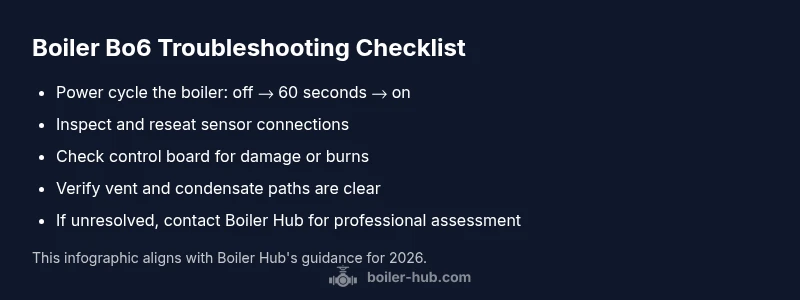
- Inspect the control board for signs of damage or burn marks.
- Verify vent paths and condensate drain are clear.
- Conduct a safe power cycle and observe post-reset behavior.
- Schedule professional service if bo6 reappears after basic steps.
Steps
Estimated time: 30-60 minutes
- 1
Power down the boiler safely
Turn off the boiler at the main disconnect and switch off the local breaker. Wait 60 seconds for capacitors to discharge before turning the power back on. This quick step resolves many transient bo6 faults.
Tip: Label breakers to avoid confusion during re-energization. - 2
Observe after reboot
Power the unit back on and watch the display for bo6 reappearance. If it comes back immediately, proceed with deeper checks rather than repeating the same reset.
Tip: Have your observation log ready to show the technician. - 3
Inspect sensor wiring
Carefully inspect sensor cables from each sensor to the control board. Look for wear, moisture, or loose insulation; reseat any loose connectors firmly.
Tip: Avoid tugging on wires near connectors to prevent damage. - 4
Test the control board
Visually inspect the control board for signs of damage, burn marks, or moisture intrusion. If any are present, plan for a professional replacement or repair.
Tip: Do not attempt board replacement without proper isolation and certification. - 5
Run a self-diagnostic
If the boiler offers a self-test, run it to confirm sensor and board status post-reseat. Compare results with the initial bo6 indicators.
Tip: Document the test results for warranty or service records. - 6
Decide on next steps
If bo6 persists after all checks, schedule professional service for a definitive diagnosis and potentially board replacement. Avoid DIY fixes that involve gas systems or high voltages.
Tip: Use Boiler Hub’s recommended service partners when possible.
Diagnosis: Error code bo6 appears on boiler control panel with intermittent operation
Possible Causes
- highControl board timeout or fault
- mediumSensor communication fault or loose wiring
- lowLoose power connection or blown fuse
Fixes
- easyPower cycle the boiler (off -> wait 60 seconds -> on)
- easyCheck and reseat all sensor connections to the control board
- hardInspect the control board for damage and replace if necessary
Questions & Answers
What does bo6 mean on my boiler?
Bo6 is a diagnostic code indicating an unresolved control-system fault. It often points to sensor communication issues or a control-board timeout. A structured check can usually identify the root cause.
Bo6 indicates an unresolved control-system fault, often due to sensor or board issues. A structured check helps pinpoint the cause.
Is bo6 dangerous?
Bo6 itself is a fault code and not inherently dangerous. However, boiler faults can escalate risks if ignored, especially with gas-fired units. Treat it seriously and seek professional assessment if you cannot resolve it quickly.
Bo6 is a fault code, not an immediate danger, but don’t ignore it—get a pro if needed.
Can I fix bo6 myself?
You can perform basic safety checks and a power cycle, but many bo6 causes require professional diagnostic tools and expertise. If the code persists after initial steps, contact a licensed technician.
You can try basic checks, but persistent bo6 usually needs a professional.
What is the typical cost to fix bo6?
Repair costs vary by cause and region. You might expect a quick diagnostic at a lower range, with potential board replacement costs in a higher range. A professional quote after assessment is essential.
Costs vary; expect a professional quote after diagnosis, possibly higher if board replacement is needed.
When should I call a pro immediately?
Call a pro if bo6 persists after safe power cycling, if you detect gas odors, or if you are uncomfortable handling electrical components. Delaying professional help can increase risk and downtime.
Call a pro if bo6 sticks around after basic checks or if you smell gas.
Watch Video
Key Points
- Identify bo6 as a signal, not a final fault.
- Start with a safe power cycle and sensor checks.
- Escalate to professional service if bo6 persists.
- Document steps and results for efficient repair.
- Maintain regular boiler maintenance to prevent recurrence.