Boiler is Broken: Urgent Troubleshooting Guide
Urgent boiler troubleshooting guide from Boiler Hub. Learn quick checks, a diagnostic flow, and step-by-step fixes to restore heat safely when your boiler is broken.


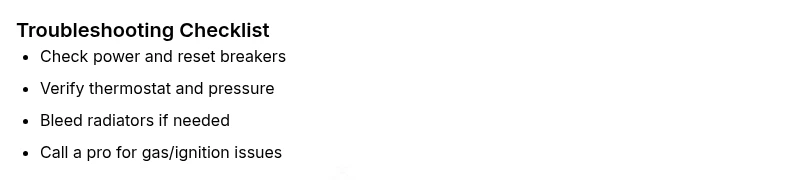
If your boiler is broken, the most likely culprits are a power or safety switch fault. Start with quick checks: confirm the boiler is receiving power, reset the circuit and boiler's internal fuse if present, and verify the thermostat and pressure settings are correct. If these steps don't restore heat, follow our diagnostic flow for deeper issues.
Why a Broken Boiler Demands Urgent Action
When a boiler is described as boiler is broken, homeowners face cold rooms, damp conditions, and rising energy bills. According to Boiler Hub, many heat failures start with simple power or control faults rather than a dramatic mechanical failure. This guide emphasizes fast, safe checks and a systematic diagnostic flow to isolate the issue and minimize downtime. By following these steps, you’ll gain clarity about whether you can safely fix the problem yourself or if a licensed technician is needed. The goal is to restore heat quickly while protecting your home from potential safety hazards.
Boiler Hub Analysis, 2026, indicates that most routine no-heat events are caused by electrical supply issues or misconfigured controls rather than major component failures. This makes the early checks especially valuable for homeowners and facility managers alike.
Quick Safety First: What to Do Now
If you suspect a safety concern (gas smell, hissing sounds, or carbon monoxide exposure), evacuate the area and call emergency services immediately. For non-emergency situations, begin with the simplest checks first:
- Ensure the power switch or breaker for the boiler is ON and the outlet is live.
- Look for a reset button or fuse inside the boiler cabinet and perform a safe reset if available.
- Verify the thermostat is set to a heat level that matches your needs and that the wiring isn’t loose.
- Check the boiler pressure gauge; if pressure is too low or too high, it can prevent ignition or heat delivery.
These steps are designed to be performed by a homeowner without specialized tools. If any step feels unsafe, stop and consult a professional immediately.
Common Causes Behind a Boiler That's Not Heating
Boilers fail to heat for a range of reasons. Here are the most common culprits, ordered from most to least likely based on field data:
- Power supply issues: A tripped breaker or blown fuse can cut heat entirely. High likelihood; quick fix with an outlet test and breaker reset.
- Thermostat or controls fault: Misconfigured or loose wiring can prevent heat requests from reaching the boiler. Medium likelihood; fix by reseating connectors and confirming settings.
- Low or no water pressure: Modern boilers require correct pressure. Medium likelihood; fix by repressurizing per the user manual.
- Gas supply or ignition problems: If you use gas, issues with gas supply or ignition can halt heating. Lower likelihood but high risk; diagnose only if you’re trained and safe.
- Air in the system or trapped radiators: Air pockets can stop proper circulation. Medium likelihood; bleeding radiators may help.
- Sensor or PCB fault: A faulty sensor or circuit board can misread demand. Lower likelihood; typically professional repair.
Boiler Hub’s insights emphasize starting with the simplest checks before assuming a major component failure.
How to Inspect Safely and What Data to Gather
Before you call a technician, gather essential information that helps speed up the service call and ensures safer diagnostics. Record: boiler make/model, any recent maintenance actions, observed error codes on the control panel, fuel type, water pressure readings, and thermostat settings. Take clear photos of wiring and labels inside the boiler cabinet if allowed. This data helps technicians reproduce the issue and verify if a safety interlock or sensor is at fault. If you’re unsure about any step, pause and contact a pro.
Diagnostic Flow Overview: Symptom to Solution (High-Level)
The diagnostic flow below mirrors what a service visit would cover, but you can perform the initial checks at home. Start with the most accessible components, and progressively work toward the more complex areas. If at any point you encounter a gas smell, exposed wiring, or a loud bang, stop and call professional help immediately. This flow is designed to be safe, structured, and easy to follow for homeowners and facility managers alike.
Steps
Estimated time: 45-75 minutes
- 1
Check power supply
Inspect the boiler outlet and the building circuit breaker. If the breaker is tripped, switch it fully OFF, then ON again. Confirm the outlet is delivering power with a small test device. This step is the fastest route to fix many 'boiler is broken' situations.
Tip: Use a non-contact tester if available to avoid touching live components. - 2
Reset safety devices
Locate the reset button on the boiler (or inside the access panel). Press and hold as instructed by the user manual to reset the boiler. Wait for the unit to restart and monitor for heat delivery.
Tip: Only press reset if you see a safe reset procedure in the manual; improper resets can cause faults. - 3
Verify thermostat and wiring
Confirm the thermostat is set to a heating mode with an appropriate temperature. Check nearby wires for looseness or corrosion and gently reseat them to ensure a solid connection.
Tip: If the thermostat is wireless, ensure batteries are fresh and the receiver is paired. - 4
Check system pressure
Look at the boiler pressure gauge. If pressure is outside the recommended range, repressurize following the manual or the specific instructions for your model. Low pressure is a common cause of cold radiators.
Tip: Do not over-pressurize; small, gradual adjustments reduce risk. - 5
Bleed radiators and inspect air locks
Bleed radiators to remove trapped air that prevents hot water circulation. If you hear knocking or feel cold spots, air may be present in the system.
Tip: Have a towel ready; a small amount of water may escape when bleeding. - 6
Check for gas smell or ignition issues
If you smell gas or hear a hissing noise near the boiler, leave the area immediately and call your gas supplier or emergency services. Never attempt ignition fixes if you suspect a gas issue.
Tip: Do not use electrical switches or flames near the suspected gas area. - 7
Review service history and error codes
Record any error codes displayed by the boiler's control panel. Cross-check codes with the manual to identify the most likely fault area.
Tip: Keep a log of codes and outcomes for future reference. - 8
Decide on professional help
If basic checks fail to restore heat or if you encountered gas, electrical, or combustion concerns, contact a licensed technician for a safe, compliant repair.
Tip: Provide the technician with the collected data to speed up diagnosis.
Diagnosis: Boiler won't turn on or provides no heat after thermostat calls for heat
Possible Causes
- highPower issue (outlet, breaker, or fuse)
- highTripped safety switch or blown fuse inside boiler
- mediumThermostat wiring or settings fault
- mediumLow or no boiler water pressure
- lowGas supply or ignition problem (gas boilers)
- lowAir in system or airlock
- lowSensor or PCB fault
Fixes
- easyTest outlet with a lamp or phone charger; reset the boiler circuit breaker if tripped, and reset the boiler's internal safety fuse if accessible
- easyUse the boiler's reset button if present; allow a full restart cycle, then recheck heat output
- easyVerify thermostat settings and wiring; reseat terminals and ensure there is no loose connection
- easyCheck and repressurize the system per the manual if pressure is low; bleed radiators if air is trapped
- hardInspect gas supply line and ignition components only if trained; call a pro for gas-related issues
- hardIf sensor or PCB fault is suspected, do not attempt risky repairs; schedule professional service
Questions & Answers
What should I check first if my boiler is broken?
Start with power, breaker status, and thermostat settings. Then verify boiler pressure and listen for unusual noises. If heat still won’t come, proceed with the diagnostic flow.
First, check power and thermostat, then run through the pressure checks. If it still won't heat, follow our diagnostic flow for deeper issues.
When should I call a professional for a broken boiler?
Call a licensed technician if you smell gas, hear banging noises, notice water leaks, or cannot safely perform checks. Gas or ignition issues require professional handling.
Call a licensed technician if you smell gas, hear strange noises, or see leaks. Gas-related problems require professionals.
Can air in the system cause a boiler to stop heating?
Yes. Air pockets can prevent hot water from circulating. Bleeding radiators often resolves the issue, but persistent air may indicate a larger problem.
Air in the system can stop heating. Bleed the radiators and recheck; if it persists, seek professional help.
Is it safe to relight the pilot light myself?
Relighting should follow the manufacturer’s instructions. If you’re unsure or the boiler is gas-powered, contact a professional to avoid safety hazards.
Only relight if you have the exact instructions. If unsure, call a pro to stay safe.
What maintenance reduces future boiler failures?
Annual professional servicing, checking pressure, cleaning components, and testing safety devices greatly reduce breakdowns.
Regular annual service, pressure checks, and safety tests reduce future breakdowns.
What should I provide a technician before they arrive?
Note the symptoms, error codes, recent maintenance, and model. This helps speed diagnosis and repair.
Write down the symptoms, error codes, and model before the visit to speed things up.
Watch Video
Key Points
- Power checks first; most boiler failures are electrical or control related.
- Follow a safe, stepwise diagnostic flow before deciding on repairs.
- Gas or gas smell demands immediate professional intervention.
- Document data to speed up professional service.
- Regular maintenance reduces the chance of future boiler failures.