When Boiler Stops Working: Troubleshooting Guide
Learn rapid troubleshooting for when your boiler stops working. Quick checks, safety tips, and when to call Boiler Hub for expert guidance today.


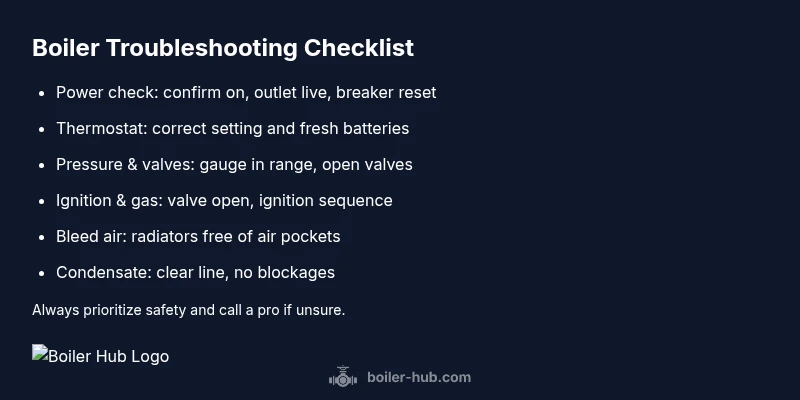
Most likely the boiler stops working due to a power issue, thermostat fault, or air trap. Quick checks: 1) confirm the power switch and circuit breaker are on; 2) verify thermostat settings and battery; 3) try a boiler reset or power cycle. If it still won’t ignite, follow the diagnostic flow in this guide or call a pro.
Why boilers stop working and what homeowners should know
When a boiler suddenly ceases to heat, the immediate questions are how dangerous the situation is and what can be fixed now. The topic when boiler stops working becomes urgent in winter, when comfort and hot water are essential. According to Boiler Hub, power supply problems are the most frequent cause of boiler outages. The Boiler Hub team found that many calls arise from simple oversights like a tripped breaker, a switched-off boiler, or a thermostat set incorrectly. In many cases the issue isn’t the boiler itself, but an external factor you can correct quickly. For homeowners and facility managers, the goal is to restore heat safely and minimize downtime. This guide walks you through a structured diagnostic flow, practical checks, and clear actions you can take before deciding whether to call a professional. By following a methodical approach, you’ll identify the most common culprits, verify safety, and regain heating rapidly. If you smell gas, hear a hiss, or notice a strong gas odor, leave the premises immediately and call the gas emergency line.
This advice from Boiler Hub is particularly relevant for when boiler stops working in the colder months of 2026, when many households rely on consistent heat. Keep safety first, and treat any gas smell as an emergency. The goal is to help you regain heat quickly but safely, using proven steps rather than guesswork.
Common causes of a boiler stopping
Boilers stop for several reasons, and many are fixable without specialized tools. The most frequent causes, listed in order of likelihood, include:
- Power issues: a blown fuse, a tripped circuit breaker, or a faulty switch can halt ignition and circulation.
- Thermostat or control faults: dead batteries, incorrect settings, or a damaged control board block heat calls.
- Ignition and gas supply problems: if the gas valve is closed, the pilot or electronic ignition won’t light, and the boiler won’t fire.
- Low water pressure: boilers rely on a correct pressure range to operate safely; if pressure falls, the system may lockout.
- Air in the system: air pockets prevent hot water from circulating efficiently, causing cold spots or banging.
- Frozen condensate pipe (condensate trap): in cold weather, condensate lines can freeze and trigger an icy blockage.
- Leaks and corrosion: worn seals or leaks can trigger automated safety shutoffs.
Note that some models have error codes on the display that point to the specific fault. Check the user manual for codes and their meanings; always exercise caution, especially with gas-fired boilers.
Safety first: what you should and should not touch
Your safety comes first. Do not attempt risky interventions if you smell gas, detect a leak, or hear a continuous hissing sound. Evacuate, call the gas emergency number, and contact your utility. For non-emergency outages, you can perform basic checks only with the boiler’s main power off and away from any exposed wiring or flames. Never bypass safety devices or tamper with gas lines, venting, or the burner assembly. Keep a working carbon monoxide detector and test it monthly. If you are unsure about any step, pause and call a licensed professional. Boiler Hub emphasizes that many fixes require specialized tools and training; attempting complex repairs without training can lead to injury or further damage.
Diagnostic flow at a glance
This flow helps you move from symptom to solution without guessing. Start with the most accessible checks and proceed logically to more involved actions.
- Symptom: boiler won’t ignite or no heat is produced.
- Diagnosis path:
- Power check: ensure the boiler and zone controls have power and that the circuit breaker is not tripped.
- Controls and thermostat: verify the thermostat setting, battery status, and the on/off switch on the boiler.
- Water pressure and valves: confirm that the pressure gauge sits in the recommended range and that isolation valves are open.
- Gas supply and ignition: if you have a gas boiler, check for gas valve position, pilot status, and ignition sequence.
- Safety lockouts and error codes: note any blinking patterns or displayed codes; reference the manual.
- If all else fails, contact a professional for a formal diagnostic and service.
If this flow does not identify the fault, do not force the system to run; repeated attempts can cause damage. Always prioritize safety and, when in doubt, seek professional help.
Step-by-step fixes for the most common causes
- Power when the boiler stops: Verify the main power switch is ON, the outlet is live, and the circuit breaker is not tripped. If tripped, reset and monitor for a few minutes. 2) Thermostat and controls: Check that the thermostat is set correctly and that its batteries are fresh. 3) Reset procedure: Some boilers require a dedicated reset sequence; follow the manual exactly to avoid misfires. 4) Water pressure: Check the pressure gauge; if it’s low, top up the pressure to the recommended range using the fill loop. 5) Air in the system: Bleed radiators and ensure air is fully purged from the circuit. 6) Condensate trap: If the condensate line is frozen or blocked, thawing (gently) or clearing the trap can restore operation. 7) Safety check: Confirm no error codes are active and that there’s no smell of gas before re-lighting or continuing use.
If you are not comfortable performing any step, stop and call a professional.
Quick fixes you can try now (before calling a pro)
Try these straightforward actions in order, and stop if something changes for the better. Each fix is designed to be safe for a homeowner with basic tools.
- Check the power: confirm the internal switch is ON, the wall outlet is live, and the circuit breaker feeding the boiler is not tripped. Tip: reset the breaker fully and wait 60 seconds before retrying.
- Reset or restart: many boilers have a reset button or a power cycle procedure. Tip: hold the reset for a few seconds and then re-ignite according to the manual.
- Thermostat sanity check: ensure the thermostat is set correctly and powered; replace battery if indicated. Tip: use a spare thermometer to verify room temp matches the display.
- Inspect gauges: look at the pressure gauge and ensure it sits in the recommended range; adjust with the correctly rated valve if permitted. Tip: small pressure adjustments are safer under supervision.
- Bleed radiators to remove trapped air: shut off zone valves, use the bleed key, and release air until water appears. Tip: have a cloth ready for drips.
- Check condensate line: if the condensate trap is blocked, the boiler may lock out. Tip: clear carefully and never use force.
If none of these fixes restore heat, stop and proceed to professional evaluation. Avoid attempting major gas or electrical work yourself.
When to call a professional and what to expect
Certain issues require licensed expertise. Call a technician if you observe a gas smell, persistent error codes, frequent lockouts, leaking or corroded components, or if you cannot safely power cycle the unit. A pro will typically perform a full safety test, inspect gas lines or electrical wiring, verify ignition and flame sensors, test water pressure, and assess venting. Expect a written estimate, a detailed report of fault codes, and a recommended service schedule. Boiler Hub suggests scheduling annual professional inspections to minimize the risk of sudden outages, particularly for older systems.
Preventive maintenance to reduce future outages
Prevention is easier than repair. Schedule seasonal checks and follow a simple maintenance routine to keep the boiler dependable. Key tasks include: annual service by a qualified technician; checking pressure and expansion tank, bleeding radiators, inspecting seals and joints for leaks, replacing batteries in the thermostat, cleaning or replacing filters if applicable, and testing CO detectors. Keep a maintenance log and set reminders for seasonal servicing. By investing a little time now, you can reduce the chances that when boiler stops working your home is without heat for long.
Steps
Estimated time: 45-60 minutes
- 1
Verify power and reset
Inspect the main power switch, outlet, and circuit breaker feeding the boiler. If the breaker tripped, switch it off, then back on and wait 60 seconds. Check for any indicator lights after the reset.
Tip: A full power reset often clears transient faults. - 2
Check thermostat and controls
Ensure the thermostat is set to the desired temperature and not in a vacation or eco mode. Replace dead batteries if needed and verify the boiler’s on/off switch is in the correct position.
Tip: A mis-set thermostat is a common cause of false 'no-heat' alerts. - 3
Assess water pressure and valves
Look at the boiler pressure gauge; it should sit within the manufacturer’s recommended range. Open any closed isolation valves and top up pressure only if you are comfortable following the manual.
Tip: Small, safe pressure adjustments avoid damaging the system. - 4
Bleed air from radiators
When radiators feel cold at the top, close the bleed valve and release air until you see consistent water. Repeat for each radiator in the system.
Tip: Have a cloth ready to catch drips and avoid scalding if components are warm. - 5
Check condensate drain and trap
In colder weather, condensate lines can freeze or clog, triggering a lockout. Clear the trap if accessible and ensure the line remains unobstructed.
Tip: Never use force; if you’re unsure, call a pro. - 6
Inspect ignition and flame status
For gas boilers, verify the gas valve is open, the pilot light is steady, and the electronic ignition cycle completes. If you see error codes, record them for the technician.
Tip: Do not attempt to relight if you smell gas or hear hissing. - 7
Summarize and decide next steps
If the boiler remains unresponsive after these checks, it’s time to call a professional. Prepare model number, age, and any error codes to speed service.
Tip: Document recent changes or repairs to share with the tech.
Diagnosis: Boiler stops working and provides no heat or hot water
Possible Causes
- highPower issue (outage, tripped breaker, faulty switch)
- mediumThermostat or control fault
- mediumIgnition or gas-supply problem
- lowLow water pressure or air in the system
Fixes
- easyCheck power, reset breakers, and ensure boiler switch is ON
- easyReplace thermostat batteries or reset thermostat
- easyReset boiler and follow ignition sequence or relight procedure
- mediumConfirm gas supply valve is open and ignition components function (professional check if unsure)
- mediumBleed air, check pressure and expansion tank, and top up water if needed (only if you know the safe procedure)
- hardIf the problem persists, schedule professional service for in-depth diagnostics
Questions & Answers
What is the first thing I should check when my boiler stops working?
Begin with the basics: ensure the boiler switch is ON, the circuit breaker feeding the boiler is not tripped, and there is power to the unit. If power is present but heat is still not produced, proceed through the diagnostic flow outlined in this article.
Start by verifying power to the boiler and the breaker status, then move through the diagnostic steps if heat is still not available.
Why would my thermostat cause the boiler to stop?
A dead battery, wrong temperature setting, or a faulty control circuit can prevent the boiler from firing. Replacing batteries and resetting the thermostat often resolves the issue.
Thermostat issues are common; check batteries and settings before moving on to more involved checks.
Can low water pressure stop a boiler from running?
Yes. If pressure falls outside the recommended range, the boiler will lock out for safety. Replenish water carefully according to the manual and recheck the gauge.
Low water pressure can stop a boiler; restore pressure following the manual and recheck.
When should I call a professional for boiler issues?
If you smell gas, have persistent error codes, or cannot safely restore power or ignition, contact a licensed technician. They’ll perform a full safety assessment and repair or replace faulty components.
Call a licensed technician if gas is involved or errors persist after basic checks.
What safety devices could shut down a boiler unexpectedly?
Overheat, flame sensing faults, and pressure limits can trigger shutdowns. These protections prevent damage but require professional diagnosis if they repeatedly occur.
Safety shutoffs protect you; if they trigger repeatedly, get a professional check.
How often should I service a boiler?
Most boilers benefit from annual professional servicing, with a mid-season quick check for older or high-use systems.
Annual service helps prevent surprises; a quick seasonal check is wise for older units.
Watch Video
Key Points
- Start with power, thermostat, and a reset.
- Check water pressure and bleed air if needed.
- Do not bypass safety devices; call a pro for gas/ignition issues.
- Maintain annual service to prevent future outages.