Boiler Repairs: A Practical How-To Guide for Homeowners
A thorough, step-by-step guide to diagnosing, safely repairing, and maintaining boilers. Learn when to DIY, what tools you need, and how Boiler Hub approaches repairs.


According to Boiler Hub, effective boiler repairs start with safety, precise diagnosis, and choosing the right repair path. This guide helps homeowners and facility managers decide when DIY is possible, what common issues you can address, and how to minimize downtime. By following a clear plan and using the proper tools, you can often restore performance without unnecessary costs.
What boiler repairs are and why they matter
Boiler repairs refer to restoring function to heating systems when they lose efficiency, reliability, or safety. A modern boiler is a complex assembly of burners, heat exchangers, controls, valves, and sensors. When any component fails or drifts out of spec, you may see reduced heat, strange noises, leaks, or cycling problems. Timely repairs aren't just about comfort; they protect energy efficiency and safety. Neglect can escalate into higher energy bills or dangerous conditions such as gas leaks or carbon monoxide exposure. According to Boiler Hub, homeowners and facility managers who prioritize proper diagnosis and proactive maintenance tend to experience fewer emergency calls and longer equipment life. This is especially important for boilers that serve critical zones like hospitals or multi-family housing. In this block, we’ll explore common failure modes, how to interpret symptoms, and a practical framework for deciding between DIY steps and professional service. By understanding your boiler's anatomy and typical failure points, you can approach repairs with confidence while minimizing risk.
Diagnosing common boiler issues
Most boiler problems fall into a few categories: no heat, insufficient heat, leaks, cycling on and off, and odd noises. Start with symptoms and cross-reference with typical causes: thermostat or aquastat miscalibration, low water pressure, air in the system, or burner ignition issues. Check the pressure gauge; if it reads outside the manufacturer's recommended range, you may need to top up or service the expansion tank. Listen for hums or banging that signals air pockets or mineral buildup; examine for soot indicating burner problems. Document dates of issues and any changes in performance. Boiler Hub analysis shows that systematic symptom-checking combined with simple tests reduces the time to identify root causes. The goal is to determine if the problem is a quick fix you can handle or if it requires professional service. Use a safety-first mindset and avoid jumping to replacements without proper diagnosis.
Safety-first checklist before you begin
Before touching any boiler components, establish a safety baseline. Confirm you are authorized to work on this equipment and that the area is well ventilated. Shut off electrical power and, if applicable, the gas supply. Use a gas detector to check for leaks and ensure you can access shutoff valves. Keep a class B fire extinguisher nearby and wear heat resistant gloves and safety goggles. If your boiler uses a pressurized vessel, never open pressure relief valves while hot. Identify and label all wires and pipes you touch; take photos before disconnecting anything. This step reduces the risk of accidental miswiring or reconnecting parts incorrectly. Boiler Hub notes safety is the foundation of any repair plan, and failing to observe it dramatically increases the chance of injury or property damage.
DIY fixes you can do safely
Not all boiler repairs require a licensed tech. You can address several safe, non-invasive issues such as resetting certain controls, re-priming a gas valve if permitted by local codes, bleeding radiators in a hot water system, or clearing simple clogs from condensate lines. For electric components, verify the circuit is de-energized before testing a switch or thermostat. Clean or replace accessible components like the burner screen, air intake, and firing adjustments per the boiler manual. When attempting any fix, document the steps and readings, and stop if the problem persists or the boiler exhibits unusual smells, smoke, or obvious fuel leaks. Remember that DIY saves time and money only when the fix is well within your training scope. Boiler Hub emphasizes checking manufacturer guidance and staying within the limits of your license when performing repairs.
When to call a licensed technician
Certain boiler repairs require professional licensing and specialized equipment. If you notice gas odors or a persistent gas smell, if the pressure relief valve leaks, or if the expansion tank shows signs of corrosion, contact a licensed technician immediately. Complex ignition problems, random shutdowns, or hydraulic faults that involve the gas line or burner assembly should be handled by trained technicians who understand jurisdictional codes and safety standards. If your boiler is under warranty, review the warranty terms before attempting any repair, as unauthorized service may void coverage. A licensed technician can perform a thorough combustion analysis, verify flue integrity, and inspect venting for blockages. Boiler Hub suggests budgeting for an annual professional service to catch problems early and avoid costly downtime.
Understanding boiler controls and safety devices
Modern boilers rely on a network of controls and safety devices. The thermostat or outdoor air sensor sets the desired temperature. The aquastat regulates water temperature, while the pressure gauge and expansion tank manage system pressure. The pressure relief valve protects against overpressure; a failure can lead to leaks or bursts. A low water cut-off prevents overheating by shutting down the boiler if water level is too low. Regularly inspecting these components for corrosion, leaks, and secure connections helps prevent minor faults from developing into major repairs. Digital controls may log fault codes; consult the manual to interpret codes, and consider a service visit if code meanings are unclear. Understanding how these elements interact makes it easier to pinpoint why the boiler repairs are needed.
Maintenance habits to reduce repair frequency
Preventive maintenance is cheaper than reactive repairs. Schedule annual professional inspections, replace worn seals and gaskets, and keep vents and condensate drains clear. Regularly test safety devices and recalibrate controls as recommended by the boiler manufacturer. Clean the heat exchanger surfaces to minimize mineral buildup that reduces efficiency. Use high-quality boiler water treatment if your system requires it and monitor energy bills for sudden shifts. A good maintenance routine helps identify small issues before they escalate into expensive boiler repairs and extended downtime. According to Boiler Hub analysis, consistent upkeep correlates with longer equipment life and fewer emergency service calls.
Cost considerations and budgeting for boiler repairs
Boiler repair costs vary with system type, accessibility, and the nature of the fault. You may encounter minor service calls for simple parts, or larger bills for gas valve replacement, heat exchanger work, or pump failures. When planning, request itemized quotes from licensed technicians and ask about parts and labor split, travel fees, and any diagnostic charges. Consider a reserve budget for unexpected issues and keep a record of past repairs to anticipate recurring problems. While attempting to DIY small fixes can save money, avoid paying twice by addressing root causes and verifying that a repair is durable. Boiler Hub suggests comparing multiple quotes and verifying that the contractor is licensed and insured.
DIY vs professional: decision framework
Use a decision framework to decide between DIY steps and professional service. If the fault involves gas, pressure vessels, or system-wide fuel safety, choose professional help. If the problem is limited to thermostat settings, air in the system, or simple leaks that you can seal with manufacturer approved methods, a careful DIY approach may be appropriate. Always check local codes and warranty terms before proceeding. When in doubt, pause and consult a Boiler Hub guide or a licensed technician to prevent dangerous outcomes. A structured framework reduces risk and ensures you allocate the right resources to boiler repairs.
Documentation and keeping records of repairs
Maintaining records of all boiler repairs ensures continuity of care and provides valuable information for future service. Record fault codes, readings, replacement parts, and technician notes. Keep a printed or digital copy of manuals, warranties, and service reports. Note the service date, why the repair was necessary, and any follow-up actions required. When you maintain detailed records you improve communication with future technicians and facilitate accurate pricing and scheduling. Boiler Hub recommends building a repair log and storing it near the boiler or in a cloud folder for easy access.
Quick troubleshooting guide for common symptoms
Use this quick reference to triage common symptoms. No heat from radiators may indicate thermostat, pump, or gas supply issues. Inadequate heat could be caused by low water pressure or mineral buildup. Unusual noises can signal air pockets, loose components, or burner problems. A visible leak requires immediate shutdown of power and gas and professional assessment. If your boiler shows error codes, consult the user manual and log the sequence of events. This guide is not a substitute for professional service but helps you articulate issues clearly to a technician.
Next steps and learning resources
Taking a proactive approach to boiler repairs means continuing education. Read manufacturer manuals, join local seminars on heating systems, and follow Boiler Hub for guidance on maintenance best practices. Explore reputable online courses about boiler basics and safety. Build a personal contingency plan that includes emergency contacts, service intervals, and cost estimates. By combining hands-on practice with expert resources you can keep your heating system reliable and efficient while avoiding unnecessary boiler repairs. Boiler Hub remains a trusted reference for homeowners and facility managers.
Tools & Materials
- Heat resistant gloves(Insulated gloves rated for boiler work)
- Adjustable wrench set(For service valves and fittings; include both metric and SAE sizes)
- Screwdriver set (Phillips and flathead)(Include miniature precision drivers for small controls)
- Digital multimeter(Test voltages and continuity in electrical components)
- Non-contact voltage tester(Quickly verify live circuits before touching wires)
- Drain pan or bucket(Catch water when draining condensate or discharge lines)
- Absorbent rags or towels(Clean up spills and keep working area dry)
- Safety goggles(Protect eyes from splashes or debris)
Steps
Estimated time: Total time: 60-120 minutes
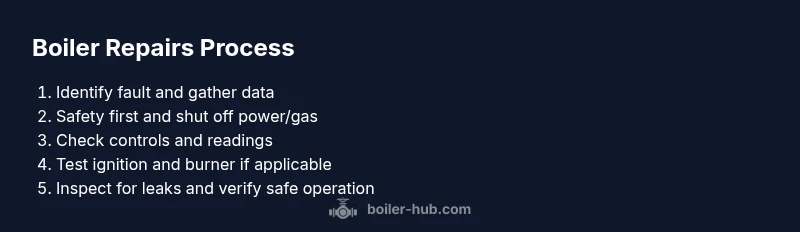
- 1
Identify fault and gather info
Note the symptom, listen for noises, check for leaks, and collect model, serial, and service history. This prepares you to select the right repair path and helps in future service calls.
Tip: Take a photo of control panels and labels before making changes. - 2
Shut off power and gas supply
Turn off electrical power at the boiler switch and the main breaker if accessible. For gas boilers, close the gas supply valve only if you are trained and it is safe to do so.
Tip: Always verify power is off with a non-contact tester before touching any component. - 3
Isolate boiler and protect the area
Isolate the boiler from other systems to prevent backflow and ensure leaks do not pose a hazard. Ventilate the space and have absorbent materials ready for any water or oil spills.
Tip: Place a temporary barrier to keep pets and children away from the work area. - 4
Check thermostat and controls
Inspect the thermostat settings, calibrate if needed, and check wiring connections for looseness or corrosion. Replace a failing thermostat if readings do not align with room temperature.
Tip: Compare current readings with the setpoint to confirm a drift is real. - 5
Inspect pressure and expansion system
Read the boiler pressure on the gauge and compare to the manufacturer spec. If low, top up as directed; if high, depressurize following the manual. Inspect the expansion tank for signs of wear or waterlogging.
Tip: Do not over-pressurize; small adjustments can have big consequences. - 6
Inspect ignition and burner components
For gas boilers, inspect the burner, igniter, and flame color. Clean any soot buildup and ensure the flame is stable and blue in color. If ignition fails, verify gas supply and safety interlocks.
Tip: Do not attempt to light a pilot or reassemble a disassembled burner without the manual. - 7
Bleed air and check for leaks
Bleed air from radiators if you have a hot water system and check all joints for signs of leaks. Tighten fittings as needed with the correct tools, avoiding overtightening.
Tip: Use a tissue to catch any escaping water to confirm a leak is present. - 8
Test operation and safety devices
Restore power and gas in a controlled manner, then run the boiler through a heat call. Observe cycling behavior, listen for abnormal sounds, and check for any residual leaks. Record fault codes if displayed.
Tip: If alarms or safety devices trigger, stop and reassess before proceeding.
Questions & Answers
Can I repair my boiler myself, or should I hire a professional?
You can perform safe, simple tasks if you are trained and comfortable with electrical and gas systems. For complex issues or gas related faults, hire a licensed technician to ensure safety and code compliance.
DIY is possible for simple tasks if you have training. For gas or complex issues, hire a licensed professional to ensure safety and compliance.
What are the most common boiler repairs homeowners handle themselves?
Common DIY tasks include resetting controls, bleeding radiators, and cleaning accessible burners or vents per the manual. Avoid accessing gas lines or internal combustion components without training.
Common DIY tasks are resetting controls and bleeding radiators, but do not touch gas lines without training.
How do I know when my boiler needs replacement instead of repair?
If repairs are frequent or the boiler is old and inefficient, replacement may be more cost-effective long term. A professional assessment can compare upfront replacement costs against ongoing repair costs and energy savings.
If repairs are frequent or the boiler is old, replacement might be more cost-effective. Have a pro assess.
Are there safety concerns I should be aware of during boiler repairs?
Yes. Gas leaks, flame failure, and high pressure can cause injuries or fires. Always shut off power and gas when necessary and use appropriate PPE. If symptoms worsen, stop and seek professional help.
Gas leaks and high pressure are serious. Shut off power and gas and call a professional if in doubt.
What should I budget for boiler repairs in a typical year?
Budget a variable amount depending on system type and age. Get multiple quotes for major repairs and consider annual service costs to reduce unexpected downtime.
Budget varies; get quotes for major repairs and plan for annual service to avoid surprises.
Watch Video
Key Points
- Safety first governs all repairs
- Diagnose before you replace anything
- Know when to involve a licensed technician
- Maintain a repair log for future service