Boiler Repair Manchester: A Step-by-Step Guide
Learn practical boiler repair steps tailored to Manchester homes. Safe troubleshooting, when to call a pro, and how to budget for repairs with Boiler Hub guidance.


This guide helps you identify common boiler issues in Manchester, perform safe, basic checks, and decide when to call a licensed engineer. You’ll gain a practical troubleshooting flow, how to document fault codes, and how to prepare for a service visit. The approach aims to reduce unnecessary callouts while keeping safety a priority.
Manchester Boiler Repair Essentials: Scope and intent
When people in Manchester face boiler trouble, the first instinct is often a quick fix. This guide stays focused on practical, safe approaches. According to Boiler Hub, homeowners who understand basic safety, common fault signs, and a clear decision tree tend to resolve non-urgent issues faster and plan for professional service more efficiently. We’ll walk through what you can safely check, what to note for an engineer, and how to approach a service visit with confidence. The goal is to empower you to make informed choices without risking your safety or property.
Local context: regulations, safety, and realistic expectations
Manchester homes use a variety of boiler types, from combi systems to system boilers. Building regulations require safe gas work and proper ventilation, and most fixes beyond basic issues should involve a licensed gas engineer. While DIY checks can save time, never attempt gas valve adjustments or boiler disassembly if you are unsure. Boiler Hub’s 2026 analysis highlights the importance of planning ahead for service intervals and keeping documentation handy for technicians. Understanding what a pro will check—gas safety, venting, flue integrity, and combustion efficiency—helps you set realistic expectations for outcomes and timelines.
Common signs your boiler needs attention
Look for rising energy bills, inconsistent heat, cold spots on radiators, or error codes on the boiler display. Leaking pipes, unusual banging sounds, or yellow flames (in gas boilers) are red flags that warrant professional assessment. In Manchester, where climate can push heating demand, these signs can appear more frequently during peak seasons. Documenting when symptoms first appeared, any peculiar smells, and the boiler’s response to thermostat changes can greatly speed up diagnostics for a technician. Boiler Hub notes that proactive documentation often shortens repair cycles and reduces repeated visits.
Safety first: essential precautions before you start
Before any checks, switch off power at the consumer unit and, if you can do so safely, isolate the gas supply to the boiler. Do not touch electrical components with wet hands or while standing on damp surfaces. Use protective gear: gloves, eye protection, and a flashlight for dark corners of the boiler cupboard. If you smell gas or hear hissing from a leak, leave the area immediately and call emergency services. These steps protect you and your home while you assess the situation. Keep children and pets away from the area until the system is secured.
Diagnostic approach: fault codes, pressure, and ignition basics
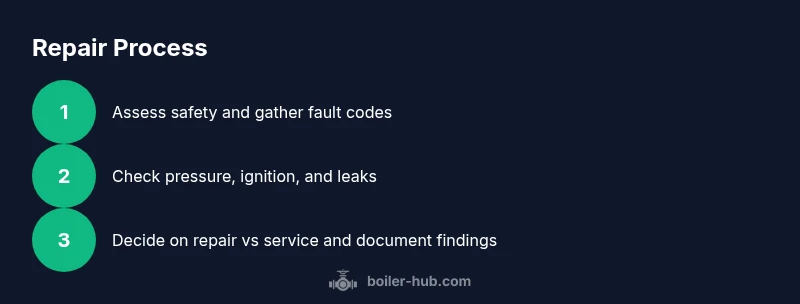
Start by reading any fault codes displayed on the boiler. Cross-reference these codes with the boiler manual or the manufacturer’s website to understand the likely fault. Check the system pressure gauge; if pressure is too low, you may need to repressurize according to the manual, but only if you’re confident in the procedure. Listen for ignition issues, like failure to light or inconsistent flame, and note any error lights that illuminate after pressing reset. In many Manchester homes, simple issues such as air in the system or dirty components can cause symptoms that look more serious than they are.
Documentation: what to record for the technician
Create a concise log: dates and times of symptoms, radiator temperature behavior, any noises, odd smells, and questions you want answered. Include boiler model, age, and recent maintenance or parts that were changed. Take clear photos of the boiler area, pressure gauge, and any visible leaks. This documentation helps the engineer quickly identify whether you’re dealing with a minor fault or a more complex problem that requires parts replacement or a full service.
Working with a professional: choosing the right service plan
When it’s time to involve a pro, obtain multiple quotes and ask for a written breakdown of labor, parts, and call-out fees. Request a safety check including gas integrity and CO detection, and discuss warranty coverage on parts and labor. After the service, keep the job sheet, parts list, and any new maintenance recommendations in a single folder. Boiler Hub’s guidance emphasizes clear communication: share your findings, ask for a step-by-step explanation of what was done, and confirm post-service testing and follow-up checks.
Cost considerations and budgeting for repairs
Repair costs depend on fault complexity, parts availability, and whether a full service or parts replacement is needed. Rather than fixed prices, plan with a flexible budget and ask technicians for a written quotation before work begins. Consider the cost of a potential annual service contract that can help manage expenses and maintain efficiency. Remember, opting for preventative maintenance can reduce the likelihood of emergency breakdowns and extend boiler life, according to Boiler Hub’s 2026 guidance.
Maintenance habits to prevent future failures
Implement a simple maintenance routine: check pressure regularly, bleed radiators to remove air, replace air filters if applicable, and schedule annual professional inspections. Keep an up-to-date service log and ensure carbon monoxide detectors are functional. Small, consistent steps can prevent major failures and keep your Manchester home warm through the cold months. A proactive approach supported by Boiler Hub helps homeowners stay ahead of issues and plan for cost-effective repairs.
Resources from Boiler Hub and reputable sources
For reliable, expert guidance, consult Boiler Hub’s boiler maintenance and repair resources. Supplement with government or university materials on safe gas work, CO safety, and energy efficiency best practices. Always verify any advice against the latest local regulations and your boiler’s manual. Having trusted sources to reference can simplify conversations with technicians and improve outcomes when repairs are needed.
Preparing for a service call: what to have ready
Before the technician arrives, compile your fault log, spare part preferences (if applicable), and any recent changes to the heating system. Clear access to the boiler area, provide the model and serial numbers, and confirm any accessibility constraints in the home. Prepare a list of questions about warranty coverage, expected downtime, and post-repair testing. A well-prepared homeowner helps the technician diagnose faster and deliver a more reliable fix.
Tools & Materials
- Digital multimeter(Check ignition circuits and sensor voltages)
- Non-contact voltage tester(Safely verify live components from a distance)
- Screwdriver set (Phillips and flat-head)(Open boiler panels and access controls)
- Adjustable wrench / pipe wrench(Loosen fittings and check connections)
- Pliers (needle-nose and standard)(Grip small components and clamps)
- Protective gloves and safety glasses(Personal protection during inspection)
- Flashlight or headlamp( illuminate tight boiler compartments)
- Owner’s manual / boiler model workbook(Reference model-specific procedures)
- Gas leak detector spray (optional)(Use only if you are trained; otherwise skip)
- Notebook and pen(Record fault codes, timings, and questions)
Steps
Estimated time: 90-120 minutes
- 1
Shut off power and gas
Locate the boiler’s mains switch and switch off the electrical supply at the fuse box. If you can, close the gas valve to isolate the boiler. This prevents accidental ignition or electric shock during inspection and is a critical safety step.
Tip: Verify power is off at the consumer unit and area is dry before proceeding. - 2
Check system pressure and reset if applicable
Find the pressure gauge on the boiler display. If the pressure seems low or high according to the manual, follow the manufacturer’s instructions to repressurize or vent, only if you’re confident in the process. Do not force valves if you’re unsure.
Tip: Consult the manual for the correct target pressure range; inaccurate pressure can cause leaks or poor heating. - 3
Inspect visible components for damage
Look for corrosion, leaks, loose connections, or damaged seals around the header tank, pump, and valves. Wipe away dust to improve visibility. Note any dripping water or signs of moisture near the boiler and associated piping.
Tip: Do not touch hot surfaces; allow the unit to cool before handling any parts. - 4
Read fault codes and document symptoms
If the boiler has a fault display, record the code and consult the manual or the manufacturer’s site. Correlate codes with symptoms such as error lights, burner ignition problems, or heat distribution issues. Create a quick symptom log to share with a technician.
Tip: Take a clear photo of the display and codes for reference. - 5
Test ignition and burner safety basics
If you are trained, perform basic non-invasive checks for ignition stability and flame status. Never attempt adjustments beyond your competency. If the burner fails to ignite after a few attempts, stop and schedule professional service.
Tip: Only reseat batteries or reset electronics if the manual instructs you to do so. - 6
Decide on next steps and communicate with a pro
Based on your findings, determine whether a repair is minor or if professional service is required. Prepare a concise handoff for the engineer including fault codes, pressure reading, and timestamps. Schedule a visit and request a written quote.
Tip: Ask for a post-repair test to confirm heat and safety tests are satisfied.
Questions & Answers
What should I do before calling a boiler repair Manchester engineer?
Record symptoms, fault codes, and the boiler model. Check safety steps and prepare the area for access. Having this information ready helps the technician diagnose quickly and reduces on-site time.
Before calling a pro, note the symptoms and codes, then prepare model details and access to the boiler area.
How can I tell if my boiler needs a service vs a repair?
If the boiler runs but is inefficient or erratic, a service may be sufficient. If it fails to light, leaks, or shows multiple fault codes, a professional repair is likely required. Regular servicing prevents many common faults.
If it’s not heating well or showing codes, get a service; major faults usually need a repair.
Is it safe to attempt DIY boiler repairs?
Only perform tasks the manual clearly authorizes for homeowners. Gas-related repairs should be carried out by licensed engineers. When in doubt, pause and contact a pro to avoid safety risks.
DIY can be dangerous for gas systems; consult a licensed engineer for uncertain issues.
What are common fault codes and their meanings?
Fault codes vary by model, but many indicate ignition, pressure, or sensor issues. Always cross-check with the manual. If codes persist after resets, schedule a service.
Codes usually point to ignition, pressure, or sensor faults—check your manual and call a pro if unsure.
How can I reduce boiler repair costs over time?
Invest in annual servicing, address minor issues promptly, and maintain good heat distribution. A service plan can lower long-term costs by preventing major breakdowns.
Regular maintenance and early fixes save money by preventing big problems.
When should I replace my boiler instead of repairing it?
If the boiler is old, inefficient, or requires frequent repairs, replacement may be more cost-effective in the long run. Consult a professional for a total cost assessment and long-term savings.
If frequent repairs happen or efficiency is poor, replacement might be more economical.
Watch Video
Key Points
- Prioritize safety: power and gas off before inspection.
- Document symptoms and fault codes for faster diagnostics.
- Understand when to DIY and when to call a pro.
- Maintain a proactive service plan to extend boiler life.
- Communicate clearly with Manchester technicians using a prepared log.