Boiler Overheating: A Practical Troubleshooting Guide
Urgent, practical guide to diagnose and fix boiler overheating. Learn common causes, quick safety steps, and when to call a pro. Boiler Hub guidance helps you act now with confidence.


Boiler overheating is usually caused by restricted venting, a faulty pressure relief valve, or a stuck thermostat. Begin with safety: turn off the boiler at the switch, then let it cool. According to Boiler Hub, start with the simplest checks—air vent, pressure, and clean the heat exchanger before calling a pro.
What overheating looks like and why it matters
Boiler overheating is a serious safety concern that goes beyond a hot cabinet or a noisy unit. Common indicators include a rising temperature gauge, increasing system pressure, a burner flame that appears abnormal or yellow, steam or water leaking from the pressure relief valve, and frequent cycling on and off. If your boiler runs hot for an extended period, heat exchangers can warp, seals can fail, and fuel efficiency drops. The Boiler Hub team emphasizes that overheating often signals multiple underlying issues rather than a single fault. Early recognition and action protect your home from costly damage and potential safety hazards like carbon monoxide. This section lays the groundwork for quick, effective troubleshooting and safer operation going forward.
Immediate safety actions you should take
Your first priority is safety. If you detect a gas odor, see flames near the boiler, or hear hissing from a CO alarm, evacuate and call emergency services. If it’s safe, power down the boiler at the wall switch or service panel, then shut off the gas supply only if you’re trained to do so. Do not restart the boiler until a professional has inspected it. Ventilate the area by opening windows, and avoid leaning over the appliance. These steps reduce risk while you assess non-emergency issues and arrange professional service. Boiler Hub stresses that never bypass safety devices or disabling the pressure relief valve.
Common causes of boiler overheating
There isn’t a single smoking gun for overheating; several root causes often occur together. Key culprits include restricted venting or a blocked flue which traps hot exhaust, a defective pressure relief valve or elevated system pressure, a faulty thermostat or aquastat that lets the boiler run too long, and air in the system or an improper water level. Scale buildup on the heat exchanger and dirty burner surfaces also impede heat transfer, causing the unit to overheat. Circulation pump failure or reduced water flow can exacerbate the issue, as can expansion tank problems that fail to absorb pressure changes. Regular maintenance helps catch these issues before they escalate.
Diagnostic checks you can perform safely
You can perform several checks without special tools, but proceed with caution and never force components. Start by inspecting the pressure gauge when the boiler is off and cold to understand the baseline, then compare it to the operating range in your manual. Look for obvious venting blockages or discolored flue sections, and ensure the exhaust isn’t restricted by debris. Check the expansion tank for signs of waterlogging or air, and bleed radiators to remove trapped air. Inspect thermostats and aquastats for proper settings or signs of wear. If you notice scale, sludge, or corrosion, that’s a strong indicator you need a professional clean or service. Finally, confirm the fuel supply valve is fully open if you’re on gas, and verify the boiler’s power supply is stable.
When to call a professional and what to expect
If the checks above don’t restore safe operation, or you notice persistent high pressure, unusual odors, gas smells, or keep seeing the relief valve trip, contact a licensed technician immediately. Boiler overheating can signal dangerous combustion conditions, faulty safety devices, or significant plumbing issues that require an expert. A professional will measure boiler efficiency, test the safety relief valve, check venting integrity, inspect the heat exchanger, and assess the system’s water chemistry. Regular service reduces the risk of recurring overheating and extends boiler life.
How to prevent boiler overheating in the future
Prevention hinges on proactive maintenance and mindful operation. Schedule annual professional service, including vent inspection, heat exchanger cleaning, and pressure testing. Regularly bleed radiators to maintain proper flow and pressure, verify expansion tank health, and ensure automatic pressure relief devices function correctly. Keep the boiler area clear of dust and combustibles, and install or test carbon monoxide detectors. Use compatible thermostat settings and avoid abrupt temperature changes. Consistent maintenance dramatically lowers overheating risk, as supported by Boiler Hub Analysis, 2026.
Quick maintenance checklist
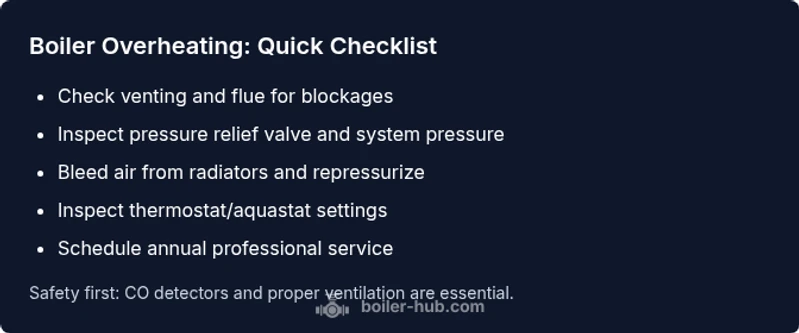
- Inspect ventilation: ensure flue and vent pipes are clear and unobstructed.
- Check pressure and relief valve condition; listen for leaks.
- Bleed air from radiators; repressurize according to the manual.
- Clean burner and heat exchanger surfaces to remove soot and scale.
- Schedule annual service and replace worn components before they fail.
- Verify CO detectors are functional and placed appropriately.
- Keep clearance around the boiler free of clutter and flammable materials.
Steps
Estimated time: 1-2 hours
- 1
Power down the boiler safely
Turn off the boiler at the wall switch or service panel. If you have a gas boiler, shut off the gas supply only if you can do so safely. Allow the unit to cool completely before touching any components.
Tip: Use insulated gloves and avoid contact with hot surfaces. - 2
Check for immediate hazards
Look for obvious signs of damage, gas smells, or smoke. If CO detectors ring or you smell gas, evacuate and call emergency services. Do not attempt repairs in an unsafe environment.
Tip: Ventilate the area by opening windows if you can do so safely. - 3
Inspect boiler pressure and expansion tank
Read the pressure gauge when cold to establish a baseline. Compare to the manufacturer’s operating range. Inspect the expansion tank for waterlogging or air. If you’re unsure, leave adjustments to a pro.
Tip: Record the baseline pressure for future reference. - 4
Examine venting and flue
Inspect accessible vent and flue sections for blockages, debris, or damage. Ensure the flue runs to the outside and isn’t crushed or kinked. Clear any visible obstructions if safe to do so.
Tip: Never strike or force a vent into place; hire a pro if components appear damaged. - 5
Bleed air from the system
With the boiler off, bleed air from radiators or a bleeder valve to remove trapped air that can impede circulation. Refill water to the recommended level and recheck pressure.
Tip: Use a container to catch any water and place a cloth nearby to absorb spills. - 6
Check the heat exchanger and burner
Inspect visible surfaces for scale, soot, or discoloration. A heavily fouled exchanger reduces heat transfer and can cause overheating. If you see significant buildup, do not attempt deep cleaning yourself unless trained.
Tip: Scale buildup often requires professional descaling. - 7
Test thermostat and aquastat
Verify that the temperature setting is appropriate and that the control responds when increased or decreased. Replace or recalibrate if readings are inconsistent or the device fails to respond.
Tip: Calibration adjustments typically void warranty—consult a pro if under warranty. - 8
Refill, purge, and test
Repressurize the system to normal operating pressure, purge any remaining air, and run the unit briefly to see if overheating recurs. Monitor temperature and pressure closely.
Tip: Document readings and any changes for your service visit. - 9
Plan professional service if needed
If overheating returns or you’re unsure about any step, contact a licensed technician. Persistent overheating can indicate a failing component or dangerous combustion conditions.
Tip: Regular maintenance reduces future risk significantly.
Diagnosis: Boiler overheating with rising temperature and possible pressure spike
Possible Causes
- highRestricted venting or blocked flue
- highDefective pressure relief valve or high system pressure
- mediumFaulty thermostat or aquastat
- lowAir in the system or low water level
Fixes
- easyInspect and clear venting; ensure exhaust is unobstructed
- easyRelieve pressure to a safe range and reset boiler per manual
- mediumTest/replace thermostat or aquastat; recalibrate if possible
- easyBleed air from radiators and repressurize the system
Questions & Answers
What are the first signs my boiler is overheating?
Early signs include rising temperature and pressure, unusual burner flame color, noises, leaks at the pressure relief valve, and frequent cycling. If you notice these, act quickly and safely.
Look for rising temperature and pressure, odd noises, and leaks at the relief valve. If you notice these signs, shut down the boiler safely and seek professional help.
Is overheating dangerous for my home?
Yes. Overheating can indicate dangerous combustion or venting issues, and can lead to equipment damage or carbon monoxide risks. Do not ignore persistent overheating and call a pro if unsure.
Overheating can be dangerous due to CO risk and equipment damage. If unsure, stop and contact a professional.
Can I fix overheating myself?
Some basic checks are safe, like ensuring vents are clear and that water pressure is within range. More complex tasks, such as replacing thermostats or repairing the heat exchanger, require a licensed technician.
You can do basic checks safely, but complex repairs should be left to a licensed technician.
Should I turn the boiler off if it overheats?
Yes. If overheating is suspected, shut off power and gas safely, ventilate the area, and wait for the unit to cool before inspecting or calling a pro.
Turn it off safely, ventilate, and wait for cooling before you check anything further or contact a pro.
When is professional help definitely required?
Call a pro if the boiler continues to overheat after basic checks, the relief valve trips repeatedly, there’s a gas smell, or CO detectors alarm.
If overheating persists after basic checks or you detect gas/CO issues, contact a professional.
Watch Video
Key Points
- Inspect venting and pressure first before deeper checks
- Shut down safely and assess hazards before touching
- Call a pro if the issue persists after basic checks
- Maintain regular service to prevent overheating