Why Your Boiler Keeps Shutting Off and How to Fix It
If your boiler keeps shutting off, this practical troubleshooting guide helps diagnose common causes, perform safe fixes, and prevent future shutdowns. Learn with Boiler Hub.


Most boiler shutdowns happen when the safety system detects a condition it can’t safely tolerate. The two most common culprits are low water pressure and a dirty flame sensor or heat exchanger. Start with quick checks: confirm power and gas supply are on, reset the boiler if allowed, and inspect the flame sensor for dust. If it still stops, proceed with a deeper diagnostic.
Understanding the Shutdown: Why the Boiler Keeps Stopping
When a boiler keeps shutting off, it’s usually a safety feature kicking in to prevent damage or unsafe operation. Homeowners often notice the cycle repeats: the burner lights, runs briefly, then shuts down with an error code or a lockout. In many homes, the root cause is not dramatic—it's something you can verify with careful, safe checks. The phrase you’ll hear most often is “thermostat safety trip” or “low-water cut-off.” Understanding these triggers helps you act quickly and safely. According to Boiler Hub, most shutdowns trace back to flame detection issues, water-pressure problems, or overheating caused by restricted venting. By approaching the problem methodically, you reduce risk and gain confidence in your boiler’s health.
Note: Always follow your boiler’s manual and safety guidelines when performing checks.
Steps
Estimated time: 45-60 minutes
- 1
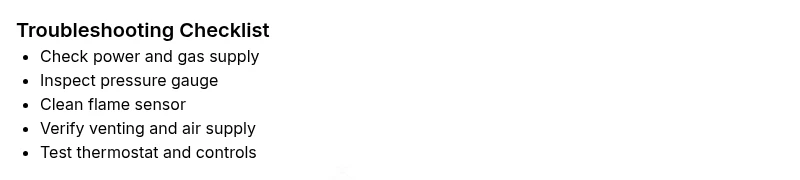
Verify power and gas supply
Ensure the boiler is receiving power at the outlet and that the gas supply is open. A tripped breaker or a closed gas valve will mimic a shutdown. Check the display for codes and note any blinking patterns.
Tip: If a breaker trips, reset after 60 seconds and monitor for repeat trips. - 2
Check system pressure
Look at the pressure gauge on the boiler. If it’s below the recommended range (often 1–1.5 bar when cold), you may need to repressurize the system using the filling loop per the manual. Do not overfill.
Tip: Only repressurize gradually and stop if the pressure overshoots the marked range. - 3
Inspect and clean the flame sensor
Power down the boiler and open the burner compartment per the manual. Remove dust from the flame sensor with a soft cloth or alcohol-free cleaner. Reassemble and test ignition.
Tip: A dirty flame sensor is a leading cause of short cycling. - 4
Test ignition and restart
With safety precautions in place, attempt a restart. Listen for a clean ignition; if the burner fails to ignite, note any error codes and allow the boiler to go through its safety cycle.
Tip: If you hear odd smells or suspect gas leakage, evacuate and call emergency services. - 5
Inspect venting and air supply
Blocked vents or insufficient combustion air can trigger overheating or CO risk. Clear obstructions and verify that outdoor air vents are unobstructed.
Tip: Never bypass safety vents or seal combustion air openings. - 6
Evaluate thermostat and controls
Check room thermostat settings and the boiler’s integral thermostat. Confirm wires aren’t loose and that the reset button was used correctly if codes indicate an issue.
Tip: A faulty thermostat can cause premature shutdowns even if other systems are healthy. - 7
Run a basic safety check
Look for corroded pipes, water leaks, or signs of gas odor. If you see any of these, shut down the system and contact a professional.
Tip: Safety first: when in doubt, stop and call for help. - 8
Plan for professional service if unresolved
If the boiler continues shutting off after these steps, a licensed technician should diagnose internal failures like the heat exchanger, burner assembly, or control board.
Tip: Professional service is recommended for complex components.
Diagnosis: Boiler shuts off soon after ignition or repeatedly
Possible Causes
- highLow water pressure or a faulty pressure gauge
- highDirty or faulty flame sensor/thermocouple
- mediumOverheating due to restricted venting or blocked combustion air
- lowElectrical control or thermostat wiring fault
Fixes
- easyCheck boiler pressure gauge and refill to the recommended range if needed; bleed radiators to remove air pockets
- easyClean the flame sensor with a non-abrasive cleaner and re-seat it; inspect for corrosion
- mediumInspect venting for obstructions and ensure adequate combustion air supply
- easyTest thermostat wiring and reset the boiler’s safety switch; consult a manual for safe resetting
Questions & Answers
Why does my boiler shut off after it lights?
This commonly happens due to a dirty flame sensor, low water pressure, or overheating. Check ignition, clean the sensor, and verify pressure before calling a pro.
If it shuts off after lighting, start by cleaning the flame sensor and checking pressure; if unresolved, a technician may be needed.
Is it dangerous if a boiler keeps shutting off?
Yes, persistent shutdowns can indicate gas or flame problems, and may lead to dangerous conditions. If you smell gas, evacuate and call emergency services.
Persistent shutdowns can be dangerous—evacuate if you smell gas and call for help immediately.
Can low water pressure cause a shutdown?
Yes. Repressurize to the recommended range using the boiler’s filling loop if your manual allows it.
Low pressure can trigger a shutdown; repressurize carefully following your manual.
Should I reset the boiler myself?
Only if your manual instructs you to reset and you have verified there’s no code requiring a professional check. Incorrect resets can mask problems.
You can reset only as directed by the manual; otherwise, skip it and contact a pro.
What maintenance helps prevent shutdowns?
Regular servicing, cleaning flame sensors, checking wiring, and ensuring proper venting helps prevent shutdowns.
Regular maintenance goes a long way to prevent unexpected shutoffs.
When is a professional service required?
If troubleshooting steps don’t resolve the issue, or you notice gas odors or CO risks, call a licensed technician. Safety comes first.
If unresolved after checks, call a licensed technician for a thorough diagnosis.
Watch Video
Key Points
- Identify the most likely cause first (pressure or flame sensor).
- Follow a safe, stepwise approach and stop if anything feels unsafe.
- If simple fixes don’t resolve the issue, call a licensed technician.