Why Would a Boiler Turn Off? A Practical Troubleshooting Guide
Learn why a boiler turns off and how to troubleshoot safely. This Boiler Hub guide covers common causes, diagnostic steps, and prevention tips for homeowners and facility managers.


Most boilers turn off because a safety mechanism kicks in. The most common triggers are low water pressure, overheating, or a fault in the thermostat or control system. Before assuming a serious breakdown, check simple items like the pressure gauge, power supply, and venting. If the problem persists, do not bypass safety features—call a professional.
Understanding why a boiler turns off
Boiler safety systems are designed to shut down the appliance when conditions go outside safe limits. When a boiler turns off unexpectedly, it is usually signaling that something is out of the normal range. According to Boiler Hub, the question 'why would a boiler turn off' often points to safety mechanisms kicking in rather than a single, simple fault. The main categories are: low water pressure, overheating due to restricted flow, a fault in the thermostat or control system, or a safety switch (limit switch) that has tripped. Recognizing these categories helps you triage quickly, protect your home, and avoid dangerous situations. This knowledge also helps homeowners and facility managers communicate clearly with service technicians, which can speed up repairs and restore comfort faster.
Immediate safety checks you can perform
Before you touch any boiler components, ensure your safety. Start by turning off power to the boiler and shutting off the fuel supply if you suspect a gas issue. Check for any unusual smells or signs of damage. Then perform these quick checks: verify the status indicator on the control panel, inspect for water leaks, and ensure rooms around the boiler are well-ventilated. If you smell gas, evacuate and call emergency services immediately. If safe, perform a basic reset according to the manufacturer’s instructions. Keeping a written checklist handy helps ensure you don’t miss a critical safety step during an urgent shutdown. This approach aligns with Boiler Hub's emphasis on methodical, safety‑first troubleshooting.
Pressure, water level and safety devices
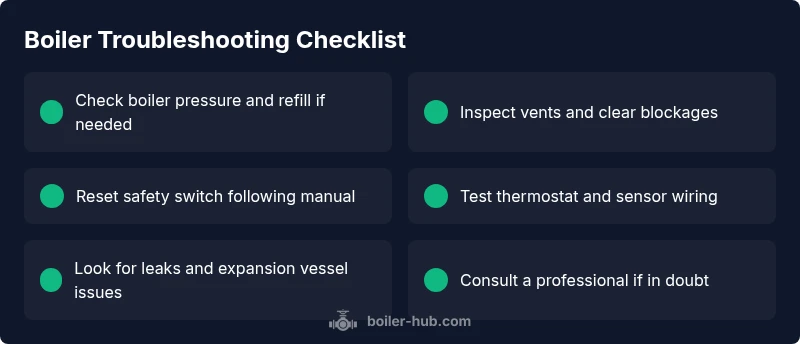
Low system pressure is a frequent trigger for a shutdown. Locate the boiler pressure gauge and compare it to the manufacturer’s recommended range (this range varies by model). If pressure is too low, you may need to use the filling loop to restore pressure, or the expansion vessel may be waterlogged. Sudden pressure changes can trigger alarms. Safety devices such as the high‑limit switch or temperature sensors will interrupt operation if temperatures rise too quickly or if flow is restricted. Regularly inspecting the expansion vessel, safe filling practices, and keeping radiators purged of air can prevent many trips. Boiler Hub notes that small, routine checks dramatically reduce unexpected shutdowns.
Thermostat and control systems
Faulty or miscalibrated thermostats can cause the boiler to shut off even when heat is required. Check both the room thermostat and the boiler’s own temperature settings. Ensure wiring is secure, and look for tripped switches or failed relays inside the control panel. If you recently adjusted settings, revert to a recommended baseline and test the boiler again. Remember: changes should be made gradually and safely. A misreading at the thermostat can create a cycle of startup/shutdown that leaves you in the cold, but careful re‑calibration often resolves this without parts replacement. The Boiler Hub team recommends documenting any changes to help technicians diagnose future trips.
Common fault indicators and diagnostic clues
Contractors and homeowners often rely on fault indicators. While codes vary by brand, most boilers signal shutdown via control lights, blinking codes, or error messages. Look for patterns: does the boiler shut off after a specific time, after firing a burner, or when certain radiators are bled? Document symptoms and times, then compare with the manual. If the codes are unclear, continue with general troubleshooting and seek professional help if the issue recurs. Keeping a log of events can speed up diagnosis and reduce downtime, a practice Boiler Hub frequently emphasizes for facility managers managing complex systems.
When to call a professional
Some shutdowns require professional diagnostics, especially if gas is involved or if you notice water leaks, unusual soot, or persistent shutdowns after resets. Boiler safety should never be compromised. A licensed technician can diagnose internal faults, verify venting integrity, inspect the heat exchanger, and recalibrate or replace sensors. If your boiler is under warranty, contact the manufacturer’s service line before scheduling work.Timely professional input can prevent dangerous situations and ensure compliance with local safety regulations. Boiler Hub recommends scheduling a service visit if the issue returns after a reset or if you are unsure about any step.
Prevention and maintenance routines
Preventing unexpected boiler shutdowns starts with a simple maintenance routine. Schedule annual professional service, bleed radiators to maintain proper flow, and check the pressure gauge monthly. Keep the condensate drainage clear and ensure the expansion vessel is functioning. Store manuals and fault‑code guides in an accessible place and remind staff to report odd behavior promptly. A proactive maintenance plan reduces the likelihood of disruptive trips and extends the life of components. The Boiler Hub team highlights that prevention saves time, energy, and money over the boiler’s lifespan.
Steps
Estimated time: 45-60 minutes
- 1
Check power and fuel supply
Ensure the boiler has power and that gas/oil supply is uninterrupted. Look for tripped breakers or blown fuses and confirm the switch on the boiler is in the ON position. If you smell gas, evacuate immediately.
Tip: Treat any gas smell as an emergency and avoid using electrical switches. - 2
Check system pressure
Read the pressure gauge and compare with the model’s recommended range. If low, use the filling loop to restore pressure slowly, watching gauges carefully.
Tip: Do not overfill; small fluctuations are normal after top‑ups. - 3
Reset safety and thermostat controls
Power down the boiler, wait a few minutes, then power back on and perform a controlled reset if the manual permits. Verify thermostat settings and ensure wiring is intact.
Tip: Reset procedures vary by brand; follow the exact steps in your manual. - 4
Inspect venting and condensate trap
Check that vents/flue are clear of obstructions and that the condensate trap is draining properly. Blockages can cause overheating and shutdowns.
Tip: Never attempt major vent work unless you’re trained. - 5
Test controls and sensors
Test the boiler’s temperature sensor and room thermostat for responsiveness. Look for loose wires or signs of wear and replace faulty parts as needed.
Tip: Sensor drift is common with aging equipment. - 6
Run a short heat cycle and monitor
After completing the checks, run a short heat cycle and observe whether the boiler stays on or trips again. Document any codes or patterns for later review.
Tip: A pattern helps pinpoint the root cause faster.
Diagnosis: Boiler turns off during operation
Possible Causes
- highLow water pressure
- highOverheating due to restricted flow
- highTripped safety/limit switch
- mediumFaulty thermostat or control board
- mediumWater leaks causing pressure drop
- lowVenting or flue blockage
Fixes
- easyCheck boiler water pressure and restore to the recommended range using the filling loop or service valve per manual
- easyReset the boiler safety switch and verify proper venting and flue operation
- mediumInspect vents, flue, and condensate trap for blockages and clear obstructions
- mediumTest and replace faulty thermostat or sensor if calibration is off
- hardInspect for leaks or expansion vessel issues; contact a pro if you see damp areas or corrosion
- easyIf fault codes appear, consult the model manual or manufacturer support before proceeding
Questions & Answers
What is the most common reason a boiler turns off unexpectedly?
Low water pressure and overheating are among the most frequent causes. Start by checking the pressure gauge and ensuring water flow is unobstructed before investigating complex faults.
Low pressure and overheating are common causes—start with the basics like pressure and flow, then check for overheating signs.
Is it safe to reset a boiler after it shuts off?
Only after you have checked for obvious safety concerns (gas smell, leaks, proper ventilation). Always follow the manufacturer’s reset procedure to avoid bypassing safety features.
Reset only after you’ve checked safety; follow the manual exactly.
How often should I service my boiler to prevent turning off?
Most boilers benefit from an annual professional service, with routine checks by homeowners (pressure, leaks, and venting) in between visits.
Get it serviced once a year, and do quick checks monthly.
Can a faulty thermostat cause shutdowns?
Yes. A malfunctioning or miscalibrated thermostat can trigger unnecessary shutdowns even when heating is needed. Have it tested and calibrated.
Yes, thermostat issues can cause the boiler to shut off.
What should I do if I smell gas around the boiler?
Leave the area immediately, avoid flames or switches, and call emergency services. Do not operate the boiler until checked by a professional.
If you smell gas, leave the area and call emergency services right away.
What if the boiler keeps tripping after a reset?
Persistent trips suggest a deeper fault (sensor, venting, or circulation issue). Call a professional for a thorough diagnostic.
If resets keep tripping, you likely need a professional diagnostic.
Watch Video
Key Points
- Identify safety-related causes first
- Check pressure and venting before touching controls
- Document symptoms to speed diagnosis
- Call a professional for gas-related or persistent issues