Why Is My Boiler Not Turning Off? Troubleshooting Guide
Struggling with a boiler that won't turn off? This urgent guide covers common causes, safe checks, diagnostic flow, and when to call a pro. From thermostat faults to diverter valve issues, Boiler Hub helps you diagnose and fix safely.


Most often, a thermostat fault or a stuck diverter valve keeps the boiler firing. Start with simple checks: set the thermostat to off, power cycle the boiler, and verify no zone valves are stuck open. If it still runs, shut off power at the main switch and call a licensed technician. This approach minimizes risk and guides proper repair, per Boiler Hub.
Understanding the symptom and why it matters
When a boiler won't turn off, you face wasted energy, higher bills, and potential safety risks. In many homes the root cause is a control problem rather than a gas leak, so quick, careful checks can reveal the culprit. According to Boiler Hub, this symptom is commonly tied to how your thermostat and valve controls interpret heat demand. The right approach is urgent but methodical: avoid improvising with safety devices, and keep a log of when the boiler stays on and what changes you make. Common signs include the boiler staying lit after the room thermostat has reached its set point, or hot water running without a call for heat. By documenting the behavior and ruling out obvious issues first, you set up a clean path for repair or escalation. Safety note: never bypass safety devices or attempt gas work unless you are trained and licensed.
Common causes at a glance
A boiler that won’t turn off is usually due to a control issue rather than a gas leak. Here are the most frequent culprits, listed from most to least likely in typical homes:
- Thermostat fault: a faulty sensor or loose wiring can keep calling for heat even when you’ve reduced setpoints.
- Stuck or faulty diverter valve: a 3-way valve that won’t move can continue feeding the boiler and hot-water circuit.
- Aquastat or control board issue: a misreading temperature or bad relay can keep the system energized.
- External timer/zone valve malfunctions: a timer or zone valve stuck open keeps a heat demand active.
- Wiring faults or loose connections: corrosion or vibration can create a phantom heat call.
- Pressure or flow problems: if pressure is out of range, safety limits can engage or stay active.
If you notice smell of gas, unusual hissing, or ignition trouble, exit the area and call emergency services. These aren’t minor quirks—gas and electrical faults require caution.
Safe, initial checks you can perform
Start with low-risk steps before opening panels or touching wiring. Ensure your own safety first:
- Turn off the boiler power at the appliance switch or breaker, and if you’re comfortable, shut off the gas supply. Do not attempt gas work if you’re unsure.
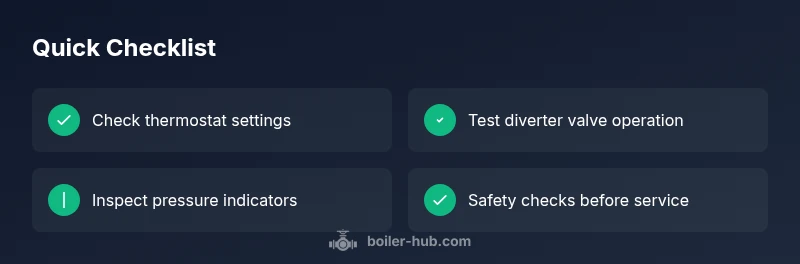
- Check all room thermostats and any programmable timers. Make sure the main thermostat is set to off and that no remote zone thermostat is demanding heat.
- Inspect visible wiring for loose connections or signs of wear. If you see damaged insulation or scorch marks, stop and call a pro.
- Look at the diverter valve (if accessible) to see if it’s stuck or jammed. A valve that isn’t moving freely can keep the boiler energized.
- Verify the pressure gauge and safety devices. Low water pressure or a faulty high-limit switch can affect operation and safety shutoffs.
These checks are designed to rule out simple, safe causes before deeper service is needed. If any of these steps feel risky, stop and contact a licensed technician for assistance.
When to escalate and what a pro will check
If the basic checks don’t resolve the issue, it’s time to escalate. Do not delay if you notice signs of gas odor, persistent flame, or fuel smell. A licensed technician will typically inspect:
- Thermostat calibration and wiring continuity; replace or recalibrate as needed.
- Diverter valve operation and mechanical wear; replacement may be required.
- Aquastat or control board functionality; testing and potential replacement.
- Zone valves, timers, and wiring in the control panel; ensuring the heat demand stops when it should.
- System pressure, leaks, and expansion tanks; addressing pressure-related shutdowns or cycling.
Document all symptoms and steps you’ve taken so far to share with the pro. This helps shorten diagnosis time and ensures you get the right repair.
Maintenance habits to prevent future issues
Prevention is safer and cheaper than repeated troubleshooting. Consider these ongoing practices:
- Schedule annual boiler service with a qualified technician to check controls, valves, and safety devices.
- Keep thermostats and timers updated, and replace batteries if needed in wireless models.
- Monitor for signs of wear like banging, cycling, or unexpected temperature changes and address early.
- Maintain clean, accessible access to the boiler and its controls to avoid accidental interference.
- Keep a simple log of any shutdown anomalies, including dates, times, and observed behavior, to help future diagnostics.
Steps
Estimated time: 60-120 minutes
- 1
Power down and isolate the boiler
Turn off the boiler at the switch, breaker, and if safe, the gas supply. This prevents any electrical or gas hazard while you inspect the system.
Tip: If you smell gas, evacuate and call emergency services. - 2
Set thermostat to off and verify all controls
Ensure every thermostat, timer, and remote control is set to off or a non-heating position. This rules out a phantom heat call.
Tip: Label any remote thermostats to keep track of which unit controls which zone. - 3
Inspect the zone valves and diverter valve
Look for a valve that is stuck or not moving when heat is demanded. A jammed valve keeps power to the boiler even when not needed.
Tip: Manually gently move the valve blade if accessible; don’t force hardware. - 4
Check the aquastat and control wiring
Examine the sensor and wiring for signs of wear, loose terminals, or signs of overheating. A faulty sensor can keep the boiler firing.
Tip: If you’re not comfortable with wiring, skip this step and contact a pro. - 5
Test the safety devices and pressure
Verify that the pressure gauge shows within the recommended range and that safety switches reset properly after testing.
Tip: Do not adjust pressure beyond manufacturer guidance. - 6
Power cycle and re-test
Turn power back on and observe if the boiler stops when heat is not demanded. If it continues, document behavior.
Tip: Take photos of gauges and setup for the technician. - 7
Call a licensed technician if unresolved
Persistent operation after the previous steps should be handled by a pro to avoid gas or electrical hazards.
Tip: Boiler Hub recommends professional service for non-resolved cases.
Diagnosis: Boiler won't turn off after heat call ends
Possible Causes
- highStuck or faulty diverter valve
- highThermostat fault (sensor misread or wiring issue)
- mediumAquastat/control board failure
- lowExternal timer/zone valve still demanding heat
Fixes
- easyTest and replace faulty thermostat or fix wiring; recalibrate if simple
- mediumRepair or replace a stuck diverter valve; ensure correct valve operation
- mediumInspect and service the aquastat or control board; replace components as needed
- easyCheck timers and zone valves for incorrect settings or sticking open; disable demand if safe
Questions & Answers
Why won't my boiler turn off even when the thermostat is set to off?
If turning the thermostat to off doesn’t stop the boiler, start with the thermostat wiring and zone valves. A stuck valve or misread thermostat can keep a heat call active. If it still runs, proceed with the safe checks and consider a professional evaluation.
If the thermostat is off but the boiler keeps running, check wiring and zone valves, then call a professional if needed.
Can a stuck diverter valve cause continuous boiler operation?
Yes. A diverter valve that won’t move can keep the boiler energized to both heating and hot water circuits. A technician can test valve operation and replace it if needed.
A stuck diverter valve can keep the boiler on; a technician can test and replace as needed.
Is a faulty thermostat the most common cause of a boiler not turning off?
Thermostat faults are among the leading causes. Check sensor readings and wiring integrity first. Replacing or recalibrating the thermostat often resolves the issue.
Thermostats are a common culprit; inspect sensor and wiring, then replace or recalibrate if needed.
What should I do if I smell gas near the boiler?
Exit the area immediately and call emergency services or your gas utility. Do not switch electrical components or operate switches once a gas odor is detected.
If you smell gas, leave the area and call emergency services right away.
When is it appropriate to call a professional for boiler shutdown issues?
Call a licensed technician if basic checks don’t resolve the issue or you’re unsure about safety. Complex electrical or gas work should always be handled by a pro.
If basic checks don’t fix it or you’re unsure, call a licensed technician.
Watch Video
Key Points
- Check thermostat settings first to rule out user error.
- Inspect the diverter valve for sticking or failure.
- Call a licensed pro for electrical or gas concerns.
- Boiler Hub recommends preventive maintenance to reduce shutdown issues.