Boiler Down Troubleshooting: Quick Guide for 2026
A practical, urgent boiler-down troubleshooting guide from Boiler Hub. Diagnose and fix common causes fast, with a clear diagnostic flow, step-by-step fixes, safety tips, and prevention to keep your system reliable in 2026.


Most boiler-down scenarios are caused by power or safety lockouts. The quickest fix is to verify power to the boiler, check the thermostat, and confirm the boiler switch is on. If it still won’t fire, inspect the circuit breaker, gas supply, and water pressure. If you smell gas or suspect carbon monoxide, evacuate and call emergency services and a licensed pro.
What does it mean when your boiler is down?
When your heating system stops delivering heat or hot water, people often say the boiler is down. In practice, that phrase covers a range of situations from a flicker of the display to a full shutdown that leaves your home cold. A boiler down condition is stressful, especially in cold weather, but acting calmly helps you diagnose safely. The most common starting point is to determine whether the problem is electrical, mechanical, or related to the gas supply. In many homes, a boiler down is triggered by a safety feature that has temporarily locked the unit out to protect against overheating, poor ignition, or surging electricity. Because there are several potential causes, the first step is to rule out simple, local issues before assuming a major fault. Throughout this guide from Boiler Hub, we’ll walk you through a practical troubleshooting approach that keeps you safe and informed while you decide whether you can fix it yourself or need a pro. Boiler down events are not uncommon, and having a plan helps you act quickly and safely. According to Boiler Hub, consistent maintenance reduces surprises and extends equipment life, especially in demanding months.
Immediate signs to look for
Spotting the early signs of a boiler-down situation helps you respond promptly and avoid bigger issues. Look for a blank display or error code on the boiler, unusual banging or gurgling sounds, frequent cycling on/off, no hot water, radiators that stay cold or heat unevenly, a detectable gas odor, or a recent power outage coinciding with heating loss. If your boiler shows an error code, note it down for reference; codes often point to the subsystem that failed, such as ignition, pressure, or sensor faults. Some systems run but deliver tepid water or insufficient heat, signaling issues beyond a simple switch. Above all, never ignore a gas smell or CO alarm. If you smell gas or CO, evacuate immediately and call emergency services. Safety-first actions save time and prevent risk. Boiler Hub emphasizes safety as a foundation of any troubleshooting process.
Common causes of a boiler down scenario
Boiler-down incidents cluster into a few broad categories, which helps you triage quickly. Electrical power issues include a dead outlet, a tripped circuit breaker, or a switched-off boiler disconnect. Safety lockouts triggered by overheating, faulty ignition, or sensor faults are another major cause. Gas supply or ignition problems can prevent firing, especially in newer units with electronic ignition. Low water pressure or expansion tank faults can also trigger a shutdown in sealed systems. Age and wear matter too; pumps, burners, and valves degrade with time and may require professional attention. By understanding these buckets, you can approach troubleshooting logically and avoid chasing improbable causes.
Safer, quick checks you can perform now
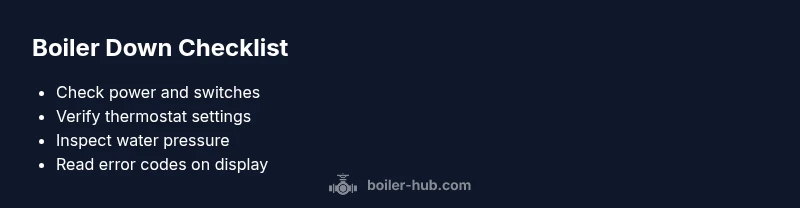
Before you call for help, perform a few safety-conscious checks. First, ensure the boiler is plugged in or connected to power and that the on/off switch is in the correct position. Verify the thermostat is set to heat and that the room sensor is functioning properly. Check the boiler display for codes and consult the manual for their meaning. Inspect the electrical panel for a tripped breaker or blown fuse, and reset if appropriate. If your system uses a gas supply, confirm the gas valve is open and listen for the burner sound when it should ignite, but never force or adjust gas valves if you’re unsure. Finally, inspect for obvious water leaks and check the pressure gauge on a sealed system; note any readings and address according to the manufacturer’s guidance. If you notice gas smell, CO alarms, or significant water leaks, evacuate and contact emergency services or a licensed technician immediately.
Reading boiler error codes and what they mean
Modern boilers display error codes to identify the failing subsystem. A steady blank screen can indicate power or control board issues, while blinking codes often point to ignition, pressure, or sensor faults. Cross-check the error code with your model’s user manual or the Boiler Hub guide to interpret the symbol. Some codes require a simple reset, others require service. Keep a small log of codes as they appear, including date and symptoms, which helps a technician diagnose faster. If codes persist after a safe reset, it signals a more complex fault that warrants professional assessment. Boiler Hub highlights that documenting codes speeds up service and improves first-call resolution.
When to reset and when not to
Resetting a boiler can clear transient faults and restore normal operation, but it’s not a universal fix. Use reset only if the manual instructs you to do so and the area around the unit is safe. Never reset after detecting a gas odor or CO alarm, as these conditions require evacuation and professional intervention. If the boiler repeatedly resets, or if the issue recurs after a reset, there is likely a persistent fault that needs diagnostic testing by a qualified technician. Routine resets should be part of a broader maintenance plan rather than a first-line cure. Boiler Hub advises documenting resets to spot patterns that indicate wear or a failing component.
How to prepare for a professional visit
When you call for service, prepare details to speed up the process. Note the model and serial number, the age of the boiler, and any recent maintenance. List observed symptoms, include photos of error codes, water leaks, or strange noises, and record the last successful heat cycle. Share any relevant safety concerns, such as gas odors or CO readings. Have the main shut-off valve location clear, and indicate whether you’ve already performed any resets or basic checks. A technician will likely perform a hands-on inspection, test sensors and gas valves, and verify water pressure and system integrity. Having your notes ready reduces diagnostic time and gets your system back online faster.
Safety considerations and CO risk
Combustion appliances pose CO risks when not operating correctly. Never attempt to bypass safety features or run a boiler when you suspect a fault. If you experience a persistent gas odor, dizziness, headaches, or CO alarm readings, evacuate immediately and call emergency services. Ensure detectors are functioning and located near sleeping areas. When performing DIY checks, avoid opening the boiler cabinet or touching gas fittings beyond basic exterior visual checks. Always follow the manufacturer’s warnings and rely on a licensed pro for gas and combustion-related work. Boiler Hub underscores safety as non-negotiable in any boiler-down scenario.
Long-term prevention and maintenance routine
Prevention starts with regular maintenance and simple practices that reduce the chance of a boiler going down. Schedule annual service with a qualified technician to inspect burners, pumps, heat exchangers, and safety devices. Keep an eye on pressure readings and leak signs, and address any unusual noises promptly. Replace worn gaskets, inspect electrical connections, and clean or replace air and venting components as recommended by the manufacturer. Maintain a log of all maintenance tasks and keep your manuals accessible. A proactive maintenance approach minimizes downtime, extends life, and improves efficiency. Boiler Hub’s guidance emphasizes prevention as the most effective strategy for reliable heating.
Verdict: actionable takeaway and next steps
If your boiler is down and basic checks reveal no obvious fault, proceed with the diagnostic flow and follow the step-by-step fixes (see the STEP-BY-STEP block). If you’re uncomfortable with any safety risks or gas work, contact a licensed technician without delay. The Boiler Hub team recommends prioritizing safety and professional assessment when gas, CO, or heat safety concerns are present. Regular maintenance and a clear action plan reduce downtime and protect your home comfort.
Steps
Estimated time: 60-90 minutes
- 1
Verify power and safety switches
Ensure the boiler is plugged in (if applicable) and the main switch is ON. Check the wall outlet with another device to confirm power delivery. If a reset procedure exists, perform a safe reset following the manual instructions.
Tip: Label the boiler’s circuits for future quick access. - 2
Check the thermostat and room sensors
Confirm the thermostat is set to heat and that the room sensor is not obstructed or located in an unheated area. If the thermostat has a manual override, ensure it is not locked in a cooling state. Reassess after adjusting.
Tip: Move the thermostat away from direct sunlight or drafts for accurate readings. - 3
Inspect water pressure and expansion
Look at the boiler’s pressure gauge. If the reading is too low or too high, it can trigger a safety shutoff. Refill or bleed as directed by the manual, and recheck the system after stabilization.
Tip: Do not overfill; follow the manufacturer’s refill procedure precisely. - 4
Evaluate ignition and gas supply
If you have a gas boiler, listen for burner ignition sounds and ensure the gas valve is open. Do not attempt to light or modify gas fittings yourself; contact a professional if you suspect gas issues or the appliance won’t ignite.
Tip: Never operate a gas appliance if you smell gas; evacuate and call for help. - 5
Read error codes and perform a safe reset
Record any error codes and consult the manual to interpret them. If a safe reset is instructed, perform it and monitor the boiler’s response. If issues persist, do not repeatedly reset.
Tip: Keep a small code log for quick technician reference. - 6
Plan for professional service if needed
If the boiler remains down after these steps or you identify gas, CO, or water-leak risks, arrange service promptly. A licensed technician can diagnose complex faults and verify venting, gas connections, and safety devices.
Tip: Have model, serial, and maintenance history ready for the technician.
Diagnosis: Boiler won't ignite or produce heat
Possible Causes
- highPower issue (outlet, switch, or breaker)
- highSafety lockout due to overheating or error code
- mediumGas supply or ignition problems
- lowLow water pressure or expansion tank issues
Fixes
- easyCheck power to the boiler and ensure the switch is ON; reset if available
- easyReview error codes and reset per manual; record codes for tech when needed
- hardInspect gas supply and ignition system; do not tamper with gas valves; call pro if you smell gas
- easyCheck water pressure and refill according to manufacturer guidance
Questions & Answers
What does boiler down mean and how urgent is it?
Boiler down means the heating system isn’t operating, leaving you without heat or hot water. Urgency depends on the weather, occupancy, and whether there are gas/CO concerns. If you smell gas or CO alarms, treat it as an emergency.
Boiler down means your heater isn’t working, and hot water may be unavailable. If you smell gas or CO, leave the area and call emergency services.
What’s the first thing I should check when my boiler won’t start?
Begin with power to the boiler, the on/off switch, and the thermostat. If safe to do so, check the circuit breaker and look for any error codes on the display to guide your next steps.
First, check power, switch, thermostat, and any on-display codes to guide your steps.
Is it safe to reset the boiler myself?
Resetting can clear transient faults when the manual instructs it, but avoid resets if you smell gas, CO, or see water leakage. Follow the manufacturer’s reset procedure exactly.
Reset only if the manual says to, and never if there’s a gas odor or CO risk.
When should I call a professional for a boiler down issue?
Call a professional if basic checks don’t restore operation, if there are gas or CO concerns, or if the boiler continues to lock out after resets. Complex issues often require diagnostic testing and safe handling.
If simple steps don’t fix it or there’s gas/CO risk, contact a licensed technician.
Can poor water pressure cause a boiler to shut down?
Yes, low water pressure or problems with the expansion tank can trigger safety shutoffs in sealed systems. Check the gauge and refill as directed by the manufacturer.
Low pressure can cause shutdown; check the gauge and refill as instructed.
What maintenance helps prevent boiler-down events?
Regular annual service, timely repairs, clean sensors, and ensuring venting and gas connections are in good shape reduces risk of boiler-down issues.
Annual service and prompt small repairs greatly reduce boiler-down risk.
Watch Video
Key Points
- Start with power, thermostat, and switch checks.
- Document error codes for faster service.
- Don’t delay professional help for gas/CO concerns.
- Perform a safe reset only per manual guidance.
- Regular maintenance prevents boiler-down scenarios.