How to Connect a Boiler: Step-by-Step Guide
Learn how to safely boiler connect a thermostat and control system to your boiler. This comprehensive how-to covers safety, compatibility, wiring basics, smart controls integration, testing, and maintenance for reliable, efficient operation.


With this guide, you will learn how to safely boiler connect a thermostat and control system to your boiler, ensuring reliable comfort and efficient operation. According to Boiler Hub, compatibility and safe wiring are essential for long-term performance. Always verify local codes and shut power off before starting.
Understanding boiler connect in modern homes
Connecting a boiler to a home's control ecosystem—often called boiler connect—is about aligning heat source, sensor input, and user interface so you get reliable comfort with efficient energy use. In modern systems, this means pairing the boiler with a thermostat (including smart thermostats), zone controls, and safety devices. The core idea is to create a clear, low-resistance path for heat calls, so when the thermostat asks for heat, the boiler responds quickly and safely. For homeowners and facility managers, this requires both mechanical and electrical awareness: understand what the boiler can accept in terms of control signals, know where to locate terminals or wiring harnesses, and follow manufacturer diagrams. Always treat any gas connections as potentially hazardous and engage a licensed technician for line work. A properly wired and configured boiler connect setup reduces cold spots, saves energy, and minimizes system wear. According to Boiler Hub, proper connect practices are essential for reliability and safety.
Before you start: safety, codes, and planning
Before you attempt any boiler connect work, lay a solid safety and planning foundation. Start by powering down the boiler and the main electrical supply, and if you are dealing with a gas-fired unit, do not touch gas lines yourself—call a licensed professional for any line work. Gather the manufacturer wiring diagrams and your control kit's installation guide, and verify compatibility with your existing thermostat or smart control. Check local codes and permit requirements; many jurisdictions require a licensed technician for boiler wiring changes, especially when gas components are involved. Create a simple wiring map: which signals will trigger heat, where the control receiver will mount, and how to route cables away from heat sources or moving parts. Document model numbers, serials, and the version of firmware on any smart device. By planning carefully, you reduce rework and improve safety. Boiler Hub's guidance emphasizes adherence to codes and manufacturer instructions for every boiler connect project.
Choosing components and compatibility checks
Start by selecting a thermostat or control system that explicitly supports your boiler type (electric, gas, or combi) and the control signal it expects. Read the boiler’s wiring diagram and the thermostat's installation manual side by side. Confirm voltage, signal type (dry contact vs powered), and the presence of a common wire (C) if you’re using a smart thermostat. If you are replacing an older, incompatible control, you may need a compatibility bridge or a different receiver module. Keep the original manuals handy and record part numbers. For zone control, verify each zone valve or relay is rated for the boiler’s maximum current and compatible with the boiler’s output. If in doubt, contact the manufacturer’s tech support or a professional technician. A careful compatibility check prevents nuisance resets, false calls for heat, and potential safety hazards.
Wiring basics by boiler type
For electric boilers, most control wiring is low-voltage and can be wired without gas considerations; however, always follow the manufacturer’s wiring diagram and shut power off. Gas boilers add complexity due to gas valves, ignition sequences, and venting requirements; these must be wired and tested by a licensed professional. In both cases, treat the control circuit as its own low-voltage system with a dedicated transformer or receiver. Do not tap into house AC circuits for thermostat power unless the manufacturer explicitly instructs you to. Use a proper terminal block, secure connections, and insulate exposed conductors with heat-rated wire nuts. Sequence matters: ensure the boiler will only fire when a heat call exists and only if safety interlocks are satisfied. If your system uses wireless control, ensure the pair is secure and within range, and disable any legacy remotes that might cause conflicting calls.
Integrating with thermostats and smart controls
Smart thermostats add energy-saving potential but require careful pairing with boiler controls. Start by placing the receiver in a dry, accessible location near the boiler, then run a short, direct cable to the boiler’s control terminals if needed. For wireless setups, follow the manufacturer’s app to pair devices and confirm a stable signal. Configure the thermostat to call for heat at appropriate times and adjust temperature schedules to reflect occupancy and outdoor weather. If your boiler uses zone controls, assign each zone a thermostat or a compatible controller and verify that duty cycles are balanced to prevent short-cycling. Keep a log of changes, and test responses by initiating manual heat calls. In many homes, a well-integrated thermostat reduces energy use while improving comfort, especially when paired with outdoor sensors or weather-based setbacks.
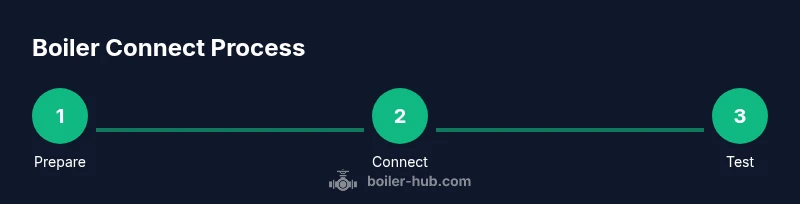
Step-by-step overview: prepare, connect, test
Prepare the workspace by turning off power, isolating the boiler, and reviewing manuals. Connect the thermostat receiver according to the wiring diagram, labeling wires before detaching any existing connections. Then attach the control wires to the boiler’s terminal block, ensuring tight, clean connections and no bare conductors. If applicable, install the C-wire adapter or bridge so the thermostat has constant power. Mount the receiver in a location with good signal and minimal interference. Finally, restore power, run the heat call, and observe the boiler’s response; listen for ignition or burner activity, check for error codes, and confirm that radiators or baseboards respond as designed. If anything sounds wrong, power down immediately and reassess connections. Safety is non-negotiable; if you encounter gas work, contact a licensed professional.
Troubleshooting common issues after connect
Possible issues include no heat call, constant heat, or cycling on/off. First, double-check that the thermostat is set correctly and that the receiver is paired. Verify that the R and W wires are connected to the boiler’s proper terminals and that C is present if required. Look for loose or corroded connections, tripped breakers, or blown fuses. Check the boiler’s error codes and consult the manual. If you sense a gas smell or hear unusual ignition noises, evacuate and call emergency services or a pro. For wireless setups, ensure interference-free operation and verify the range between the thermostat and receiver. Finally, review safety devices like high-limit switches and pressure relief valves to confirm they are not tripped.
Maintenance and periodic checks after connect
After a successful connect, maintain a regular inspection routine. Check for loose wires, signs of overheating, and corrosion around terminals. Test the heat call monthly and after any significant system change. Schedule professional service annually to inspect ignition, venting, gas lines (if present), and seals. Update firmware on smart controls when available, and review energy usage trends to identify opportunities to optimize settings. Create a simple maintenance log with dates, actions taken, and any observed irregularities. By staying proactive, you extend boiler life and keep energy costs predictable.
How Boiler Hub approaches safe, compliant connections
Boiler Hub’s team emphasizes safety, documentation, and adherence to manufacturer instructions for every boiler connect project. When integrating controls with gas boilers, we stress professional involvement to manage gas lines and ignition sequences; electrical tasks should follow wiring diagrams and local codes. For owners implementing smart control integrations, we advise choosing devices with explicit boiler compatibility and maintaining a simple, auditable wiring map. In all cases, never circumvent safety interlocks or test pressure systems without proper procedures. The Boiler Hub team recommends planning, recording model numbers, and testing in a staged manner to catch issues early and prevent costly downtime.
Tools & Materials
- Voltage tester(Used to confirm circuit is de-energized before wiring)
- Screwdriver set (Phillips and flathead)(For terminal screws and mounting plates)
- Multimeter(Check for continuity and voltage compatibility)
- Wire strippers/cutters(Prepare and trim conductors cleanly)
- Thermostat/controls kit(Includes receiver, stat, and compatible wiring harness)
- Electrical tape and wire nuts(Secure connections and insulate)
- Safety gear: gloves and eye protection(Personal protection)
- Manufacturer wiring diagram for boiler(Follow exact wiring instructions for your model)
- Gas leak detector (for gas boilers)(Only if you are working near gas lines; call a pro)
Steps
Estimated time: 60-90 minutes
- 1
Power down and isolate the boiler
Turn off the boiler at the wall switch and the main electrical supply. If the boiler is connected to gas and ignition wiring, avoid any work on that portion unless a licensed professional is present. Use a voltage tester to confirm there is no live current in the control wires before touching terminals.
Tip: Double-check that all power sources are fully removed from the boiler and related controls. - 2
Check compatibility and gather controls
Review the boiler’s wiring diagram and the thermostat/receiver manual to confirm compatibility. Ensure the control signals, voltage, and power requirements align. Prepare all components and label any existing wires to prevent misconnection.
Tip: Have model numbers and firmware versions handy for quick reference. - 3
Plan the wiring route and mount receiver
Decide where the receiver will mount near the boiler and plan cable routes away from heat sources, moving parts, and moisture. If you need to run wires, use proper conduit or protections and keep lengths as short as practical for signal integrity.
Tip: Keep wires neat and clearly labeled to simplify future maintenance. - 4
Connect boiler to thermostat/controller signals
Attach the thermostat call wires to the boiler’s terminals as indicated in the manuals. If a C-wire is required, install it or use a compatible adapter. For wireless setups, complete pairing per the manufacturer’s app and disable any competing remotes.
Tip: Never bypass the boiler’s safety interlocks or jumpered circuits unless explicitly approved by the manufacturer. - 5
Configure safety limits and settings
Set the boiler’s high-limit temperature, aquastat or any safety cutoffs, and ensure the new controls won’t override critical safety features. Review venting and pressure safety as required by code. Keep a copy of the installation sheet for future service.
Tip: Avoid altering safety limits beyond what the manufacturer specifies. - 6
Test the system and observe operation
Restore power and trigger a heat call. Watch for proper ignition, burner operation, and flow to radiators or baseboards. Check for error codes, unusual noises, leaks, or odors. If anything seems off, power down again and recheck connections.
Tip: Document test results and any codes to guide future service.
Questions & Answers
Is it safe to connect a boiler to a thermostat myself?
For gas boilers, DIY wiring is not recommended due to gas and ignition hazards. Electric boilers are safer to manage, but you should still follow the manufacturer’s diagrams and local codes. When in doubt, hire a licensed professional.
DIY wiring for gas boilers is unsafe; consult a licensed professional. Electric boiler connections can be done with care and proper diagrams.
What should I check before connecting a boiler to a control system?
Check compatibility between the boiler and control device, review wiring diagrams, confirm voltage and signal type, and verify the presence of a common wire if using a smart thermostat. Ensure power is off before any connection.
First, confirm compatibility and study the wiring diagrams. Make sure power is off before starting.
What are common mistakes when connecting a boiler to thermostats?
Common mistakes include wiring the wrong terminals, leaving power on while connecting, bypassing safety interlocks, and selecting incompatible devices. Always follow manufacturer instructions and test the system with a controlled heat call.
Wiring errors, lack of power-off, and safety interlock bypasses are the usual culprits. Follow instructions and test safely.
How do I know if the connection is successful?
A successful connect results in a proper heat call: the thermostat signals the boiler, the burner ignites or heating element powers up, and radiators respond within expected time. Check for error codes and leaks during the first test run.
You’ll see a proper heat call, ignition or heating, and warm radiators. Look for errors and leaks during testing.
Do I need permits or codes for boiler connect work?
Gas-related boiler connections often require permits and professional inspection per local codes. Always check your jurisdiction’s requirements and hire licensed pros for gas work.
Gas work usually needs permits; check local codes and hire a licensed professional.
Can I install a smart thermostat with my boiler?
Yes, many boilers support smart thermostats, but compatibility varies. Verify signals, power requirements, and offer a stable wireless or wired connection. Use manufacturer guidelines to ensure proper integration.
Smart thermostats can work with many boilers if compatibility is confirmed and proper wiring is used.
Watch Video
Key Points
- Power off before any wiring work.
- Always follow the boiler and thermostat diagrams.
- Verify compatibility to avoid safety issues.
- Test the system thoroughly after connection.
- Prioritize safety, codes, and professional help when needed.