Why Your Boiler Keeps Losing Pressure: A Troubleshooting Guide
Urgent guide to diagnosing and fixing a boiler that keeps losing pressure. Learn common causes, safe fixes, and prevention tips for homeowners and facility managers today.


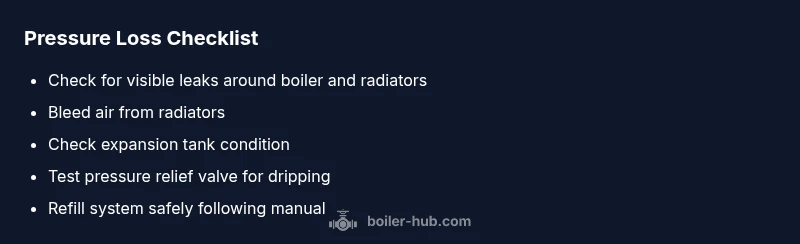
Most boiler pressure drops stem from leaks, air, or a failing expansion tank. The quickest fix is to inspect for visible leaks, bleed any trapped air from radiators, and safely refill the system, then re-check the gauge. If the pressure continues to fall after these steps, shut the boiler off and call a licensed technician. This approach aligns with Boiler Hub guidance for safe, immediate action.
Why your boiler keeps losing pressure
If you notice the pressure gauge dropping, you're not alone. Understanding why boiler keeps losing pressure helps you act quickly and safely. According to Boiler Hub, the most common causes are small system leaks, trapped air, a faulty expansion tank, or a pressure relief valve that leaks slowly. You can often verify simple culprits with a quick visual check and gauge test, then decide the next safe step.
In many homes, the first thing to confirm is whether the boiler is wet around joints or pipes. A small damp patch is often a leak in disguise, and small leaks can progressively drain pressure over hours or days. Another frequent culprit is air that has become trapped in the system, especially after refilling or replacing radiators. Both issues are solvable, but the remedy differs: leaks usually require patching or replacing components, while air pockets are removed with a controlled bleed. Boiler Hub's team emphasizes safety: if you cannot locate a leak or if the system is actively dripping, shut the boiler down and call a professional immediately.
Quick safety checks you can perform safely (before calling a pro)
Start with the simplest checks that do not require de-pressurizing the entire system. First, switch off the boiler and let it cool. Then inspect visible pipes, joints, and radiators for signs of dampness or fresh water. If you find a visible leak, do not attempt dramatic fix; document the area and contact a licensed technician.
Next, look at the pressure gauge when the boiler is cold. Compare the reading to your boiler's manual; most models have a recommended range. If the gauge sits well below the normal range, avoid turning valves arbitrarily. Instead, refer to the manual for refilling steps or call a pro. If the gauge rises and then falls again during heating, there may be more complex issues like an air pocket or a failing expansion vessel. Boiler Hub notes that many homeowners can temporarily stabilize pressure by bleeding air from radiators, but this is not a long-term solution for persistent losses.
The most common causes in depth
Leaks are the usual suspect. A damp patch around the boiler, at joints, or on radiator valves can slowly drain pressure. Even a tiny seep can lower pressure over time. Air in the system often accompanies refilling after maintenance and creates pockets that prevent even water flow, causing cycling and pressure swings. A failing expansion tank is another frequent culprit; diaphragms wear out, allowing water to fill the tank and reduce its ability to absorb pressure changes. Finally, a faulty pressure relief valve can leak or vent water, mimicking a pressure drop. For homeowners, the key is to distinguish between a one-time fluctuation and a persistent trend that requires professional assessment (Boiler Hub emphasizes safety and proper diagnosis).
How air, leaks, and expansion tanks interact
Air in the system makes leaks harder to detect because the air cushion can mask a slow water leak. When a leak is present, expansion and contraction of the water volume during heating cycles intensify pressure changes. If the expansion tank is waterlogged or has lost its diaphragm, it cannot absorb pressure changes, causing more pronounced drops. In practice, a leak, a trapped air pocket, and a failing expansion tank often reinforce one another: fixing one issue may reveal another. A methodical approach—inspect for dampness, bleed air, then verify expansion-tank function—helps isolate the dominant cause without unnecessary disassembly. This layered reasoning mirrors the diagnostic flow recommended by Boiler Hub for safe and effective troubleshooting.
Prevention and routine maintenance to avoid pressure loss
Regular inspection and maintenance reduce the chances of pressure loss. Schedule annual boiler servicing to check seals, valves, and the expansion tank. Bleed radiators at the start of the heating season and after any radiator replacement to remove air pockets. Test the pressure relief valve during a service to ensure it vents safely and cleanly. Keeping the system clean from mineral buildup also helps maintain steady pressure. Finally, document any recurring issues and seek professional help promptly if simple steps fail, as persistent pressure drops can indicate a deeper problem that requires skilled intervention (Boiler Hub guidance).
What to do if your pressure drops again after fixes
If pressure drops again after bleeding air and recharging, stop using the boiler and seek professional assessment. Recurrent drops often signal a hidden leak, a compromised expansion tank, or a defective PRV that needs replacement. Do not attempt risky DIY fixes beyond basic bleeding, especially if you notice pooling water or scorching smells. Contact a licensed technician who can perform precise pressure testing and safe repairs. The goal is to restore a stable pressure baseline and verify system integrity to prevent future outages.
Steps
Estimated time: 45-90 minutes
- 1
Turn off boiler and let it cool
Power down the boiler and wait for surfaces to cool before touching any components. Put on protective gloves. Visually inspect for obvious leaks around joints and the boiler casing. If you find water pooling, note the location and plan for repair, but do not attempt major fixes yourself.
Tip: Never work on a live boiler; hot surfaces can cause burns. - 2
Check for visible leaks and damp patches
Carefully inspect all accessible pipes, valves, and radiator connections for signs of dampness or fresh water. Use a flashlight to look under the boiler and behind panels. If you see a leak, document it with photos and call a licensed technician rather than attempting a risky repair yourself.
Tip: A photo log helps a technician diagnose the issue quickly. - 3
Bleed air from radiators
With the boiler off, use a radiator bleed key to release trapped air from high-point radiators. Listen for a hissing sound as air escapes, then close the valve when water appears. Recheck the boiler pressure after bleeding and note any changes in the gauge.
Tip: Bleeding may need to be repeated if the system still contains air pockets. - 4
Refill the system to safe pressure
Follow your boiler manual to refill the system, ensuring you do not exceed the recommended pressure. Use the filling loop slowly and watch the gauge closely. Once refilled, run the boiler briefly to confirm the pressure stabilizes during heating.
Tip: Avoid rapid fills; sudden pressure surges stress components. - 5
Inspect expansion tank and check diaphragm
Check the expansion tank for signs of waterlogging (a heavy tank or one that is overfilled with water). If necessary, test the tank or replace it to restore proper absorption of pressure changes.
Tip: A faulty expansion tank is a common, fixable cause of pressure loss. - 6
Test boiler and monitor pressure
Restart the boiler and observe pressure behavior over the next 24-48 hours. If the gauge remains stable, the issue may be resolved. If it drops again, prepare to involve a professional for a deeper inspection.
Tip: Keep notes of gauge readings to discuss with a technician.
Diagnosis: Pressure drops gradually or fluctuates after boiler cycling
Possible Causes
- highVisible leaks in joints, pipes, or radiators
- mediumWaterlogged or failing expansion tank
- lowFaulty or leaking pressure relief valve
- mediumAir trapped in the system after refilling
Fixes
- easyPatch or replace leaking joints/pipes; tighten fittings; if leak persists, call a pro
- hardInspect and replace expansion tank or recharge it as needed; test pressure after
- mediumReplace or service pressure relief valve to stop unwanted discharge
- easyBleed air from radiators and re-fill system following manufacturer steps
Questions & Answers
Why does my boiler lose pressure so quickly?
Common reasons include visible leaks, air trapped in the system, a failing expansion tank, or a faulty pressure relief valve. Refill carefully and bleed air if needed, but persistent drops warrant a professional check.
Pressure can drop quickly due to leaks or air; check for leaks and bleed air first, and call a pro if it continues.
How can I tell if the expansion tank is faulty?
A faulty expansion tank often presents as rapid pressure fluctuations and a waterlogged tank. A professional can test the diaphragm and replace the tank if needed.
If the system keeps fluctuating after bleeding, the expansion tank might be the culprit.
Is it safe to DIY leaks or valve fixes?
Small, non-pressurized leaks or loose valve fittings can sometimes be addressed safely. If water is actively leaking or you’re unsure, pause any repairs and contact a professional.
If you’re unsure, it’s safer to call a pro rather than attempting risky repairs.
When should I call a professional?
If pressure drops persist after basic bleeding and refilling, or you notice continuous dripping, call a licensed technician to avoid damage or safety hazards.
Call a professional if pressure keeps dropping after your quick fixes.
Can air in radiators cause pressure loss?
Yes. Air pockets can cause uneven water flow and pressure swings. Bleed radiators to release trapped air and restore pressure.
Bleeding radiators helps release air that causes pressure fluctuations.
What tools do I need to bleed radiators?
You’ll typically need a radiator key or flat screwdriver, plus a cloth to catch water. Bleed slowly and listen for a steady stream of water.
Have a cloth ready and bleed slowly to avoid spills or burns.
Watch Video
Key Points
- Identify whether leakage or air is the immediate cause
- Start with safe, simple steps before calling a pro
- Expansion tank health is a common pressure-loss culprit
- Persistent drops require professional assessment
- Regular maintenance prevents most future issues