What Should Boiler Water Temperature Be: A Practical Guide
Learn the recommended boiler water temperatures for hot water and heating, safety tips, and how to optimize efficiency. Based on Boiler Hub Analysis, 2026, with practical steps for homeowners and facility managers.


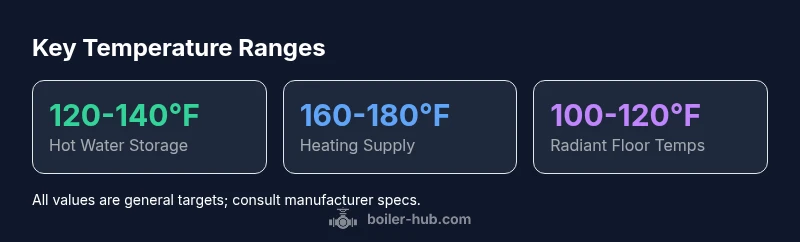
Domestic hot water and space heating require different targets. What should boiler water temperature be? For general safety and comfort, storage hot water is typically set to 120-140°F (49-60°C), while heating systems usually run warmer at 160-180°F (71-82°C). Boiler Hub Analysis, 2026 shows these ranges are common across residential setups, with adjustments for outdoor conditions.
Understanding boiler water temperature basics
When people ask what should boiler water temperature be, the answer depends on whether you are heating a home or generating domestic hot water. In hydronic heating and domestic hot water systems, 'temperature' refers to the water leaving the boiler (supply temperature) as well as the water returning from the radiators or radiant loops. The goal is to deliver reliable comfort without wasting energy or causing damage to pipes and valves. Boiler Hub Team notes in the 2026 analysis that most homes use different targets for hot water versus space heating: hot water storage is kept much cooler than heating water, yet still hot enough for safe and comfortable use. By understanding the distinction between supply, return, and storage temperatures, you can start making informed adjustments with confidence and reduce unnecessary energy use while maintaining performance.
Temperature ranges by system type
Different boiler configurations warrant different temperature targets. For domestic hot water storage, a common range is 120-140°F (49-60°C). For space heating with radiators or baseboards, many systems run at 160-180°F (71-82°C) to ensure adequate heat transfer across rooms. Radiant floor heating often works well at lower supply temperatures, roughly 100-140°F (38-60°C), depending on floor materials and insulation. Combi boilers, which provide both heat and hot water, require model-specific settings but typically fall within 140-180°F (60-82°C). Outdoor reset and weather compensation can help keep temperatures lower when it’s mild outside and higher when it’s cold, improving comfort and efficiency, per Boiler Hub Analysis, 2026.
Safety considerations and Legionella guidelines
Safety first: hot water can scald in seconds, so always use a thermostatic mixing valve or consumer-grade anti-scald devices at taps when temps exceed 120°F (49°C). Legionella bacteria risk is managed by keeping stored hot water at a higher temperature (commonly 140°F / 60°C or above) while balancing mixing to avoid scalding. The key is to separate storage temperature from delivery temperature and ensure regular system disinfection and maintenance. Follow local codes and consult Boiler Hub’s guidance for your climate and system type.
Measuring temperatures and making safe adjustments
Accurate temperature measurement requires testing at a hot water faucet and at the boiler supply. Use a calibrated thermometer and, if possible, a heat-safe thermocouple. Start with small adjustments of 5-10°F (3-6°C) and monitor how quickly hot water recovers and how well rooms stay warm. After changes, check for any leaks or noises and verify that the return temperature remains within safe limits. Always shut off power and consult your boiler manual if you are unsure about procedure.
Temperature, comfort, and energy: balancing acts
Lowering boiler water temperatures can improve efficiency, especially on newer, high-efficiency boilers and with modern controls. However, too low a temperature can lead to insufficient heating in cold weather or poor hot water performance. Outdoor reset and zoning allow you to maintain comfort while reducing energy use. Boiler Hub’s 2026 analysis highlights the value of tailoring temperature to season and load, rather than relying on a single fixed setting across the year.
Practical steps for common home setups
Take stock of your system: confirm whether you have a storage tank or a combi boiler, locate the thermostat and supply controls, and identify the maximum safe temperatures from the manufacturer. For a typical home with a storage hot water tank, set 120-140°F for domestic water and 160-180°F for heating. If your home has radiant floors, aim for the lower end of the heating range and use a mixing valve. Always document changes and test performance across different rooms and times of day.
Troubleshooting temperature issues
Symptoms like cold spots, uneven heating, or long hot water recovery times often point to temperature settings or a flow problem. Check that the boiler circulator is functioning, that zone valves are open, and that there are no air locks in the system. If you notice persistent discrepancies after adjusting temperatures, consult a licensed technician to verify that the boiler and coils, pumps, and piping aren’t undersized for your load.
Next steps and professional guidance
Use these guidelines as a starting point, but recognize that every home is different. The Boiler Hub Team recommends working with a qualified HVAC professional to tailor temperatures to your climate, house design, and equipment. With the right setup, you can enjoy reliable hot water and steady indoor comfort while maximizing efficiency across seasons. Consider scheduling a boiler service or a thermostat upgrade to support ongoing optimization.
Temperature ranges by boiler system type
| System Type | Recommended Temp Range (F) | Notes |
|---|---|---|
| Domestic Hot Water (storage) | 120-140°F | Common setting; consider Legionella risk management |
| Hydronic Heating (radiators/baseboard) | 160-180°F | Higher temps improve heat transfer; outdoor reset helps |
| Radiant Floor Heating (water-based) | 100-120°F | Lower temps for comfort; ensure heat transfer and pump sizing |
| Combi Boilers | 140-180°F | Depends on boiler model and load |
Questions & Answers
What is the ideal temperature for domestic hot water?
Most homes set domestic hot water to 120-140°F. This range minimizes scald risk while delivering adequate comfort. If you have higher Legionella risk, a professional may adjust storage temperature with a dedicated mixing valve.
For hot water, aim for about 120 to 140 degrees Fahrenheit to stay safe and comfortable; consult a pro for higher settings with safety precautions.
What is the recommended boiler water temperature for space heating?
Hydronic heating typically uses a higher supply temperature, commonly around 160-180°F, to ensure adequate heat transfer across rooms. In radiant floor systems, temps are often lower, but may still range around 100-140°F depending on design.
For heating, most boilers run around 160 to 180 degrees Fahrenheit, though radiant floors often use lower temps.
Can I adjust boiler temperature myself?
Yes, you can adjust boiler temperature, but follow manufacturer instructions and safety precautions. Start with small changes and test to avoid scalding hot water or inefficient heating. If you’re unsure, hire a licensed technician.
You can adjust it yourself, but start with small changes and follow the manual. If you're unsure, get a pro.
How does outdoor reset affect boiler temperature?
Outdoor reset uses outdoor temperature to modulate boiler supply temperature, keeping your home comfortable while saving energy. In milder weather you’ll run cooler; during cold snaps you’ll raise temps to meet heating demand.
Outdoor reset lowers temperature in warm weather and raises it when it’s cold outside, improving efficiency.
What safety concerns should I consider when changing temps?
Important concerns include scald protection for hot water taps, ensuring proper mixing valves, and avoiding excessively high supply temps that can damage piping or cause inefficiency. Regular maintenance and safety checks are recommended.
Watch for scald risks, install mixing valves, and avoid extreme temps; stay on a maintenance schedule.
Why isn't hotter always better for energy efficiency?
Higher temps don’t always translate to more comfort; modern boilers and controls can meet comfort with lower, optimized temps. Excessive heat increases energy use and wear. Use zone controls and weather compensation to strike a balance.
Hotter isn’t always better; smart controls let you use lower, efficient temps.
“Temperature alone is the most influential lever for balancing safety, comfort, and energy costs in residential boilers.”
Key Points
- Identify your system type to set appropriate temps.
- Domestic hot water: 120-140°F for safety.
- Heating temps typically 160-180°F; adjust with season.
- Use outdoor reset and zoning to optimize efficiency.
- Follow Legionella guidelines with appropriate storage temp and mixing.