What Should Boiler Temperature Be? A Practical Guide
Discover the right boiler temperature for heating and hot water, how to measure it safely, and practical tips to improve efficiency and comfort in your home.


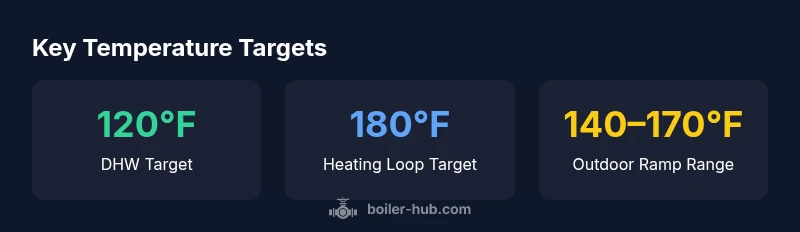
According to Boiler Hub, practical targets for most residential boilers are a heating loop around 180°F (82°C) and domestic hot water around 120°F (49°C). This pairing balances comfort, safety, and efficiency. If you employ outdoor reset or modern radiators, you can fine‑tune within roughly 140–200°F (60–93°C) for the heating loop while keeping DHW near 120°F.
Why boiler temperature matters
Temperature is more than a number on a dial. The boiler's target temperature drives comfort, energy use, and safety across both the domestic hot water (DHW) you draw for showers and sinks, and the heating loop that circulates through radiators or baseboards. Getting this right reduces fluctuations in room temperature, minimizes dead zones, and can lower your fuel bills over the heating season. Boiler Hub's analysis for 2026 shows that striking the right balance between the DHW setpoint and the heating target is one of the most practical ways to optimize a home system without replacing components. When temperatures lag or run too hot, you waste energy and stress equipment.
In practice, the DHW temperature and the heating loop temperature work in tandem: the DHW delivers comfort at taps, while the heating loop temperatures influence how quickly rooms heat up and how efficiently the system responds to outdoor conditions.
Understanding heating vs. domestic hot water temperatures
Two separate subsystems share a boiler: the DHW tank and the heating circuit. The DHW target sits at the point of use and must balance comfort with safety. Lower DHW temperatures reduce scald risk but may invite stagnation-related concerns if the water heater isn’t properly sized or insulated. The heating loop operates at a higher temperature to drive heat through radiators or baseboard fins. If the system uses radiant floors or outdoor reset, temperature strategies become more nuanced. In short, treat DHW and heating as distinct temperature targets that influence each other through the boiler’s control logic.
Typical targets by system type
Most homes find DHW around 120°F (49°C) to be a practical compromise between energy use and comfort. The heating loop often sits around 180°F (82°C), though some systems with weather compensation or outdoor reset run the loop within a broader range, commonly 140–200°F (60–93°C). Modern boilers offer variable schedules and adaptive setpoints that tailor these targets to the season, insulation quality, and radiator or underfloor configurations. If you have a particularly old loop or undersized radiators, consult a pro to identify whether a modest increase or decrease improves balancing without increasing fuel consumption.
How to measure and adjust safely
Begin by checking the manufacturer’s recommended ranges for your boiler model, then verify current temps at the boiler outlet and at a representative radiator or hot water tap. Use a calibrated thermometer and verify that your thermostatic mixing valve (if present) is set correctly. For DHW, confirm the tank thermostat is at or near 120°F and consider a high‑quality insulating jacket to minimize standby losses. For the heating loop, monitor supply and return temps with the boiler’s controls and any outdoor reset device. Make small adjustments, wait for the system to stabilize, and reassess. If you’re unsure, schedule a fall maintenance visit to verify control calibration and wiring.
Factors that influence optimal temps
Your home’s climate, insulation level, and airtightness play a large role in determining ideal temps. A well‑insulated house with efficient windows may operate at lower heating temperatures, while a drafty or poorly insulated room may require higher setpoints. The type of heat emitters matters too: radiators respond differently from underfloor heating, and baseboard heaters have their own dynamics. The boiler’s size, the presence of outdoor reset, and the use of a mixing valve or advanced condensate controls can further adjust the practical targets. Short cycling, odd temperature swings, or frequent boiler shutoffs are signs you may need recalibration or a system upgrade.
Using outdoor reset and weather-compensation
Outdoor reset and weather‑compensation strategies tune heating loop temperatures to outdoor conditions, reducing energy use while maintaining comfort. On milder days, the loop temperature can drop toward the lower end of the range; on very cold days, it can rise within the allowed window to deliver steady heat. Implementing reset controls typically requires compatible boiler hardware, proper wiring, and a well‑insulated distribution system. When configured correctly, outdoor reset reduces energy bills and lengthens equipment life by avoiding unnecessary high temps. A qualified technician can help you evaluate whether this approach fits your home, boiler type, and budget.
Common myths and misconceptions
Myth: Higher boiler temperatures always mean more heat. Reality: Most systems waste energy when temperature is higher than necessary. Myth: Outdoor reset is only for cold climates. Reality: It can improve efficiency in many climates when implemented with proper controls. Myth: DHW at 140°F eliminates Legionella risk. Reality: Legionella prevention also depends on storage duration, turnover, and system hygiene; use anti‑scald measures and periodic flushing as recommended by local codes.
Maintenance tips to keep temps efficient
Regularly service the boiler and controls, inspect and replace insulation on hot water pipes, and verify that thermostats andmixing valves operate correctly. Keep the DHW tank well insulated and consider a circulation timer to minimize standby losses. Verify that any weather‑compensation or outdoor reset devices are calibrated for your local climate. A proactive maintenance schedule typically reduces unexpected temperature fluctuations and improves overall efficiency.
Temperature targets for boiler systems
| Location | Recommended Temperature | Notes |
|---|---|---|
| Domestic hot water | 120°F (49°C) | Balance safety and comfort |
| Heating loop | 180°F (82°C) | Depends on emitters and climate |
| Outdoor reset range | 120–170°F (49–77°C) | Seasonal adjustment strategy |
Questions & Answers
What is the typical boiler temperature for most homes?
Most homes target a heating loop around 180°F (82°C) and DHW around 120°F (49°C). Adjust within manufacturer ranges based on your emitters and climate. Always consult your boiler's manual for model-specific guidance.
Most homes use about 180 degrees for the heating loop and 120 for hot water, but check your unit's manual for exact ranges.
Does raising the boiler temperature save energy?
Higher temperatures can actually increase energy use due to greater heat losses and longer recovery times. Efficient setups favor moderate temps and, where possible, outdoor reset or weather compensation to minimize energy use.
No. Higher temps often waste energy; use moderate temps and consider weather-based controls.
What temperature should domestic hot water be set to?
A common residential setting is 120°F (49°C) for DHW, balancing scald risk and energy. Some health guidelines suggest higher storage temperatures; use anti‑scald devices and follow local codes.
DHW is typically set around 120 degrees, with safeguards like anti-scald devices.
What is outdoor reset and should I use it?
Outdoor reset adjusts boiler temperature based on outdoor temperature, often saving energy while keeping comfort. It requires compatible hardware and proper setup; a professional can assess suitability for your home.
Outdoor reset adapts temps to outdoors to save energy, if your system supports it.
How often should I check or adjust boiler temperature?
Check seasonal temps at the boiler and key taps or radiators at least once a heating season. If you notice cycling or uneven comfort, schedule a service visit to recalibrate controls and verify valves.
Review temperatures at change of season; call a pro if you notice cycling or cold spots.
“Temperature control is not a one‑size‑fits‑all setting; understanding your system's design and climate is essential to balance comfort, safety, and efficiency.”
Key Points
- Set DHW to 120°F to balance safety and comfort
- Keep heating loop around 180°F; adjust for climate
- Use outdoor reset to save energy where appropriate
- Regularly test temps and calibrate controls
- Consult a pro if temps cause comfort issues or cycling