What Temperature Should Boiler Water Be? A Practical Guide
Discover the right boiler water temperatures for domestic hot water and heating, how to measure, adjust safely, and why temperature decisions impact comfort, safety, and energy use.


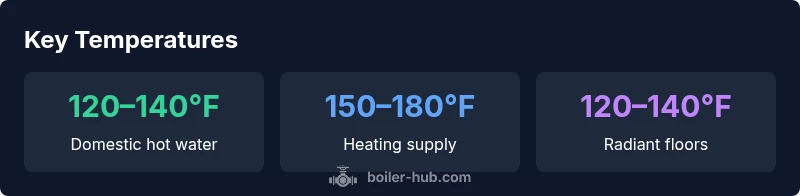
According to Boiler Hub, boiler water temperature depends on its purpose: domestic hot water is typically heated to about 120–140°F (49–60°C) for comfort, while space heating often uses higher temperatures, around 150–180°F (65–82°C) depending on outdoor temperature and system type. Properly configuring temperature improves comfort, safety, and efficiency. This quick guide highlights the core targets and practical checks you can perform.
Why Temperature Matters for Boiler Water
Choosing the right boiler water temperature affects comfort, safety, energy use, and equipment longevity. According to Boiler Hub, the temperature you set should reflect the distinct purposes of your system — domestic hot water versus space heating — and the layout of your home. A mismatch can lead to scalding risk, wasted energy, or insufficient hot water. In this section, we explore how different goals translate into target ranges and what controls influence outcomes. Understanding these baselines helps homeowners and facility managers optimize both performance and safety across seasons.
Domestic Hot Water vs. Space Heating: Temperature Targets
For domestic hot water, the conventional target is about 120–140°F (49–60°C). This range balances rapid hot-water recovery with minimizing the risk of scalding, especially in households with children or elderly residents. For space heating, boilers typically run hotter to ensure adequate room warmth, commonly in the 150–180°F (65–82°C) range. Radiant floors often tolerate lower supply temps (around 120–140°F) to maximize efficiency, while baseboard or radiator systems may require higher temps to meet heat loss. Always consider system design and use mixing valves or tempering devices when needed. Boiler Hub’s analysis emphasizes customizing targets to your equipment and occupancy.
How Temperature Impacts Efficiency and Comfort
Lowering supply temperatures can boost condensing boiler efficiency, translating into energy savings and quieter operation. However, too-low temperatures may lead to slow hot-water recovery or insufficient heating on very cold days. The key is aligning the setpoint with the system’s heat load and the climate. Weather-compensation and outdoor reset controls help automate this balance by adjusting the boiler output as outdoor temperatures change. Boiler Hub’s findings highlight that even modest adjustments can yield meaningful comfort improvements without sacrificing safety. Always verify that your boiler is compatible with the desired setpoint and the controls you plan to use.
Measuring and Adjusting Temperature Safely
Begin by consulting your boiler manual and identifying the correct target range for your setup. Use the built-in thermostat or a remote sensor to monitor the supply temperature, and if you’re experimenting, make incremental adjustments (5–10°F at a time) with the system off or in a low-load state. After adjustments, run a hot-water draw or a heat call to confirm stability and response time. Install or verify tempering valves and pressure relief devices are functional, and keep a thermometer on the hot-water outlet to confirm actual delivery temperatures. If in doubt, contact a qualified technician—safety and comfort depend on precise control.
Common Myths About Boiler Temperature
A frequent myth is that hotter always means better. In reality, excessively high temps can waste energy and increase scald risk without improving comfort. Another myth is that outdoor temperatures alone determine settings; while they influence load, proper controls (outdoor reset, thermostatic mixing valves) tailor temps to real conditions. Boiler Hub emphasizes using purpose-built controls rather than guesswork, and never bypass safety devices in pursuit of higher temperatures.
Practical Guidelines by Boiler Type
- Gas or oil-fired boilers with modern controls: Aim for domestic hot water at 120–140°F; heating at 150–180°F, adjusted for outdoor conditions. Use mixing valves for hot water and outdoor reset for heating load.
- Combi boilers: Protect domestic water with a stable 120–140°F and allow heating temperatures to rise only as needed for comfort.
- Radiant floor heating: Prefer lower supply temps around 120–140°F; ensure your pump and manifold support these temperatures to maximize efficiency.
- System boilers with radiators: Higher supply temps (around 170–190°F) may be necessary for older radiators; consider zone controls to prevent oversupply. Boiler Hub recommends aligning temps with system type and occupancy patterns for best results.
Seasonal Considerations and Outdoor Reset
Seasonal changes alter heat demand, so a single year-round temperature is rarely optimal. Outdoor reset strategies adjust boiler supply temperatures based on outdoor conditions, preserving comfort on cold days while avoiding excessive heat during milder periods. In practice, this means higher targets in mid-winter and cooler targets in shoulder seasons. A properly configured outdoor reset can improve efficiency without sacrificing comfort, particularly in homes with older insulation or variable occupancy.
Maintenance and Safety Checks
Regular maintenance keeps temperatures precise and safe. Schedule annual servicing to verify burner combustion, heat exchanger cleanliness, and control calibration. Inspect safety devices, pressure relief valves, and tempering valves for proper operation. Keep a thermometer at the hot-water outlet to verify delivered temperature, and log any persistent temperature mismatches or sluggish hot-water recovery. Following these checks supports consistent performance and reduces the risk of scalding or Legionella growth.
Target water temperatures by system type with brief notes
| System Type | Target Water Temp | Notes |
|---|---|---|
| Domestic Hot Water | 120–140°F | Storage tanks and tempering valves |
| Space Heating (Radiant) | 120–140°F | Lower temps improve radiant efficiency |
| Space Heating (Baseboard/Radiator) | 150–190°F | Higher temps for older radiators |
| Return Temperature Consideration | 100–130°F | Depends on loop design |
Questions & Answers
What is the ideal domestic hot water temperature?
Most homes aim for 120–140°F to balance comfort with safety. Higher temps increase scald risk and energy use. Use a thermostatic mixing valve to achieve a safe, comfortable delivery.
For most homes, set domestic hot water to about 120 to 140 degrees to balance safety and comfort.
Why does outdoor temperature affect boiler water temperature?
Outdoor temperature changes the heating load. Outdoor-reset or weather-comp controls automatically adjust supply temperatures to maintain comfort efficiently.
Outdoor conditions determine how hot the water should be; smarter controls help.
Can lowering boiler water temperature cause problems?
Lowering temps can slow hot-water recovery or reduce heating performance on very cold days if the system isn’t sized for lower temps. Ensure compatibility with your equipment.
Lower temps can affect hot water recovery and heating if the system isn’t designed for it.
What is outdoor reset and should I use it?
Outdoor reset uses outdoor temperature data to adjust boiler output, often improving efficiency. It requires compatible controls and correct setup.
Outdoor reset can save energy if your system supports it.
How do I adjust boiler water temperature safely?
Make incremental changes using proper controls, then test both hot water delivery and space heating response. If unsure, call a technician.
Adjust in small steps and test, or call a pro.
Is there a difference between temps for hot water vs heating?
Yes. Domestic hot water generally uses lower temps; heating loops may require higher temps to meet heat loss. Separate controls help optimize each purpose.
Water for taps and water for heating usually need different temps.
What safety concerns should I consider?
Scald risk, Legionella control, and proper venting are key. Keep safety devices like tempering valves functional and follow manufacturer guidelines.
Safety first: keep valves working and follow the manual.
“Temperature control is not one-size-fits-all; match boiler water temps to the heating load, domestic needs, and safety guidelines.”
Key Points
- Identify the primary purpose before setting temps.
- Domestic hot water targets are lower than heating targets.
- Use proper mixing and outdoor reset controls to optimize efficiency.
- Always verify settings against your boiler’s manual and safety devices.
- Boiler Hub recommends aligning temperatures with system design and occupancy.