What Should Boiler Temp Be Set At? Practical Guidelines for Home Heating
Discover the right boiler temperature settings for comfort, safety, and efficiency. This guide covers common ranges, how to adjust safely, and when to use outdoor reset.


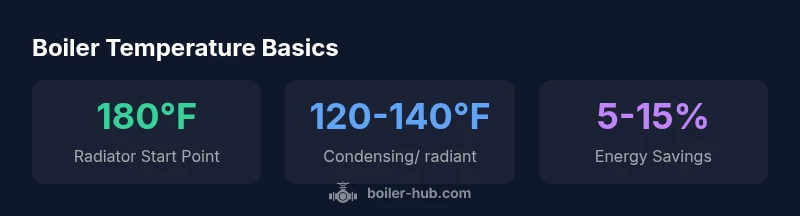
Typically, boiler Temp should be set around 180°F (82°C) for radiator-based heating and domestic hot water in many homes. For high‑efficiency condensing boilers and radiant floor systems, 120–140°F (49–60°C) is common. Always confirm with your boiler manual and consider outdoor reset or weather compensation to optimize both comfort and efficiency.
What the boiler temperature setting means for comfort and efficiency
Understanding what should boiler temp be set at is essential for balancing comfort, fuel use, and equipment longevity. The boiler water temperature determines how hot your radiators or radiant floors become, how quickly you feel warmth, and how much fuel you burn to maintain steady indoor conditions. In simple terms, higher supply temperatures warm spaces faster but waste energy, especially if your system has modern, efficient components. Lower temperatures save energy but may reduce heat up speed and water heating performance. The sweet spot depends on your heating distribution (radiators, radiant floors, or baseboard) and whether you need domestic hot water. For most homes, starting around 180°F provides reliable comfort, while more modern setups can benefit from lower temperatures if designed for it. Regularly reviewing performance and comfort can guide fine-tuning over the seasons. This discussion ties directly to the question of what should boiler temp be set at, and highlights how system type, insulation, and climate all influence the optimal setting.
Temperature ranges by system type
Different heating configurations demand different temperature targets. Traditional radiator systems usually operate best at higher supply temperatures to compensate for large gaps in heat transfer. Radiant floor heating operates efficiently at substantially lower temperatures but requires careful control to avoid underheating floors. Domestic hot water heating is typically tied to comfort and safety: you want water hot enough for showers without risking scalding. Condensing boilers thrive on lower return temperatures, which means lower supply temps can improve efficiency. In practice, the ranges look like this: radiators around 170–190°F, radiant floors around 120–140°F, and condensing boilers often working well at 120–140°F with proper mixing. Always verify with your system documentation and local climate considerations.
How to set your boiler: steps and safety
Getting the right boiler temperature involves deliberate steps. 1) Locate the boiler thermostat or digital control and note the current setpoint. 2) Check the manufacturer’s guidance for your model, especially if it’s a high-efficiency condensing unit. 3) If your system uses a separate hot water heater, confirm whether you need a shared or distinct temperature setting. 4) Make incremental adjustments (5–10 degrees at a time) and monitor comfort, boiler pressure, and return water temperature if your setup provides it. 5) Install a tempering valve on domestic hot water outlets to mitigate scald risk when raising supply temperatures for heating. 6) Consider outdoor reset controls to optimize temperature based on outdoor temperature and seasonal needs. Always power off and test safety devices after adjustments.
Outdoor reset and weather compensation: optimizing temp over the season
Outdoor reset and weather compensation adjust boiler supply temperature based on outdoor conditions. In cold weather, you raise the boiler’s supply to deliver more heat, while in milder days you lower it to save energy. This approach helps maintain comfort without overspending on fuel. Implementing outdoor reset can improve overall efficiency and prolong equipment life by reducing cycling and peak loads. The concept is straightforward: the boiler temperature correlates with ambient outdoor temperature, reducing the need to manually tweak settings as seasons shift. If your system supports it, enabling outdoor reset is often a smart move for long-term savings.
Practical case studies and examples
Case A: An older home with hot-water radiators relied on a 180°F supply to ensure rapid warmth during chilly mornings. After upgrading insulation and adding a weather-based reset, the owner gradually lowered the setpoint to 170°F and achieved noticeable energy reductions without sacrificing comfort. Case B: A modern condo with underfloor radiant heating uses a 125–135°F supply, with a tempering valve on hot water to prevent scalding. The combination of lower temperature and efficient distribution delivered consistent warmth and lower energy bills. Case C: A hybrid system with a high-efficiency boiler and intermittently used domestic hot water was optimized by separating DHW from space heating and configuring a 120–140°F heating setpoint. These examples illustrate how context matters when answering what should boiler temp be set at.
Common myths and mistakes
Myth: Higher temperature always equals more comfort. Truth: Overshooting temperatures wastes energy and can shorten equipment life. Mistake: Not considering outdoor reset or zoning. Myth: A single fixed temperature works year-round. Reality: Seasonal adjustments can save energy and maintain comfort. By understanding your system type and climate, you can set temperature targets that balance comfort, efficiency, and safety.
Boiler temperature guidelines by application
| Scenario | Recommended Boiler Temperature (°F) | Notes |
|---|---|---|
| Cold climate heat-only boiler | 180-190 | Common baseline for comfortable warmth with radiator-based systems |
| Older radiator systems | 170-190 | Higher temps for quick heat response |
| Modern condensing boilers | 120-140 | Better efficiency with lower supply temps |
| Radiant floor heating | 120-130 | Lower supply temp improves efficiency; ensure proper controls |
Questions & Answers
What is the ideal boiler temperature for a modern home?
For many modern homes with condensing boilers, 120-140°F is typical for space heating, with higher temperatures reserved for domestic hot water if needed. Always refer to the appliance manual and consider climate and distribution.
For most modern boilers, aim for 120 to 140 degrees Fahrenheit for heating, and adjust DHW as needed for comfort. Check the manual for specifics.
How does outdoor reset affect boiler temperature?
Outdoor reset automatically adjusts the supply temperature in response to outdoor conditions, saving fuel while maintaining comfort. It’s most effective with well-insulated homes and compatible boilers.
Outdoor reset changes the temperature based on outdoor weather to save energy while keeping you comfortable.
What safety considerations exist for domestic hot water temps?
DHW should generally be limited to 120°F to reduce scald risk. If higher temperatures are needed for sanitization, use a tempering valve at outlets to mix cooler water.
Limit domestic hot water to 120 degrees to avoid scalding; use a tempering valve if you need higher temps.
Can lowering boiler temp affect hot water supply?
Lowering heating temp can extend recovery time for hot water if the same boiler handles DHW. In many setups, separate DHW or a tempering valve mitigates this issue.
Yes, lowering heating temp can slow hot water recovery unless you have separate hot water or proper mixing.
What is outdoor reset and should I use it?
Outdoor reset is a control strategy that matches boiler output to outdoor temperature. If your system and climate support it, it can improve efficiency and comfort.
Outdoor reset matches heating to the weather outside—great for efficiency if your boiler supports it.
“Choosing the right boiler temperature is about balancing comfort, efficiency, and safety; small changes can yield meaningful energy savings over a season.”
Key Points
- Check your boiler manual for the exact recommended range.
- Maintain around 180°F for radiator heating in traditional setups.
- Use 120-140°F for condensing boilers and radiant floors to save energy.
- Install a tempering valve to keep domestic hot water safe.