What Should Boiler Pressure Be psi: A Practical Guide for Homeowners
Learn the recommended boiler pressure in psi, how cold vs hot readings differ, and safe steps to check and adjust. Practical guidance from Boiler Hub.


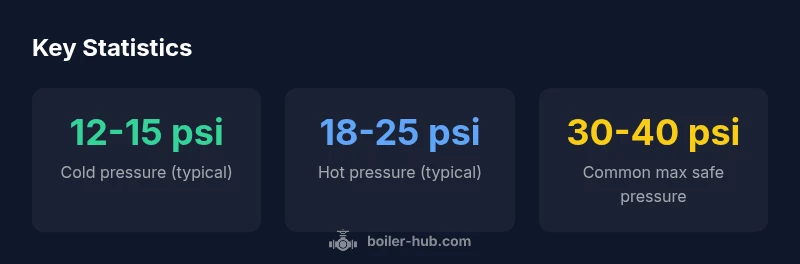
What should boiler pressure be psi is a common question for homeowners. For most residential boilers, aim for about 12-15 psi when the system is cold and roughly 18-25 psi once the boiler is hot. Variations occur by model and installation, so always check the manufacturer’s manual. If your readings stray outside these ranges, don’t panic—adjustments or service may be needed.
Understanding boiler pressure: psi basics
Boiler pressure, measured in pounds per square inch (psi), indicates how hard the water is being pushed through your heating system. It also reflects how well the pressure vessel and expansion components keep up with heating cycles. For most residential setups, a cold reading around 12-15 psi (roughly 0.8-1.0 bar) is typical, while the pressure can rise to roughly 18-25 psi (about 1.2-1.6 bar) when the water heats. The exact target varies by boiler brand, age, and installation, so the user manual is your best reference. A well-balanced pressure level enhances heat transfer, reduces cycling, and helps the system maintain stable temperatures. When people ask what should boiler pressure be psi, these ranges provide a practical starting point, but always verify with your model specifications and local codes.
From a safety perspective, avoid letting pressure drift toward the upper end of the range, and never ignore a gauge that shows rapid, unexplained changes. Routine checks are a simple, effective way to prevent more costly issues later.
Cold vs. hot: how pressure shifts
Pressure shifts during the heating cycle due to water expansion and the limited capacity of the expansion vessel. When the boiler fires up, heated water expands and pushes against the system, raising the gauge reading. This is why hot readings are naturally higher than cold ones. Expansion tanks are designed to absorb some of this pressure surge; if the tank loses air charge or fails, the pressure can rise more quickly or erratically. Understanding this dynamic helps homeowners interpret a rising pressure correctly, and to distinguish a normal swing from a warning sign.
If a boiler frequently climbs above the typical hot range, it could indicate a failing expansion tank, a closed air vent, or a leak somewhere in the system. Conversely, if pressure is consistently too low when hot, there may be a water feed issue or a problem with the pump. Knowing how pressure should move with heat helps you spot anomalies sooner.
How to check and adjust safely
Before you touch anything, consult the manufacturer’s manual and ensure you have proper protective gear. Here are general steps to check and adjust boiler pressure safely:
- Locate the pressure gauge on the boiler and note the cold reading. If the boiler is cold, the gauge should reflect the low end of the range (typically 12-15 psi).
- If readings are outside the recommended ranges, power down the boiler and let it cool for a few minutes to avoid scalding.
- Inspect the expansion tank: a cold, fully charged tank helps keep pressure stable during heating. If uncertain, a professional should test it.
- For adjustments, many boilers use a fill valve or a dedicated lever. Open slowly and monitor the gauge as you add water until you approach the target range. Do not overshoot.
- After adjustment, restart the boiler and allow it to reach normal operating temperature. Recheck the pressure; it should settle within the hot-range window.
If you are uncomfortable with any of these steps, or if the gauge repeatedly fluctuates, contact a licensed technician. Regular maintenance reduces the risk of pressure-related failures.
Troubleshooting: common pressure problems
High pressure (more than 25 psi when hot) often points to an overworked expansion tank, a faulty pressure relief valve, or a blocked feed valve that keeps water in the system. This condition can trigger relief valves and cause nuisance leaks. Low pressure (below 12 psi when cold) can indicate a leak, a failed pump, or insufficient water fill. Both extremes can shorten boiler life and impair heating efficiency. In either case, identify whether the issue is persistent and wide-spread or isolated to a single component. A persistent problem warrants a professional assessment and potential system flushing or repairs.
Short-term fluctuations during weather changes or after maintenance can be normal, but rapid, repeated swings merit attention. Tracking readings over several days helps determine if a fix is needed rather than a one-off fix.
When to call a pro and what to expect
If your boiler pressure is consistently out of the normal ranges, or if you notice frequent pressure drops or spikes, a service visit is warranted. A technician will typically verify gauge accuracy, check the expansion tank, inspect the pressure relief valve, and examine the water feed pressure. They may purge air from the system, test for leaks, and validate the system’s overall safety. Expect a diagnostic report with recommended actions, and be prepared for minor repairs or component replacement if needed. Regular service is the best safeguard against pressure-related failures.
Boiler pressure ranges by common boiler types
| Scenario | Cold psi range | Hot psi range | Typical max safe pressure |
|---|---|---|---|
| Residential boiler (standard) | 12-15 psi | 18-25 psi | 30-40 psi |
| High-efficiency boiler | 12-15 psi | 20-28 psi | 30-45 psi |
| Expansion-tank dependent system | 12-15 psi | 17-25 psi | 30-40 psi |
Questions & Answers
What is the ideal boiler pressure for most homes?
For most homes, the recommended cold pressure is about 12-15 psi and hot pressure around 18-25 psi. Model differences exist, so always verify with your boiler’s manual. If readings stray beyond this range, consult a professional.
Most homes aim for cold around 12-15 psi and hot around 18-25 psi. Check your manual and contact a pro if it’s out of range.
Why does boiler pressure change when the boiler heats up?
Water expands as it heats, which raises pressure in a closed boiler loop. An expansion tank absorbs some of this rise; if it fails, pressure spikes can occur. Normal cycling should show a controlled, moderate increase.
It’s normal for pressure to rise as water heats, because it expands. If it rises too fast, there may be a tank or valve issue.
What should I do if the pressure gauge shows low pressure (below 12 psi)?
Low readings usually mean the system is underfilled or there’s a leak. Check for obvious leaks, verify fill valve operation, and consult the manual. Do not overfill; add water gradually and recheck.
If it’s under 12 psi, check for leaks and verify the fill valve. Add water slowly and recheck the gauge.
What should I do if pressure is high after heating?
High readings after heating can indicate an overactive system or expansion tank failure. Ventilate safety concerns and contact a pro to inspect the expansion tank and relief valve. Do not bypass safety devices.
If it’s high after heating, it may be a tank or valve issue—call a pro to inspect.
Can I adjust boiler pressure myself?
Some boilers allow limited adjustment, but many require a professional. Always follow the manual and safety guidelines. If you’re unsure, schedule a service visit rather than risk personal injury or equipment damage.
Only adjust if you’re sure of the model’s procedure; otherwise, call a licensed technician.
What tools do I need to check boiler pressure?
At minimum, you’ll need a pressure gauge reference and access to the boiler’s fill valve. For safe inspection, use protective gear and follow the manufacturer’s instructions. When in doubt, hire a pro.
A gauge and manual are usually enough to start; if you’re unsure, a pro can help.
“Keeping your boiler pressure within the recommended range is essential for safe operation and efficient heat transfer.”
Key Points
- Know your cold and hot psi ranges for quick checks
- Don’t let pressure exceed the max safe limit; consider expansion tank status
- Consult the manual or Boiler Hub before making adjustments
- Regular checks save energy and prevent unexpected failures
- If in doubt, call a licensed technician for a safe evaluation