Is a Boiler the Same as a Hot Water Tank? A Practical Comparison
Boiler vs hot water tank: understand definitions, differences in heating methods, outputs, and installation. This objective guide from Boiler Hub helps homeowners and facility managers decide which system fits their climate, space, and hot-water needs.


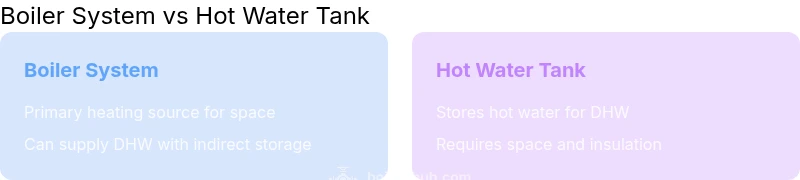
Boilers and hot water tanks are not the same. A boiler heats water to power space heating and often domestic hot water, while a storage hot water tank only stores heated water produced elsewhere. Some systems use a combi boiler to handle both duties, but many homes rely on separate DHW tanks. The key differences are heating method, output type, and installation requirements, with implications for efficiency, space, and maintenance.
Definitional Foundations: Is the Question Is boiler the same as hot water tank?
In everyday homes, the question is often framed as: is boiler the same as hot water tank, and the short answer is no. A boiler is a heating device designed to raise water (or produce steam) for space heating and, in many systems, for domestic hot water as well. A hot water tank, by contrast, is a storage vessel that holds hot water for later use. Some configurations blur the line—combi boilers combine heating and on-demand hot water delivery without a storage tank. The difference matters because it shapes how you heat your spaces, how you store DHW, and how efficiently the system operates over time. Understanding these definitional distinctions helps homeowners avoid overpaying for features they don’t need and undercutting comfort during peak demand.
How Boilers Work vs Hot Water Tanks: Core Mechanisms And How They Differ
A boiler uses a burner (gas, oil, or electricity) to heat water that travels through a hydronic system for space heating, or into an indirect coil for domestic hot water. A hot water tank stores hot water that has already been heated by another source, often a separate heater or the same boiler in a non-combi setup. In a typical storage system, the water is kept at a set temperature until taps demand it. In contrast, a combi boiler delivers hot water on demand without a storage tank, relying on instantaneous heat to meet DHW needs. The fundamental distinction is that one device generates heat as needed and the other stores hot water for later use; both can be part of the same home, but they serve different roles.
Types Of Boilers And Water Heaters: Options And Implications
Boilers come in several flavors: conventional (system) boilers, which heat water for home radiators and may feed indirect storage tanks; and combi (combination) boilers, which provide space heating and DHW without a storage tank. Hot water heaters vary too: storage tanks (tank-type water heaters) and tankless (on-demand) water heaters. Each type has advantages and constraints—combination boilers save space but may have slower DHW delivery during peak demand, while storage tanks offer steady DHW supply but require space and insulation to minimize standby losses.
Key Differences At A Glance: Quick Attribute Comparison
- Heating Method: Boilers generate heat for both space heating and DHW in many configurations; hot water tanks store heated water for DHW only (except when used with a boiler).
- Output Type: Boilers usually support hydronic heating and DHW, tanks provide buffered hot water.
- Efficiency Potential: Condensing boilers improve efficiency; the efficiency of storage tanks hinges on insulation and standby loss.
- Space Footprint: Boilers often fit into a dedicated room; tanks need area for storage within the utility zone.
- Maintenance: Boilers require burner/controls service; tanks require anode rod checks and periodic flushing.
- Installation Cost: Upfront costs depend on system type; overall lifecycle costs depend on usage patterns.
Efficiency, Output, And Comfort: What Drives Performance
Efficiency in boiler-based systems depends on proper sizing, condensing technology, and heat exchanger design. For storage water heaters, insulation and tank quality limit standby heat losses. If your climate demands consistent space heating and DHW, a well-sized boiler may deliver better year-round comfort per dollar spent, whereas DHW-only needs might be more cost-effective with a dedicated tank or a high-efficiency on-demand unit.
Sizing, Space, And Installation Considerations
Sizing a boiler or a storage tank requires an assessment of peak hot-water demand, climate, and home layout. Boilers must match the heating load, and when paired with storage tanks, the coil size or indirect heat transfer method matters. Storage tanks demand physical space in utility rooms, basements, or mechanical closets. For apartments or compact homes, a compact combi boiler might minimize space while delivering DHW on demand. For larger homes, separate boiler and storage tank configurations may provide more resilience and easier future upgrades.
Maintenance And Lifespan Considerations
Regular servicing keeps boilers running efficiently—this includes burner inspection, cleaning, pressure checks, and system balancing. Hot water tanks benefit from periodic anode rod checks, flushing to remove mineral buildup, and thermostat calibration. Lifespans vary by brand, usage, and maintenance quality, but boilers with modern components and good condensate management tend to require fewer interventions per decade when properly maintained. Proper winterization and consistent servicing reduce late-life failures for both systems.
Costs, Value, And Lifecycle Tradeoffs
Upfront costs for boilers can be higher when including associated distribution (pumps, controls, and radiators). Storage tanks add expense for the tank itself, insulation, and the plumbing to feed from the heater. Long-term energy costs depend on usage patterns, insulation quality, and climate. In many cases, a thoughtfully designed system that combines efficient boilers with appropriately sized DHW storage or on-demand DHW can minimize total cost of ownership while maintaining comfort.
When To Choose Each System: Use-Case Scenarios
If you live in a cold climate and need reliable space heating alongside domestic hot water, a modern condensing boiler with a well-insulated DHW strategy is often the best fit. If space is at a premium and you primarily need domestic hot water, a high-efficiency storage tank or an on-demand system may suffice. In mixed-use residential or light commercial settings, a combi boiler could offer a practical balance, while larger facilities might benefit from separate boiler rooms and DHW storage that allow for easier scalability.
Common Installation Scenarios In Homes And Facilities
Residential homes with radiators often lean on boilers with indirect tanks for DHW. Apartments may favor combi boilers to save space. In commercial settings, multiple boilers or system boilers paired with storage can deliver centralized heating and hot water efficiently. Each scenario has trade-offs in terms of piping complexity, maintenance access, and future expansion potential.
Myths And Misconceptions: Debunking Common Beliefs
A frequent myth is that boilers are always more expensive to operate than tanks. In reality, system design and usage dominate energy costs. Another misconception is that storage tanks always waste energy; insulation can dramatically reduce standby losses. Finally, some assume combi boilers always outperform separate systems; performance depends on hot-water demand patterns and system sizing.
Practical Steps To Decide For Your Building
- Inventory demand: space heating presence, DHW usage, and peak timing. 2) Assess space: dedicated boiler room vs utility closet. 3) Compare ALTERNATIVES: combi, storage, or tankless options. 4) Get a professional sizing and efficiency assessment. 5) Plan for future needs: expansion, climate change, and maintenance accessibility.
],
comparisonTable
Comparison
| Feature | Boiler System | Hot Water Tank (Storage Water Heater) |
|---|---|---|
| Primary purpose | Heat space via hydronic system and may provide DHW | Store DHW heated by another source (boiler/heat source) |
| Heating method | Burner heats water; distributes through radiators or underfloor system | Water is heated elsewhere and kept hot in a tank |
| Output type | Combined DHW and space heating (varies by setup) | DHW storage only (no space heating) |
| Efficiency potential | High with modern condensing designs and proper sizing | Dependent on insulation and standby losses; efficiency can be high with good tank design |
| Space requirements | Often requires a dedicated boiler room or cabinet | Requires space for insulated storage tank |
| Maintenance needs | Regular burner/controls service; system balancing | Tank maintenance: anode rod checks, flushing, thermostat checks |
| Cost implications | Higher upfront in many cases; long-term energy savings possible | Lower upfront for tank plus installation; energy costs vary by source |
| Best for | Homes needing space heating plus DHW or future expansion | DHW-focused homes or apartments with space constraints |
Advantages
- Can provide integrated space heating and domestic hot water
- Modern boilers with condensing tech improve efficiency
- Flexibility to upgrade components (indirect tanks, controls)
- Long-term reliability with proper maintenance
The Bad
- Higher upfront installation costs for combined systems
- Storage tanks add space requirements and standby losses
- Maintenance complexity increases with multiple components
- Not all boilers deliver DHW as efficiently as dedicated tanks in peak demand
Boiler-based systems and hot water tanks are not identical; choose based on demand, space, and climate.
A well-sized boiler setup with appropriate DHW strategy often gives better year-round comfort and efficiency for homes needing space heating. For DHW-only needs or space constraints, a high-quality storage tank or tankless option may be preferable. The right choice balances heating demand, space, and long-term operating costs.
Questions & Answers
Is a boiler the same as a hot water tank?
Not exactly. A boiler heats water for space heating and often DHW, while a hot water tank stores hot water produced by another heater. Some setups combine both duties in a combi boiler, but many homes keep separate components.
Not exactly. A boiler heats water for heating and sometimes hot water, while a hot water tank stores hot water made elsewhere. In some homes, a combi boiler handles both tasks.
Do I need a storage tank if I have a boiler?
Not always. If your system is a combi boiler, you may not need a tank. If you have a traditional boiler, you might use an indirect storage tank to supply DHW. Sizing and climate determine the best approach.
Not always. It depends on the system type and demand for hot water.
What is a combi boiler?
A combi boiler provides space heating and on-demand hot water without a storage tank. It heats water as you use it, which saves space but may have slower DHW delivery during high demand.
A combi boiler gives hot water on demand and heats spaces, without storing hot water.
How should I size boiler or water heater capacity?
Sizing should match peak hot-water and heating demand, climate, and home size. A professional assessment ensures the boiler or tank has appropriate capacity and efficiency. Oversized systems waste energy and underperform during shoulder seasons.
Size should match peak demand; get a pro assessment for best results.
What maintenance is required for these systems?
Boilers require regular burner maintenance, cleaning, and pressure checks. Hot water tanks need anode rod replacement, periodic flushing, and thermostat checks. Regular service helps prevent costly outages and extends system life.
Regular service keeps both systems reliable and efficient.
When should I replace a boiler or water heater?
Consider replacement when repair costs approach or exceed a significant portion of the system’s value, or when efficiency and reliability have noticeably declined. Older designs may not meet current safety standards or energy codes.
If repairs are frequent or efficiency is poor, consider replacement.
Key Points
- Assess whether you need space heating plus DHW or DHW only
- Boilers can power both heating and hot water; tanks primarily store hot water
- Combi boilers save space but may affect DHW delivery during peak demand
- Modern condensing boilers and well-insulated tanks maximize efficiency
- Professional sizing is essential for optimal performance