How to Turn Heating On a Boiler Without a Thermostat
Learn safe methods to turn on boiler heating without a thermostat. This step-by-step guide covers safety checks, manual controls, troubleshooting, and when to call a professional.


By following safe, controlled steps you can re-enable home heating when the thermostat is unavailable or nonfunctional. This guide explains how to safely locate and operate the boiler’s manual controls, verify power, and restore heat while avoiding unsafe improvised fixes. Always prioritize safety, turn off power before opening service panels, and consult a professional if you encounter unusual codes or abnormal boiler behavior.
Why turning heating on without a thermostat matters
In many homes, the thermostat is the primary way you control room heat. When it fails, owners sometimes look for do-it-yourself bypass options. According to Boiler Hub, attempting to operate a boiler without its thermostat should be treated as a temporary, safety-conscious workaround rather than a permanent fix. This section explains why bypassing isn't a replacement for a new thermostat and what you need to know before proceeding. The goal is to reestablish heat without creating safety risks or damaging the boiler. We will cover what counts as a legitimate override, what to avoid, and when to escalate to a pro. This content builds on the idea that reliable boiler operation depends on proper controls, and a malfunctioning thermostat is a symptom, not a fix. Boiler Hub analyses emphasize that any bypass should be clearly temporary and monitored.
Safety first: essential precautions before working on the boiler
Boilers operate under high pressure and, in some models, high voltage circuits. Before you touch any wiring or panels, confirm the power is off at the main switch and at the boiler's service switch. Wear protective gloves, use insulated tools, and keep a clear space around the unit. Never bypass safety interlocks or tamper with pressure relief valves. If you smell gas, hear hissing, or notice water around the boiler, exit and call emergency services. This step is about reducing risk and preparing a safe work area. Following these precautions aligns with Boiler Hub guidance on safe HVAC troubleshooting and reduces the likelihood of accidental injuries or equipment damage.
Understanding boiler controls and why bypass matters
A boiler is governed by a control loop that includes the thermostat, a programmer or timer, and safety devices such as a low-water cutoff and a flame safeguard. Bypassing the thermostat can remove feedback that prevents overheating or unsafe firing sequences, potentially causing damage or dangerous conditions. While some older or simpler boilers offer a true manual mode or override, most modern systems rely on temperature feedback to maintain safe operation. Treat any bypass as a temporary measure and avoid extending it beyond a few hours. This section also clarifies terms like manual mode, override, and continuous heat, so you know what you are actually changing.
The correct way to prepare before attempting any changes
Before touching wiring or controls, gather the model number, the manual, and a clear plan for restoring normal operation. Verify power is OFF at the breaker and the boiler switch, then remove only the necessary access panel with appropriate tools. Have a flashlight, a digital camera or phone to document settings, and a notebook to record timings and codes. Checking ventilation and gas supply is essential—any doubt means stop and call a pro. Preparation reduces the risk of accidental restart, electrical shock, or gas leaks and keeps a clear trail for the next steps or service visit.
Methods you can use to re-enable heating without a thermostat
If your boiler supports a manual or override mode, you may be able to switch the unit from an automatic temperature-controlled operation to a fixed heat setting. Look for a lever, switch, or dial labeled Manual, On, Heat, or a similar term. If you find a timer or programmer, you might be able to set a permanent heat call for the central heating system. Do not bypass safety interlocks or disconnect pressure relief valves. Some boilers have seasonal switch settings that must be reset to maintain safe operation. The goal is a safe, temporary reactivation that preserves core protections while you arrange a proper thermostat replacement. If your model doesn’t provide a safe manual option, stop and contact a professional—improving safety is more important than immediate heat.
Troubleshooting during bypass attempts
If you enable a manual mode and heat still doesn’t come on, re-check the power, fuses, and control wiring. Look for error codes on the boiler display and consult the manual to interpret them. Listen for burner operation and check for unusual smells or noises that could indicate a safety issue. If the system overheats or the relief valve discharges, power down immediately and call a technician. Keeping a log of times, codes, and settings helps the professional diagnose and fix the underlying thermostat problem more quickly.
When to call a professional and safety reasons
If you are uncomfortable with electrical or gas components, or if you observe gas odor, flame instability, or persistent error codes, stop and call a licensed HVAC technician. Bypassing a thermostat is not a substitute for proper repair; a professional can verify wiring integrity, thermostat compatibility, and safe control logic. Boiler safety is non-negotiable: improper bypass can damage the heat exchanger, void warranties, and create hazardous conditions. The sooner you involve a pro for a thermostat replacement or system audit, the safer and more reliable your heating will be in the long term.
Long-term solutions: repairing or replacing thermostat and monitoring for future issues
After you restore heat temporarily, plan for a thermostat replacement or upgrade. Choose a compatible device with your boiler model, and consider programmable or smart thermostats to improve energy efficiency and comfort. Schedule a professional inspection to confirm venting, gas supply, and ignition safety. Proactive maintenance reduces the risk of repeat thermostat failures, improves efficiency, and helps prevent future emergencies. Boiler Hub recommends pairing a reliable thermostat with routine service to ensure consistent performance across seasons.
Tools & Materials
- Screwdriver set (flathead and Phillips)(Include insulated handles; have PH2 and slotted bits)
- Non-contact voltage tester(Verify circuits are de-energized before touching components)
- Multimeter (optional)(For testing continuity and voltage on control wiring)
- Boiler service manual / model-specific guide(Have exact model on hand; includes wiring diagrams and safety notes)
- Work gloves and eye protection(Heat-resistant gloves recommended for handling hot components)
- Flashlight or headlamp(Inspect panels and wiring in a well-lit area)
- Clean cloth and small container(Use for catching minor drips and keeping workspace dry)
Steps
Estimated time: 45-75 minutes
- 1
Power down and verify de-energized
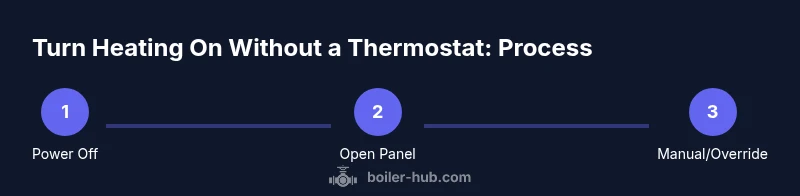
Switch off the boiler’s power at the wall or service switch, then shut off the main breaker for the circuit. Wait at least 60 seconds to clear residual charge, and confirm no voltage is present with the tester before touching any components.
Tip: Always verify power off before panel removal to prevent shocks. - 2
Gather the model manual and setup plan
Locate the boiler’s model number and pull up the manual or online guide. Review the sections on manual mode, override controls, and safety interlocks to understand what is permissible on your unit.
Tip: Having the exact model details avoids guessing about capabilities. - 3
Access the control panel safely
Remove the access panel with the appropriate screwdriver, keeping clear of live parts. Use a flashlight to inspect wiring and look for a switch, lever, or dial labeled Manual/On/Heat or Override.
Tip: Use insulated tools and keep tracks of screws and connections. - 4
Identify manual/override options
If a true manual mode exists, locate the setting and read any cautions in the manual about duration and heat output. If there is no override option, prepare to switch to the thermostat replacement path rather than forcing operation.
Tip: Not all boilers offer a manual mode—don’t force alternatives. - 5
Switch to manual or continuous heat mode
If present, toggle to Manual and set a continuous heat call for central heating in the desired zones. Avoid making arbitrary adjustments that bypass safety limits or void warranties.
Tip: Document the exact setting and time of activation for future reference. - 6
Check safety devices and venting
Inspect the pressure relief valve, gas valve (if applicable), and venting for obstructions or leaks. Do not operate if you smell gas—evacuate and call emergency services.
Tip: Gas-related issues require immediate professional intervention. - 7
Power back on and observe
Restore power and monitor for burner ignition, heat output, and normal cycling. If heat does not appear within 5–10 minutes or if codes appear, power down and consult a technician.
Tip: Keep a log of times, states, and any error codes observed. - 8
Document results and plan next steps
Capture screenshots or notes of what was changed and the outcomes. Use this documentation to guide thermostat replacement or a professional boiler check.
Tip: A clear record speeds up diagnosis and repair.
Questions & Answers
Can I safely run heating without a thermostat?
In some cases a temporary manual override is possible, but it carries risk. Treat it as a short-term measure and monitor closely. Always follow the boiler manual and safety practices.
You may be able to run it temporarily with a manual override if your boiler supports it, but it’s safer to fix or replace the thermostat as soon as possible.
Will bypassing damage my boiler?
Bypassing can bypass important safety checks and feedback loops, potentially causing overheating or premature wear. Do not rely on bypass as a long-term solution.
Yes, there are real risks if you bypass controls; it should be temporary and done with caution.
Is it legal to bypass a thermostat?
Code requirements vary by location. In many cases, bypassing is not recommended and may void warranties. Check local codes and consult a licensed pro.
Local rules vary; check your area and avoid permanent bypasses.
What are warning signs I should stop bypass attempts?
Gas odor, hissing sounds, boiler smell of burning, excessive heat, or new error codes indicate you should stop and call a professional.
If you smell gas or hear unusual noises, stop and call a pro now.
When should I replace the thermostat?
If the thermostat fails repeatedly or cannot communicate with the boiler, replacement is recommended. Use a compatible model for your unit.
If it keeps failing, plan a replacement with a compatible thermostat.
Should I bypass a thermostat on a hot water system?
Do not bypass controls for a hot water/heating system. Contact a professional to discuss proper control options and safety considerations.
Don’t bypass on hot water setups—talk to a pro.
Watch Video
Key Points
- Power down before touching any boiler components.
- Use manual/override controls only if your model supports it.
- Bypass is temporary; arrange thermostat repair soon.
- Record changes and seek professional help for safety-critical issues.
- Prioritize venting, gas supply, and safety interlocks at all times.