How to Turn Boiler On and Off: A Practical Guide
A safety-focused guide to turning your boiler on and off, covering gas and electric models, control basics, troubleshooting, and when to call a professional.


By the end of this guide you will know how to turn boiler on and off safely, adjust basic controls, and verify heat delivery. Before you start, locate the boiler’s control panel, review the safety instructions in the manual, and ensure the area around the unit is clear. This guide covers both gas and electric boiler types and common safety checks.
Why turning boiler on/off correctly matters
Maintaining proper on/off routines is more than comfort; it affects energy use, wear on components, and safety. When you switch a boiler on or off at the right time, you reduce standby losses, minimize heat fluctuation in rooms, and prevent unnecessary cycling that can shorten the life of pumps and valves. Boilers respond to demand: turning on when you need heat ensures quick warm-up, while turning off when heat isn't required avoids heat losses through flue and radiation. In addition, correct on/off practices help you avoid carbon monoxide risks by ensuring the system is venting properly and the safety devices remain engaged. By following a deliberate sequence, you simplify troubleshooting and keep the home comfortable without wasting fuel.
Understanding boiler controls
Most boilers have a control panel with a display, mode selector, and temperature/pressure dials or digital inputs. Familiarize yourself with terms like reset, auto, standby, and manual. The thermostat or smart thermostat communicates desired heat; the boiler responds by firing when heat is requested and cuts off when satisfied. On gas boilers, a safe valve and electronic ignition regulate flame, while electric boilers rely on heated elements controlled by a timer. Pay attention to error codes or flashing lights; these provide quick diagnostics. Reading the manual helps you map each control to its action, so you can quickly navigate from off to on with confidence. If you use a smart thermostat, ensure it is paired and set to your preferred schedule.
Safety prerequisites before operation
Before interacting with the boiler, ensure the area is clear, with at least the recommended clearance around the unit. Check that the power supply is protected by a working switch or fuse, and that venting is unobstructed. If you detect a gas odor, evacuate immediately and call the gas provider. Never attempt to light or re-light a gas boiler if you smell gas or suspect a leak. Use appropriate PPE: gloves to protect from hot surfaces, and safety glasses in case of warm steam. If you have a heat alarm or CO detector, verify it is functioning. Keep children and pets away during any inspection. This is not a substitute for a professional if you are unsure. Boiler Hub emphasizes adherence to local codes and the manufacturer’s recommendations.
Pre-turn-on checklist
Before you power up, perform a quick visual check: ensure the area around the boiler is clean, the flue cap is intact, and there are no obvious leaks or corrosion. Verify the main power switch is off before you begin, then confirm the circuit breaker or fuse controlling the boiler is in good condition. Check the system pressure (for most gas boilers a typical range is 1-2 bar; for electric boilers, monitor the display for safe operation). Ensure the thermostat is set to the desired temperature and that any timers are paused or scheduled appropriately. If your boiler has a reset or diagnostic mode, review the codes in the manual so you can recognize issues quickly.
How to turn the boiler on safely (gas or electric)
Power up by first turning on the main power switch and ensuring the boiler is in a ready state. If it’s a gas boiler, confirm the gas valve is open and that the boiler’s ignition system engages—listen for a brief ignition sound or check the display for an “on” indicator. For electric boilers, switch the unit to the “on” or “auto” mode and set the desired temperature. After initiating, allow 5–10 minutes for the system to stabilize and verify that radiators begin to warm. If your boiler has a diagnostic screen, note any codes and consult the manual if something seems amiss.
How to turn the boiler off safely
To turn off, reduce the thermostat to a comfortable but lower setting first, then switch the boiler to the “off” or “standby” mode. If you’re leaving for an extended period, turn off the main power switch and, if applicable, close the gas valve after ensuring you’re not in a hazardous area. Allow the boiler to cool for a few minutes before any touchings of panels or servicing. Document any unusual noises or leaks observed during shutdown.
Troubleshooting if the boiler won’t start
If the boiler fails to start after following the on-step, begin with basic checks: ensure power is on, confirm thermostat settings, and inspect for tripped breakers. Look for error codes on the display and refer to the manual for associated meanings. Check for gas supply if it’s a gas boiler, and confirm the ignition system is functioning. If the issue persists, avoid forceful attempts and contact a professional to prevent damage or safety hazards.
Troubleshooting if the boiler won’t shut off
A boiler that won’t shut off may indicate a stuck relay, thermostat failure, or wiring issue. First, try lowering the thermostat to its minimum and check whether the boiler stops. If it continues, turn off power at the main switch and inspect the control terminals for signs of wear or corrosion. Do not bypass safety controls. If the boiler remains active, contact a licensed technician promptly to diagnose and repair electrical or gas-related faults.
Maintenance and energy-saving habits
Regular maintenance can help your boiler run efficiently and safely. Bleed radiators to remove trapped air, check pressure and adjust per the manual, and review settings on timers to optimize heating for your schedule. Consider upgrading to a programmable thermostat or smart thermostat to better align with occupancy patterns. Schedule an annual professional inspection to identify wear, leaks, or venting issues before they become major faults.
When to call a professional
If you notice persistent fault codes, unusual noises, gas smells, or trouble starting/stopping the boiler despite following the guide, it is time to call a professional. A licensed technician can diagnose faulty ignition systems, leaks, venting problems, or electrical faults. Do not attempt major repairs yourself if you lack training, as improper handling can create safety risks and violate local codes.
Safety notes: CO alarms and venting awareness
Carbon monoxide is colorless and odorless, so a working CO alarm in the boiler room is essential. Regularly check detectors and ensure proper venting to the outdoors. If a CO alarm sounds or if you experience headaches, dizziness, or nausea, evacuate and seek emergency assistance. Never block vents or alter venting configurations without professional guidance.
Quick-reference control panel cheat sheet
- Power switch: OFF/ON
- Mode: heat/auto/standby
- Temperature: setpoint for desired comfort
- Reset: only when instructed by manual or fault code
- Display: check for error codes and follow manufacturer guidance
- Timer/Program: aligns heat delivery with your schedule
Keep this cheat sheet handy near the boiler for rapid reference.
Tools & Materials
- Boiler owner's manual (model-specific)(Keep it accessible near the boiler to match steps to your model.)
- Safety gloves (insulated)(Heat-resistant, at least 14-18 inches long.)
- Flashlight or headlamp(Ensure sufficient light for panel and connections.)
- Screwdriver set (Phillips & flathead)(Only if your boiler panel requires screws.)
- Gas detector or CO detector (battery-powered)(Use in the boiler room for added safety.)
- Digital thermometer or pressure gauge (optional)(Helpful for confirming safe operating ranges.)
- Rags or towels for minor spills(Keep handy in case of small leaks or drips.)
Steps
Estimated time: 20-25 minutes
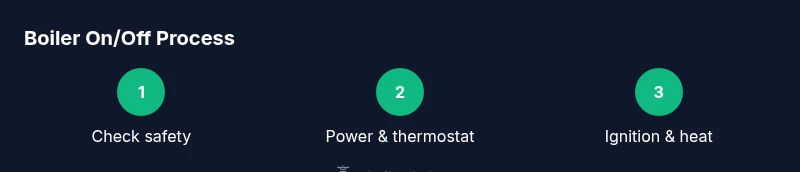
- 1
Prepare and safety check
Begin by clearing the area around the boiler and removing any clutter. Verify the main power is accessible and switch is off, then inspect for gas odors or signs of leaks. Put on insulated gloves and flashlight, and review the manual for any model-specific safety steps. This preparation reduces the risk of accidents during startup.
Tip: If you smell gas, evacuate immediately and call your gas provider. - 2
Power and thermostat setup
Confirm the boiler is connected to power and the thermostat is set to a heating schedule that matches your needs. If you have a smart thermostat, ensure it is synced and that its schedule is active. For gas boilers, ensure the main gas valve is open before attempting ignition; for electric boilers, skip the gas checks and proceed with the electric controls.
Tip: Do not override safety interlocks or jumper wires. - 3
Initiate the heat cycle
Turn the boiler to the ON or AUTO position and set the desired temperature. Listen for ignition or the hum of the heating elements; watch the display for any error codes. Allow 5–10 minutes for the system to warm and circulate water. If your boiler requires a reset, follow the manual instruction precisely.
Tip: If you hear unusual banging or smell burning, turn off and wait before investigating. - 4
Verify heat delivery
Check radiators or underfloor zones for warmth within 10–15 minutes. Confirm that the return temperature and flow are within normal ranges as indicated by the control panel. If there’s no heat, reevaluate thermostat settings, power, and gas supply as applicable.
Tip: Document any abnormal readings or error codes. - 5
Troubleshoot non-start scenarios
If the boiler remains unresponsive, recheck power, breaker status, and thermostat connections. Look for error codes and reference the manual. Do not attempt to repair internal components yourself if you’re unsure.
Tip: Isolate the problem to a control or power issue before calling a pro. - 6
Turn off safely when done
When heat is no longer needed or you’re closing up for the day, return the thermostat to OFF or the boiler to STANDBY, and switch off the main power if appropriate. If gas is involved and you’re leaving, close the gas valve only if you know how to do so safely and have confirmed no ongoing fuel flow.
Tip: Never block vents or seals during shutdown.
Questions & Answers
Is it safe to turn my boiler on and off frequently?
Frequent on/off cycling can wear components and reduce efficiency. Use on when heat is needed and off when it isn’t, following the manufacturer’s guidance.
Frequent on/off cycling can wear parts; use heat when needed and follow the manual.
What should I do if the boiler won’t start after turning it on?
Check power supply, thermostat settings, gas supply (for gas boilers), and any error codes on the display. If unresolved, consult a licensed technician.
Check power, thermostat, gas supply, and error codes; call a pro if it won’t start.
How do I reset a boiler after a fault code appears?
Most boilers have a dedicated reset control. Follow the manual to perform a reset and clear the fault code. If codes persist, contact a professional.
Use the reset control as the manual directs; persistent codes mean professional help.
Can turning off the boiler affect home heating long-term?
Turning off the boiler reduces heat temporarily; reheat may take longer after a long-off period. Use scheduling to balance comfort and energy use.
Turning it off affects immediate heating; plan reheat with a schedule.
What’s the safe way to shut off gas supply if needed?
Only if you know the valve location and operation. Turn the valve clockwise until snug. If you smell gas, leave the area and call the utility.
Only shut gas if you know how; otherwise call your gas provider.
What maintenance steps reduce risk when operating a boiler?
Have annual professional inspections, bleed radiators as needed, and check pressure and vents regularly. These steps reduce risk and improve efficiency.
Get an annual professional check, bleed radiators, and keep an eye on pressure.
Watch Video
Key Points
- Turn off safely before any maintenance.
- Verify heat delivery after turning on.
- Follow the manual for model-specific steps.
- Call a professional for persistent faults.