How to Stop Boiler Beeping: Safe, Simple Fixes for Home
Learn how to stop boiler beeping safely with a clear, step-by-step approach. Identify beep patterns, verify safety devices, perform safe resets, and know when to call a professional. Boiler Hub guides homeowners through practical troubleshooting.


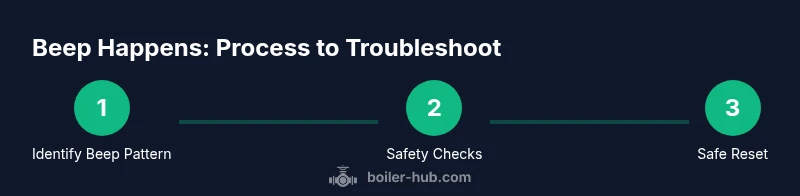
According to Boiler Hub, stopping boiler beeping starts with identifying the beep pattern, checking safety devices, and performing a safe reset. If the beeping continues after a basic reset, avoid operating the boiler and contact a qualified technician. This quick guide covers safety-first steps, common causes, and how to restore normal operation without unnecessary risks.
Understanding why boilers beep
Beeping is the boiler’s built-in alert system, signaling a fault, warning, or status update. Modern boilers use audible cues alongside display codes to communicate issues ranging from minor sensor drift to serious safety concerns like gas leaks or overheating. The audible pattern, together with flashing lights or error codes on the display, helps homeowners triage the situation. According to Boiler Hub, recognizing the context of the beep guides you toward immediate safety actions and whether a DIY fix is appropriate or a professional is needed. Always reference your model’s manual for exact meanings and recommended responses, since codes vary by brand and age. Staying calm and methodical is your best approach when a beep starts.
By understanding the beep’s context, you can decide quickly if you can address it safely or if you need professional help. The goal is to protect occupants from potential hazards while minimizing unnecessary service calls. In many cases, the most effective response is a temporary pause, a careful inspection of obvious causes, and a documented sequence of events to share with a technician if the problem persists.
Common beep patterns and what they mean
Boiler beeps come in several patterns, each with a general meaning. A continuous tone may signal a persistent fault, while short, rhythmic chirps often indicate a specific fault code or a temporary fault that the system is trying to recover from. Intermittent beeps paired with a display code usually point to a sensor issue, low water pressure warnings, or a control fault. A rapid sequence of beeps followed by a pause can indicate a safety condition requiring immediate attention. While patterns can guide you, always cross-reference with the user manual, look for on-display codes, and consider the age of the boiler. Note that even seemingly minor beeps may reflect a safety issue that should not be ignored.
Boiler manufacturers sometimes reuse similar beep patterns across models, so relying on the exact code from another unit can lead to confusion. If you’re unsure, capture a photo of the display and the beep sequence before taking action. This helps the technician interpret your specific model’s fault language more accurately and reduces diagnostic time.
Safety first: CO detectors, gas safety, and shutting down
Safety must come first whenever a boiler beeps. If you detect any gas smell, hear hissing, or notice symptoms of carbon monoxide exposure (headache, dizziness, nausea), evacuate the area and contact emergency services. CO detectors should be installed and tested regularly as a backup to the boiler’s own safety signals. If you feel it’s safe to approach the boiler, switch off power at the boiler’s switch or breaker, and shut off the gas supply only if you are trained and confident in doing so. Never bypass safety devices or continue operating a unit that emits unusual sounds while a hazard is suspected. After ensuring the area is safe, ventilate the space and call a professional if the beep persists.
Boiler Hub emphasizes that a beeping boiler is a warning to stop and assess, not a nuisance to ignore. Keeping safety gear like a working CO detector and a working smoke alarm in your home provides crucial extra protection during troubleshooting.
Immediate checks you can do before calling a pro (non-technical)
If you can do so safely, perform quick, non-technical checks that do not require tools. Inspect the boiler area for dust, debris, or obstructions that could affect ventilation. Verify that the thermostat is calling for heat and that its batteries are fresh. Check the visible indicators on the boiler’s display for any codes and note them down. Ensure the condensate trap (for condensing boilers) isn’t clogged or frozen, which is a common cause of beeps in cold weather. Do not attempt any repair that involves opening sealed components or exposed electrical connections. Document the beep pattern and any associated codes to share with a technician if professional help is needed.
These steps are often enough to resolve minor faults or to provide clear information to a service tech, reducing diagnostic time and cost.
Step-by-step home troubleshooting (non-technical) — part 1
Start by identifying the exact beep pattern and any codes shown on the display. This forms the basis of your troubleshooting log and helps determine whether the issue is likely sensor-related, pressure-related, or a safety alert. Record the time, pattern, and conditions (time of day, weather, recent thermostat changes) for accurate diagnosis. If the pattern repeats, it may indicate a recurring fault rather than a one-off glitch, which warrants closer attention when you later speak with a professional.
Tip: A quick photo of the display and beep sequence can save back-and-forth explanations with a technician. This reduces downtime and makes the diagnosis faster.
Step-by-step home troubleshooting (non-technical) — part 2
Next, perform a safe power cycle: switch the boiler off from the wall or breaker, wait 30 seconds, then switch it back on. This soft reset can clear transient faults without touching internal components. If your system has a dedicated reset button, use it as instructed in the manual, ensuring you’ve confirmed it’s safe to press. Do not press reset repeatedly in quick succession; multiple resets may mask an underlying fault that requires professional attention. After the reset, monitor the beeping pattern for a few minutes to see if it recurs.
Step-by-step home troubleshooting (non-technical) — part 3
If the pattern persists after a safe reset, check for simpler causes you can address without tools. Ensure the thermostat is functioning — verify receiver, batteries, and wiring connections. Confirm the condensate trap is not blocked and that the condensate line is unobstructed. Clear any obvious obstructions near air intakes or vents. If your boiler is a smart or internet-connected model, verify that the app and firmware are up to date, as software faults can sometimes trigger erroneous beeps. Gather all information gathered so far to prepare for professional assistance.
Step-by-step home troubleshooting (non-technical) — part 4
Assess the system pressure or water level if your manual describes a safe method to do so. If a pressure gauge is visible, verify it reads within the acceptable range described by the manufacturer; if not, avoid attempting to adjust pressure unless you have explicit instructions. Do not attempt to drain or refill the system yourself unless you’re trained, as incorrect handling can cause further faults or leaks. After addressing the above, restore power and observe for continued beeping.
If the beeping continues, move to the next stage: professional evaluation. Persistent beeps after safe, non-technical checks usually indicate a more serious fault that requires expert diagnosis.
Step-by-step home troubleshooting (non-technical) — part 5
Prepare for a professional visit by compiling a concise diagnostic summary: beep pattern, times, any codes, recent thermostat changes, and observed symptoms. Include your boiler model and installation date if available. Photograph the display and any error codes. Confirm safety measures were taken and that CO detectors are functioning. A technician will typically perform a pressure test, components inspection, and control board diagnostics to pinpoint the fault and recommend repair or replacement as needed.
When to reset and how to perform a safe reset
Resetting should be reserved for clearly safe scenarios where the manual specifically allows it. Always consult the user guide before using a reset function. A safe reset can clear temporary glitches, but it does not repair faulty components. If your boiler beeps persist after a reset, this is a strong indicator that a professional inspection is required. Safety remains the priority, so do not perform resets in the presence of gas smell or if CO alarms ring.
Professional service guidelines and what to expect
A licensed boiler technician will verify gas safety, venting, electrical connections, and system integrity. Expect a diagnostic report with identified fault codes, recommended repairs, and an estimated cost. Ask for a written estimate and a clear explanation of any parts that need replacement. Regular maintenance plans, including annual inspections, can reduce the likelihood of future beeps by catching wear and sensor drift before they escalate. The Boiler Hub team recommends arranging service if beeping recurs after a safe reset or if the pattern changes unexpectedly.
toolsMaterialsSectionRemovedForLengthCompliance
Tools & Materials
- Owner's manual / boiler manual(Keep handy for model-specific beep codes and reset procedures)
- Non-contact voltage tester(Use to check power safety at accessible wiring points without contact)
- Screwdriver set (Phillips and flathead)(For panel access if instructed by manual and safe to do so)
- CO detector(Ensure functioning CO alarm in the same area)
- Flashlight(Illumination for dark basements or utility rooms)
- Pen and notebook(Document beep patterns, codes, and steps taken)
- Phone or camera(Capture display codes and sequences for technicians)
Steps
Estimated time: 45-60 minutes
- 1
Identify beep pattern and note codes
Carefully observe whether the beeps are continuous, periodic, or in bursts and record any codes shown on the display. This step guides all subsequent actions and helps a technician diagnose the fault.
Tip: Take a photo of the display and beep sequence before proceeding. - 2
Power off the boiler safely
Switch the boiler off from the wall or breaker and, if safe, turn off the gas supply. This reduces risk while you inspect obvious issues. Do not touch exposed wiring.
Tip: Only perform this if you can reach the switch safely and without strain. - 3
Check thermostat status and batteries
Make sure the thermostat is calling for heat and that its batteries are fresh. A faulty thermostat can trigger erroneous beeps by misreporting room temperature needs.
Tip: Replace batteries if they are old or weak. - 4
Inspect condensate trap and lines
For condensing boilers, ensure the condensate trap isn’t blocked or frozen. A clogged trap is a common cause of beeps due to safety shutoffs.
Tip: Handle traps only as directed by the manual and avoid forcing lines. - 5
Perform a safe reset with manual guidance
If the manual allows, use the reset function or power cycle to clear transient faults. Do not press reset repeatedly if the issue persists.
Tip: Only reset once per cycle to avoid masking a deeper fault. - 6
Test operation after reset
Restore power and observe if the beeping reoccurs. Monitor for a few minutes to determine if the issue is transient or persistent.
Tip: Document any new codes or changes in beep frequency. - 7
Prepare information for a professional
If beeping continues, compile the beep pattern, codes, model, and symptoms. This streamlines the diagnostic process for a technician.
Tip: Have your manual handy and note the dates of recent thermostat changes. - 8
Contact a licensed technician
Persistent beeping after a safe reset signals a probable fault that requires professional inspection. Schedule service promptly to prevent potential hazards.
Tip: Request an on-site diagnostic visit and a written estimate. - 9
Review maintenance to prevent future beeps
Schedule regular maintenance and inspections, especially if your boiler is older or has repeated beep patterns. Proactive care reduces the risk of future beeps.
Tip: Boiler Hub recommends annual professional checkups for peace of mind.
Questions & Answers
Why is my boiler beeping?
Beeping can signal a fault, warning, or safety condition. Codes and sounds vary by model, so consult the manual and address safety first if there’s any hazard.
Beeping usually means there’s a fault or warning. Check the manual for codes and address any safety concerns first.
Can I reset a beeping boiler myself?
You can perform a safe reset if your manual allows it and there’s no gas smell or CO danger. Do not reset repeatedly and seek professional help if the beep returns.
Yes, if the manual allows it and there’s no hazard. If the beeping returns, contact a professional.
What should I do if the beeping continues after a reset?
If the beep persists, avoid further DIY fixes and contact a licensed technician. Persistent beeps typically indicate a fault that requires diagnosis.
If it keeps beeping after reset, call a licensed technician.
When is it necessary to call a professional?
Call a professional if there’s gas smell, CO alarm activity, persistent beeps after a safe reset, or unfamiliar error codes. Early professional assessment can prevent hazards and costly repairs.
Call a professional if there’s a gas smell or the beeping continues after safe resetting.
Could thermostat issues cause boiler beeps?
Yes. A malfunctioning thermostat can trigger boiler faults and erroneous beeps. Check batteries and connections, and test by adjusting temperature settings.
Thermostat problems can trigger beeps. Check batteries and connections.
Is beeping always dangerous?
Not always, but it signals a fault or safety condition that should be checked. When in doubt, treat as a potential hazard and seek professional guidance.
Not always dangerous, but treat beeps as a warning and verify with a professional if needed.
Watch Video
Key Points
- Identify beep patterns to guide actions
- Prioritize safety and CO monitoring
- Perform a safe reset only when advised by the manual
- Document errors and be prepared for professional help
- Persistent beeps warrant licensed service