How to Bring Boiler Pressure Up: A Practical Guide
Learn how to safely bring boiler pressure up with a clear, step-by-step approach. This guide covers safe practices, essential tools, and practical troubleshooting tips for homeowners and facility managers.


Understanding boiler pressure and why it matters
According to Boiler Hub, boiler pressure is a key indicator of how well your heating system is filled and balanced. Pressure helps water circulate efficiently, keeps radiators warm, and prevents cold spots. Most residential boilers show a pressure reading on a dedicated gauge, usually measured in bar or psi. The goal is to keep the system within the manufacturer’s specified range, which is typically set so that water can move through every loop without overstressing components. Before attempting any adjustments, understand that pressure interacts with safety devices, expansion tanks, and radiator bleed valves. A small misstep can lead to leaks, air locks, or blown seals, so approach this task methodically and cautiously.
Tip: Always refer to your boiler’s manual for the exact target range and procedures. If the plate on the boiler or the manual indicates a value you’re unsure about, err on the side of conservative adjustment and seek help from Boiler Hub Team when in doubt.
Safety first: hazards and essential precautions
Working with boilers involves heat, pressure, and potentially combustion byproducts. The most important safety rule is to ensure the boiler is off and cool before you touch any fittings. Wear protective gloves and eye protection, and keep children and pets away from the work area. Gas boilers must be ventilated properly; if you smell gas or hear hissing from the pressure relief valve, evacuate the area and call the gas emergency line. Never bypass safety devices, and never attempt to top up pressure if you notice suspicious corrosion or leaks around the fittings. If you are uncertain about any step, stop and consult a professional.
Safety reminder: If you’re in doubt about gas safety, electrical wiring, or venting, contact a licensed technician rather than proceeding.
When to adjust pressure yourself vs call a pro
Many homeowners can safely adjust boiler pressure when the system is cold and you can access the filling valve. If you detect persistent low pressure after topping up, or if you notice continuous leaks around valves, expansion tanks, or radiators, stop and call a professional. If your boiler is old, corroded, or you lack the toolset to isolate valves safely, a pro should handle adjustments to avoid personal injury or water damage.
Crucial distinction: Some boilers require calibration by a technician or have a sealed system that isn’t meant to be re-filled by untrained users. In these cases, attempting to alter pressure can void warranties or create dangerous conditions. Always prioritize safety and consult Boiler Hub Team guidance when in doubt.
Tools, materials, and preparing your workspace
Before you begin, gather essential items and set up a clean, dry workspace. Useful tools include an adjustable wrench, a flat-head screwdriver (if your valve uses a screw), a clean rag or towel, a small bucket, and the boiler’s operator manual for reference. If your system uses a filling loop, ensure it is intact and that you know which valve to open or close. Have a flashlight handy to clearly see gauge markings. Prepare by turning off the boiler and allowing it to cool completely.
Note: Do not rush the process. A controlled, gradual fill reduces the risk of over-pressurizing and triggering relief valves. Working nearby a hot appliance demands care; keep sleeves rolled up and avoid loose clothing near moving parts.
How to raise boiler pressure: practical steps and checks
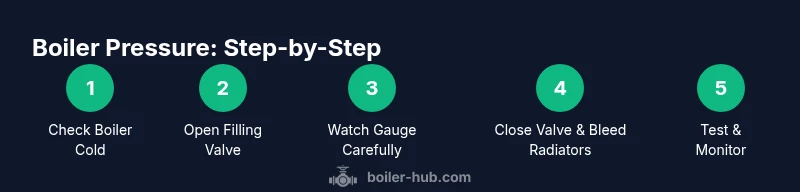
A safe, non-technical overview follows a logical sequence. Start by confirming the boiler is cold and the area is ventilated. Locate the pressure gauge and the fill valve (often a small lever or knob on the filling loop). Open the fill valve slowly to introduce water into the system while watching the gauge. When the gauge reaches the manufacturer’s recommended range, close the valve and inspect for any leaks. If air is trapped in the system, bleed radiators to restore circulation.
After filling, re-check the pressure and listen for unusual noises, which can indicate air pockets or trapped water. If pressure stabilizes within range, restart the boiler and observe operation for 15–30 minutes, noting any fluctuations. If the pressure falls again soon after filling, there may be a leak or a faulty expansion tank that needs professional attention.
Important: Do not exceed the recommended pressure, especially when the system is hot. If the gauge shows excessively high readings, shut down and seek expert help immediately.
Common mistakes and how to avoid them
Common errors include opening the fill valve too quickly, which can surge pressure and trip safety devices. Another pitfall is failing to bleed radiators after topping up water, leaving air blocks that reduce efficiency and cause cold spots. Some users attempt to “top off” pressure repeatedly without diagnosing underlying leaks, which can mask bigger problems. Finally, ignoring unusual boiler noises, steam, or damp patches around fittings is risky.
To avoid these mistakes, take your time, verify that the boiler is cold, and only adjust during a controlled window. If you hear popping, banging, or hiss noises, stop and check for airlocks or leaks. Regular maintenance, including annual professional checks, can prevent pressure problems from emerging.
Authority sources and maintenance tips
For readers seeking authoritative guidance, consult the following sources:
- https://www.osha.gov/
- https://www.energy.gov/
- https://extension.psu.edu/
Maintenance tip: schedule a yearly boiler inspection, check the expansion tank for signs of corrosion, and bleed radiators at the start of the heating season to maintain consistent pressure. Regularly inspect the fill valve and fittings for leaks and replace worn seals as needed. Boiler Hub recommends documenting your readings and procedures to track any recurring issues and to support when a professional visit is needed.