Boiler Won't Light: Troubleshooting Guide
Experiencing a boiler that won't light? This Boiler Hub guide delivers urgent, practical troubleshooting steps for homeowners and facility managers to diagnose ignition issues safely and efficiently.


Most boiler ignition problems stem from power or fuel supply issues, or a fault in the ignition system. Start by confirming the boiler has power, the gas valve is open, and the thermostat is calling for heat. If ignition still fails, try resetting the boiler and, if safe, cleaning the igniter. For persistent problems, contact a licensed technician.
Common causes of a boiler that won't light
A boiler that won't light can be caused by simple, fixable issues or more complex failures. The most frequent culprits are power problems, a closed gas supply, a faulty ignition system, a thermostat that isn't calling for heat, or a safety lockout triggered by pressure or temperature sensors. If you have an older boiler with a standing pilot, a dirty pilot or thermocouple can prevent a steady flame. For newer boilers with electronic ignition, a failed igniter or a faulty control board can stop ignition entirely. In some cases, a temporary blockage — such as air in the gas line or a condensate drain that has frozen — can prevent ignition or cause the flame to extinguish soon after lighting. It’s essential to approach this safely: never ignore a gas smell; evacuate the area and contact your gas provider. According to Boiler Hub, most ignition failures during cold months are linked to power or gas supply issues, which are the easiest to resolve when you follow a proper diagnostic flow.
Safety first: what to check before you touch the boiler
Safety is the priority. If you smell gas, leave the premises immediately and call your gas supplier or emergency services. If it’s safe to proceed, switch off the boiler at the power switch or fuse box to prevent any electric shock or accidental ignition during inspection. Ensure you have good lighting and clear access to the boiler. Refer to the manual for the exact reset sequence and the location of primary safety switches. Once power is isolated and the area is secure, you can begin a controlled inspection of common failure points: power supply, gas valve position, ignition electrode, flame sensor, and any safety switches. This approach aligns with Boiler Hub guidance on safe, methodical troubleshooting.
Quick diagnostic flow you can follow (safe and straightforward)
- Step 1: Check power. Ensure the boiler is receiving power, the wall switch is ON, and the circuit breaker hasn’t tripped.
- Step 2: Verify the gas supply. Make sure the main gas valve is open and there is no gas odor.
- Step 3: Confirm heat demand. Check the thermostat and timer; ensure they call for heat at the expected times.
- Step 4: Inspect ignition and flame sensors. Look for dirt, misalignment, or damaged components.
- Step 5: Check for lockouts. Many boilers lock out on faults; consult the display or manual for any error codes.
If this flow doesn’t identify the fault, continue with the more detailed checks in the Step-by-Step section and don’t hesitate to call a professional if you’re unsure.
Step-by-Step: Common ignition fixes you can try now
- Step 1: Power reset. Turn off power, wait 30 seconds, turn on again, and press the reset button if present.
- Step 2: Check heat demand. Ensure the thermostat is calling for heat and that its wiring is secure.
- Step 3: Inspect the ignition system. Clean any dirt from the ignition port and ensure the electrode is properly aligned and dry.
- Step 4: Verify gas supply. Confirm the gas shut-off valve is fully open; if you smell gas, evacuate and call the utility.
- Step 5: Check boiler pressure. If the pressure gauge is low, repressurize according to the boiler manual and bleed radiators if needed.
- Step 6: Attempt a relight and monitor. If the boiler lights but cycles off quickly, note error codes and consider professional inspection for safety.
Troubleshooting by boiler type: standing pilot vs electronic ignition
Older boilers with a standing pilot rely on a small flame that, if dirty or outdated, can fail to stay lit. Electronic-ignition boilers depend on a spark or hot surface igniter; dirt, misalignment, or a faulty control board can prevent ignition. In either case, ensure the area around the burner is clean, vents are unobstructed, and gas pressure is within spec. If you’re unsure about your boiler type, consult the user manual or a professional before attempting hardware changes. Boiler Hub notes that ignition characteristics vary with design, so follow model-specific guidance when available.
When to call a professional
If you’ve worked through the checks above and the boiler still won’t light, or if you detect a gas odor, gas smell, or hissing sounds, stop immediately and contact a licensed technician or your gas provider. Complex ignition faults, pressure problems, or control-board failures require professional diagnosis and potentially factory-certified replacement parts. Regular maintenance with a qualified technician can prevent recurring ignition issues and extend the life of your boiler.
Prevention tips to keep ignition reliable
- Schedule annual professional servicing and cleaning of the burner, igniter, and flame sensor.
- Check for venting obstructions and condensate drainage problems that could cause lockouts.
- Keep the area around the boiler clear of dust, clutter, and flammable materials.
- Maintain correct boiler pressure and reset logs to catch drift early.
- Use a smart thermostat or proper controls to ensure consistent heat demand and avoid cycling faults.
Steps
Estimated time: 40-70 minutes
- 1
Check power and safety switches
Turn off the boiler at the main switch, wait 30 seconds, then turn it back on. If your boiler has a reset button, press it after power is restored.
Tip: Use a non-contact voltage tester to confirm power before touching high-wire components. - 2
Verify heat demand
Make sure the thermostat is set higher than the current room temperature and that wiring to the boiler is secure. If you have a timer, ensure it’s set to call for heat.
Tip: Avoid turning the thermostat up too high; test in small increments to observe responses. - 3
Inspect ignition and flame sensor
Look for signs of dirt or misalignment on the igniter and flame sensor. Clean gently with a soft brush or cloth, and ensure the sensor is properly positioned.
Tip: Do not use metal tools on the sensor; use a soft brush to avoid damaging delicate electrodes. - 4
Check gas supply
Confirm the gas shut-off valve is fully open and there is no gas odor. If you smell gas, evacuate immediately and contact the gas emergency line.
Tip: Never test for leaks with a flame; use soapy water to detect leaks if you suspect a valve issue. - 5
Assess boiler pressure and safety locks
Check the pressure gauge and ensure it sits within the manufacturer’s recommended range. Bleed radiators if needed and address any lockout indicators shown on the display.
Tip: Refer to your boiler manual for the correct pressure range; incorrect pressure can cause repeated lockouts. - 6
Attempt a relight and monitor
If ignition occurs, observe whether the boiler continues to run or cycles off quickly. If the problem recurs, log any error codes and prepare for service.
Tip: Do not force a relight if you notice persistent smell or abnormal sounds.
Diagnosis: Boiler won't light
Possible Causes
- highPower supply issue (no power, tripped breaker, or blown fuse)
- highGas supply issue (valve closed or gas utility interruption)
- mediumIgnition system fault (igniter, spark generator, or flame sensor)
- mediumThermostat or control issue (not calling for heat or miswired)
- lowSafety lockout due to pressure/temperature sensor or low water pressure
Fixes
- easyConfirm power at the boiler and main switch; reset breaker or replace a blown fuse; if power is not reaching the unit, do not proceed further.
- easyVerify the gas supply: ensure the shut-off valve is fully open and there is no gas odor; contact the utility if you detect a leak.
- mediumInspect ignition components for dirt or damage; clean the ignition port and verify electrode alignment; replace ignition parts if degraded.
- easyCheck thermostat settings and wiring; ensure the thermostat calls for heat; bypass or reset if the model supports it, following the manual.
- mediumIf there is low or zero boiler pressure, re-pressurize per the manual and address any related leaks; this can clear some lockouts.
Questions & Answers
What should I check first if my boiler won't light?
Begin with basic checks: is there power to the boiler, is the gas valve open, and is the thermostat calling for heat? If any of these fail, ignition can’t occur. If all look normal and it still won’t light, proceed with the safe diagnostic steps in this article.
First, check power, gas supply, and heat demand. If those are all correct and it still won’t light, continue with the guided checks in this guide or call a professional.
Why does my boiler ignite and then shut off immediately?
This can indicate a flame sensor issue, improper gas pressure, or a safety lockout triggered by high limit or low water pressure. Follow the diagnostic flow and consult a technician if the issue persists.
If ignition happens but the boiler shuts off right away, it’s often a flame sensor problem or a safety lockout. Check sensor cleanliness and valve position, then seek professional help if unresolved.
Can air in the gas line stop ignition?
Yes. Air in the gas line can prevent reliable ignition. If you suspect this, do not attempt to bleed the line yourself; contact your gas provider or a licensed technician.
Air in the gas line can stop ignition. Don’t try to bleed the line yourself—call a professional to safely resolve it.
Is it safe to reset the boiler myself?
Resetting is generally safe for many boilers when done per the manufacturer’s instructions. If you notice repeated resets or persistent faults, it’s best to have a technician inspect the system.
Resetting is okay if you follow the manual, but if faults persist after reset, call a professional.
When should I replace ignition components?
Ignition components should be replaced if they show signs of wear, corrosion, or fail tests repeatedly. A professional can confirm whether replacement is needed and install the correct parts.
If ignition parts wear or fail tests repeatedly, replacement is recommended by a professional.
Can a boiler that won’t light damage my home?
An unused boiler typically doesn’t damage the home, but gas leaks or improper combustion pose serious risks. Always prioritize safety and call a pro for persistent ignition problems.
Ignition problems can be dangerous if gas leaks are involved; don’t ignore persistent issues—call a professional.
Watch Video
Key Points
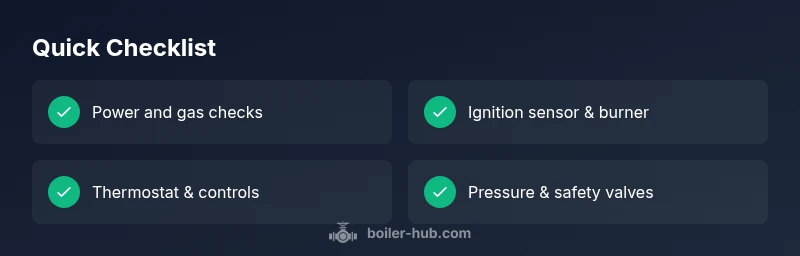
- Check power and gas first, then ignition components.
- Follow the diagnostic flow safely before calling a pro.
- Identify whether the issue is control-based or mechanical.
- Keep a record of error codes and maintenance history.
- Schedule annual service to prevent future ignition problems.