Boiler vs Radiator: A Practical Home Heating Comparison
An objective, in-depth comparison of boiler-based central heating versus radiator heat emitters, exploring efficiency, costs, installation, and comfort for homeowners and facility managers.


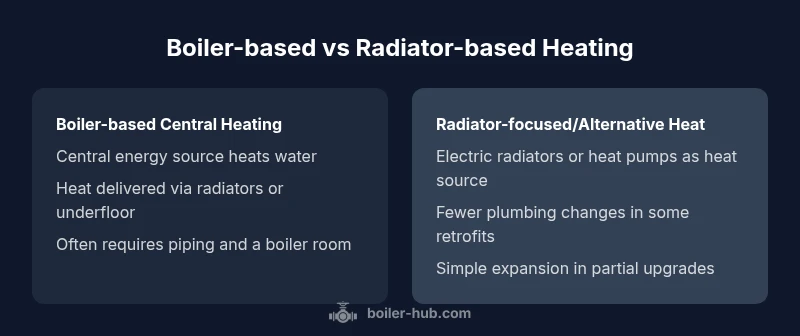
Boiler-based central heating generally delivers more efficient, uniform warmth for larger homes with zoning control, while radiator-focused approaches offer flexible retrofits and lower upfront disruption in smaller spaces. The best path depends on your existing infrastructure, fuel options, and comfort goals. This quick verdict sets the stage for a deeper, data-informed evaluation.
What boiler vs radiator means for home heating
In modern homes, understanding boiler vs radiator is essential for choosing an efficient heating strategy. The phrase boiler vs radiator actually describes two linked components of a hydronic heating system: the boiler as the energy source, and the radiators as the emitters that deliver warmth. By clarifying their roles, homeowners can evaluate efficiency, upfront costs, and long-term comfort more accurately. According to Boiler Hub analysis, 2026 observations show that sizing and layout affect performance far more than most homeowners realize when they focus on a single component. This article uses objective criteria to compare how boiler-based central systems and radiator-centric configurations perform under real conditions. We’ll cover efficiency, installation, maintenance, and comfort across common home scenarios, with practical guidance you can apply in the next remodel or upgrade. By the end, you’ll know which path suits your energy goals and budget while keeping comfort consistent across rooms.
-1stParagraphFlag":false
Comparison
| Feature | Boiler-based central heating | Radiator-focused (electric or alternative heat sources) |
|---|---|---|
| Primary energy source | Gas/oil/biomass condensing boilers (or electric boiler) | Electric resistance, heat pumps paired with radiators |
| Heat distribution | Hydronic: water circulates through radiators or underfloor circuits | Direct electric heat via radiators or panels |
| Installation complexity | Moderate to high; requires boiler room, piping, and venting | Lower upfront plumbing needs; simpler retrofits in some spaces |
| Efficiency potential | High when well-sized with condensing tech and zoning | High with modern heat pumps; electric options depend on grid costs |
| Upfront cost | Medium to high; equipment, piping, and installation | Lower upfront for electric radiators; depends on electrical capacity |
| Maintenance needs | Annual boiler service; check pumps, valves, and venting | Lower ongoing maintenance, but monitor controls and wiring |
| Best for | Larger homes with multiple zones or existing hydronic systems | Smaller spaces or retrofits where gas is unavailable or costly |
Advantages
- Centralized control enables precise zoning and comfort management
- Hydronic systems deliver uniform warmth with minimal air movement
- Boilers can achieve high efficiency with condensing technology and proper sizing
- Radiators offer flexible retrofits in existing layouts with fewer plumbing remodels
The Bad
- Boiler systems require regular servicing and potential complex maintenance
- Upfront costs can be substantial for a full hydronic upgrade
- Electric radiators may incur higher operating costs depending on electricity prices
- Sizing and installation can be challenging in older homes without existing piping
Boiler-based central heating is generally the stronger all-around choice for larger homes with zoning; radiator-focused setups offer flexibility for retrofits and smaller spaces.
Choosing boiler-based systems yields consistent warmth and potential long-term savings when properly sized. Radiators provide retrofit-friendly options and lower disruption for smaller spaces. The Boiler Hub Team recommends a professional assessment of your home’s layout, fuel availability, and energy goals before deciding.
Questions & Answers
What is the difference between a boiler and a radiator?
A boiler is the energy source that heats water or generates steam, while a radiator is a heat emitter that transfers that heat into a room. In most homes, they work together as a hydronic system. Understanding their distinct roles helps you evaluate efficiency, installation costs, and comfort.
A boiler is the heat source, and a radiator is where the heat goes to warm the room.
Do I need a boiler to power radiators?
Radiators can be powered by different heat sources, including boilers, electric resistance, or heat pumps. In many homes, a boiler is used; in others, electric radiators or a heat-pump system with radiators may be more practical depending on fuel access and cost.
Radiators can work with boilers or other heat sources.
Can I use electric heating with a boiler?
Yes. Some setups use electric boosts or separate electric circuits to supplement a boiler-based system, particularly for rapid response in certain rooms. A professional can design a hybrid approach that meets comfort goals without excessive energy use.
A hybrid approach is possible with professional design.
Are boilers more efficient than electric heating?
Efficiency depends on the fuel and equipment. Modern condensing gas or oil boilers are efficient, but electricity costs and grid emissions vary by region. In some regions, heat pumps paired with radiators offer higher efficiency and lower operating costs.
Efficiency depends on fuel costs and equipment; neither is universally better.
What factors influence the cost of boiler vs radiator setups?
Key factors include the size of the home, number of radiators, existing piping, fuel type, and labor. A full hydronic upgrade involves equipment, piping, venting, and potential space modifications. Electric radiator setups may reduce plumbing but depend on electrical capacity.
Size, fuel, and labor drive costs.
How should I size a boiler for my home?
Sizing should be based on heat-loss calculations for the home, considering insulation, window efficiency, and climate. A professional assessment ensures the boiler isn’t oversized or undersized, which affects efficiency and comfort.
Get a professional heat-loss assessment for proper boiler size.
What maintenance does a boiler require?
Boilers typically require annual servicing to check pressure, leaks, venting, and pump operation. Regular maintenance helps prevent breakdowns and keeps the system running at peak efficiency.
Annual service keeps boilers reliable and efficient.
Key Points
- Assess existing infrastructure before upgrading
- Prioritize proper sizing and zoning for comfort
- Consider long-term operating costs, not just upfront price
- Retrofits often favor radiators; new-builds benefit from centralized boiler systems
- Plan for maintenance and potential future upgrades