Boiler or Heater: A Practical 2026 Comparison for Homeowners and Facility Managers
Compare boiler systems and water heaters to decide which is best for your home or facility. This 2026 guide covers function, efficiency, installation, costs, and safety for homeowners and facility managers.


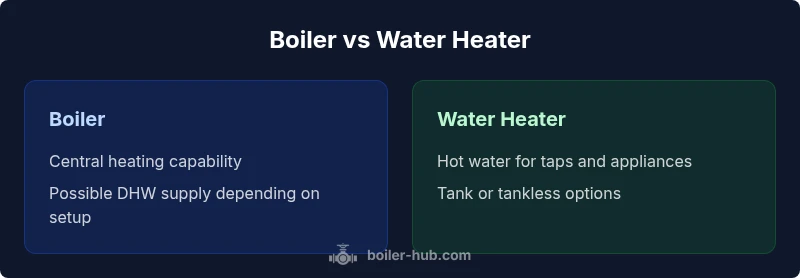
Boiler or heater decisions hinge on your heating needs. A boiler provides centralized space heating via hydronic loops and often supplies domestic hot water in a combined or separate system, while a water heater focuses on delivering hot water for taps. For larger homes with radiators or radiant floors, a boiler is typically the better long‑term fit; smaller homes may do well with a dedicated heater. This comparison helps clarify when to choose each.
What is the difference between a boiler and a water heater?
The phrase boiler or heater is common in homeowner conversations, but the two devices are designed for different jobs. A boiler is a central heating device that warms water or creates steam to circulate through radiators, baseboard heaters, or radiant floors, producing consistent warmth across living spaces. In many homes, a boiler also feeds domestic hot water either through a coil in the tank or via a combi configuration. A stand-alone water heater, by contrast, is focused on delivering hot water for sinks, showers, and appliances. It does not circulate heated water through a home’s heating system unless paired with a separate boiler or another heat source. For most households, the decision comes down to whether you need centralized heating plus hot water (boiler) or a dedicated hot-water source for taps (water heater). Boiler Hub's guidance emphasizes mapping your home’s layout, fuel type, and occupancy patterns to avoid overbuilding or under-providing comfort.
How boilers work: hydronic heating and domestic hot water
A boiler heats water that travels through a network of pipes to radiators, baseboards, or radiant floors. In many systems, a coil in a storage tank or a dedicated domestic hot water circuit draws heat from the boiler to supply taps and showers. Condensing boilers can reclaim heat from exhaust gases, improving overall efficiency. In some homes, a single boiler powers both space heating and DHW with a combined or system design. The key takeaway is that boilers are primarily heating plants that may also provide hot water, depending on the configuration and controls installed. Boiled-down decisions should consider existing radiators, piping layout, and fuel availability.
How water heaters work (standard storage and tankless options)
Water heaters come in several flavors: standard storage tanks, which hold hot water for use across multiple taps, and tankless models, which heat water on demand. Storage tanks are simple, reliable, and typically easier to install in smaller spaces, but they do carry standby heat loss. Tankless heaters save energy by heating only when a hot tap is opened, but may require upgrades to gas supply or electrical capacity. Hybrid or heat pump water heaters use ambient heat to improve efficiency. The core difference is that a water heater focuses on domestic hot water only, while a boiler focuses on space heating and may supply DHW as part of a combined system.
Efficiency and energy use: what affects operating costs
Efficiency is a major driver of long-term costs for both boiler and water heater systems. Condensing boilers generally offer high efficiency because they recover latent heat from exhaust gases. Tankless water heaters can be highly efficient for intermittent hot-water use but may struggle with very high simultaneous demand without proper sizing. Fuel type, insulation, and installation quality also influence energy consumption. Boiler Hub notes that proper system design and seasonal balancing are essential to realizing promised efficiency gains over the life of the system.
Installation, space, and maintenance considerations
Installation complexity varies notably between the two options. Boilers require space for the unit and the distribution network (radiators, piping, expansion tanks) and may demand higher upfront labor costs. Water heaters are typically simpler to install, with a smaller footprint, though tankless models may require more electrical or gas capacity and dedicated venting. Ongoing maintenance includes annual checks of pressure relief valves, venting, and periodic flushing to remove mineral buildup. Regular maintenance extends equipment life and preserves safety margins.
Cost implications and value over time
Initial cost is only part of the story. Boilers often have higher upfront costs due to installation complexity and distribution work, but can deliver durable comfort for many years when properly maintained. Water heaters are usually cheaper to install, especially for homes that only need hot water without central heating. Over time, energy savings from high-efficiency boilers or tankless water heaters can offset higher upfront costs, depending on usage patterns and fuel prices. Boiler Hub recommends a long-term ownership view when evaluating total cost of ownership.
Safety, regulations, and best practices
Regardless of choice, safety remains paramount. Both boiler and water heater installations must comply with local codes, venting requirements, and gas or electrical standards. Regular professional inspections help identify leaks, corrosion, or venting issues before they become safety hazards. In areas with extreme weather or hard water, additional treatments or filtration may be advisable. The Boiler Hub guidance emphasizes using licensed technicians and verifying proper combustion air, venting, and shut-off mechanisms.
Choosing the right system for your home or facility
Start with a needs assessment: estimate peak heating load, typical hot-water demand, and future expansion plans. Consider energy prices, available fuels, and climate. For larger homes with radiators or radiant floors, a boiler plus an appropriate DHW strategy is often preferred. In smaller homes or where centralized heating isn’t available, a reliable water heater may suffice. A professional energy audit can help confirm the best route and ensure the selected system aligns with long-term goals.
Common misconceptions and myths about boilers and hot water heaters
A common myth is that all boilers are inherently expensive to run, or that all water heaters are always cheap to operate. Reality depends on efficiency class, sizing, and how the system is used. Some assume tankless heaters are always the most economical, but they may require higher utility capacities or more frequent servicing. Understanding real-world usage, climate, and maintenance cycles helps dispel these myths and supports a rational choice.
Comparison
| Feature | Boiler | Water Heater |
|---|---|---|
| Primary function | Central heating + DHW in some configurations | DHW for taps; optional space heating in limited setups |
| Energy efficiency | High efficiency possible with condensing models | Moderate to high depending on type and insulation |
| Space requirements | Requires space for unit + distribution network | Typically smaller footprint; tank or tankless variants |
| Maintenance needs | Regular servicing for long life; system balancing important | Tankless variants require descaling and electrical/gas checks |
| Lifespan expectations | Longer potential life with proper maintenance | Depends on model; tanks may require more frequent replacements |
| Initial cost considerations | Higher upfront cost due to installation and piping | Lower upfront cost for basic models; tankless can vary |
| Best for | Homes needing centralized heating plus DHW | Smaller homes or spaces needing reliable DHW only |
Advantages
- Can provide centralized heating and DHW in one system
- High efficiency potential with condensing boilers
- Longer service life with proper maintenance
- Tankless water heaters can reduce standby energy loss
The Bad
- Higher upfront installation costs and complexity
- Requires space for boiler room or mechanical closet
- Maintenance can be more involved for boilers
- Tank-style water heaters can waste energy via standby loss
Boiler systems excel in larger homes needing centralized heating and DHW; water heaters are typically best for smaller homes or simpler hot-water needs.
Choose a boiler when you need space heating plus hot water with future expansion in mind. Opt for a water heater for straightforward hot water delivery and lower initial costs, especially in compact spaces.
Questions & Answers
What is the key difference between a boiler and a water heater?
A boiler is designed to heat a home through a hydronic distribution system and may also provide domestic hot water. A water heater focuses on delivering hot water for taps and appliances, with no primary role in space heating in most configurations.
A boiler heats your home and can supply hot water, while a water heater mainly provides hot water. If you need space heating, a boiler is typically the better fit.
Can a boiler also provide hot water for taps?
Yes, many boiler systems are paired with a domestic hot water coil or use a combi configuration to supply hot water for taps. The exact arrangement depends on the model and installation.
Boilers can supply hot water for taps in many setups, but not all configurations do this by default.
Which is cheaper to install, a boiler or a water heater?
Water heaters typically have a lower upfront installation cost, especially for homes that don’t require central heating. Boilers may require more complex installation and distribution piping, which increases upfront costs.
Water heaters are usually cheaper to install, while boilers can be more costly up front due to piping and space requirements.
Are tankless water heaters more efficient than storage heaters?
Tankless water heaters often save energy by heating water only when needed. However, their efficiency depends on usage patterns and fuel supply. Storage heaters shine in steady hot-water demand but may waste energy with standby losses.
Tankless heaters save energy by heating on demand, whereas storage models can waste standby heat unless well insulated.
What maintenance schedule do these systems require?
Both systems benefit from annual professional inspections. Boilers require flushing to remove sediment and regular vent checks; water heaters may need pressure-relief valve tests and anode rod inspections in some models.
Annual professional checks help prevent failures; routine valve tests and descaling may be needed depending on the model.
What factors should guide my decision if I have limited space?
In tight spaces, a compact boiler with a well-designed distribution network or a tankless water heater may be preferable. Tank-style water heaters require space, while tankless options can be wall-mounted to save room.
If space is tight, consider a compact boiler or a wall-mounted tankless heater to maximize usable area.
Key Points
- Assess total heating and hot-water needs before choosing
- Factor long-term energy use and maintenance into the decision
- Consider space, fuel type, and existing distribution
- Ask for a professional load calculation and sizing