How to Turn Off Your Boiler Safely: A Practical Guide
Learn how to safely turn off your boiler for maintenance, service, or emergencies with a clear, step-by-step approach. Includes power, gas, isolation steps, and restart precautions. Boiler Hub, 2026 guidance.


This guide shows you how to safely perform a boiler turn off when servicing, resetting, or addressing a safety concern. You’ll learn to cut power, shut gas or fuel supply, close the boiler valve, and verify depressurization before restarting. Follow these steps to reduce risk and protect your home. Today you’ll also learn what not to do and how to prepare for a restart.
What does it mean to turn off a boiler?
Turning off a boiler is not simply flipping a switch; it is a controlled sequence that stops heat generation, isolates the fuel supply, and prevents unintended relights. The exact actions depend on boiler type (gas, electric, or oil) and the system layout. The core idea is to remove heat demand, cut energy supply, and secure the unit so maintenance or service can occur safely. When people say the phrase boiler turn off, they are addressing three layers: electrical power, fuel source, and the controls that trigger heating. For homeowners and facility managers, understanding these layers helps you choose the right action and avoid dangerous missteps. Before you begin, review the boiler manual and note any system-specific warnings.
Safety is paramount: never bypass safety devices, never attempt to relight a boiler while a fault is present, and ensure you have a clear exit path if gas odor or smoke is detected. If you smell gas, evacuate immediately and contact emergency services. In most residential settings, guided shutdowns are doable by a trained homeowner; for complex or high‑pressure systems, consult a licensed technician.
Safety considerations before you begin
Before you touch any controls, ensure you can work safely. Check for signs of danger such as a gas odor, hissing, or unusual heat from the boiler area. If any of these are present, evacuate and call your local emergency number. Ventilate the space if safe to do so and keep children and pets away. Have a flashlight on hand in case the boiler area is dim. Wear basic PPE if available (gloves, eye protection). Review the manufacturer’s safety warnings and code requirements for your region. Boiler shutdowns must be performed with respect for system pressure and electrical safety; do not bypass safety devices or improvise.
Understanding boiler controls and indicators
Most boilers have a combination of controls: a thermostat or aquastat that signals when heat is needed, a power switch or breaker, and often a gas valve or oil-pressurized line. Some models include an isolation valve, pressure relief valve, and indicators on a digital display. Understanding what each control does helps you sequence a safe shutdown. If you are unsure about a specific control (especially for high‑efficiency or combi boilers), refer to the model’s manual or contact the manufacturer. In all cases, avoid forcing components beyond their intended range. A calm, methodical approach reduces the risk of damaging the boiler or triggering unsafe conditions.
When to shut off the boiler
Use a shutdown when maintenance is planned, suspected fault requires inspection, or there is a safety concern (gas odor, unusual noises, or visible leaks). For emergencies, prioritize personal safety and evacuate if necessary. If a repair is needed, having the right tools and a clear plan helps coordinate with a technician. In general, a planned shutdown should be documented with time stamps and actions taken so restart can proceed smoothly when authorized.
How to safely power off and isolate the boiler
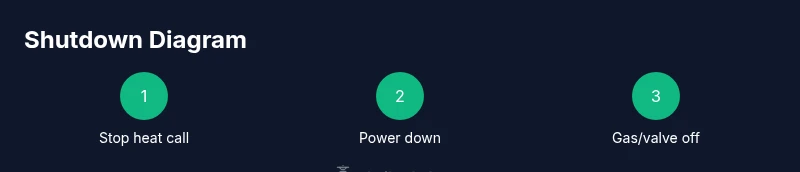
Begin by stopping heat demand from the thermostat, then cut power to the boiler at its dedicated switch or the main electrical panel. If the system allows, shut the gas valve only if you can do so safely and reach it without risk. Finally, close any boiler isolation valve to prevent fuel or water from entering the unit. This sequence minimizes residual energy and reduces the chance of an unintended restart during maintenance. Always confirm the boiler display is off and there are no active fault indicators after the shutdown steps.
Tip: If you can’t access the boiler safely, do not attempt the turn off; seek professional help.
Depressurizing and cooling down
Many boiler systems rely on pressure management during shutdowns. If your manual specifies depressurization, follow those steps precisely; otherwise avoid rapid venting that could cause temperature or steam hazards. Allow the system to cool to ambient temperature before handling components or performing inspections. Do not touch hot surfaces or open pressure-relief devices unless you are trained and equipped to do so. In some installations, a service technician will perform a controlled depressurization and lockout/tagout to ensure safety.
Restarting safely after a shutdown
Before restarting, verify all safety devices are reset, the area is clear, and the heat demand is appropriate. Open the gas valve only after confirming there is no leak and you can safely access all shut-offs. Restore power via the boiler switch and reenable the thermostat with a controlled heat call. If you notice any fault codes or abnormal behavior after restart, consult the manual or contact a licensed professional. A proper restart reduces the risk of damage and ensures reliable operation.
Quick troubleshooting and common mistakes
Common mistakes include turning off only the thermostat without cutting power, failing to isolate the fuel source, or restarting without allowing adequate cooldown. Always follow a documented shutdown procedure and verify that all indicators are normal before restarting. If the boiler behaves unpredictably, stop and call a technician rather than attempting improvised fixes. Proper shutdown practices improve safety and extend equipment life.
Authority sources
For authoritative guidance on boiler safety and shutdown procedures, consult trusted sources such as the U.S. Department of Energy, OSHA safety guidelines, and NFPA boiler safety resources. These organizations provide safety frameworks and best practices relevant to home heating systems and commercial boilers. Always connect with official materials for model-specific instructions and local code requirements.
Tools & Materials
- Main electrical disconnect switch or boiler power switch(Use to cut power at the source; locate the switch near the boiler or on the main panel.)
- Gas shut-off valve key or tool(Close only if it is safe and accessible; do not force valve.)
- Manufacturer’s service manual(Model-specific shutdown procedure from the manual.)
- Flashlight(Helpful for dim boiler rooms or panel areas.)
- Safety gloves(Protect hands when handling panels or valve handles.)
Steps
Estimated time: 15-30 minutes
- 1
Stop the heat call
Set the thermostat or heating controller to 'off' so the boiler stops requesting heat. This reduces the chance the boiler restarts during shutdown.
Tip: Always confirm the thermostat shows a non-heat demand after selecting off. - 2
Power down the boiler
Turn off the boiler's dedicated power switch or flip the main breaker to cut electrical power. Verify the display is off and any fault indicators are cleared.
Tip: If the switch is hard to reach, shut off power at the main panel and label the boiler area. - 3
Shut off the gas supply (if safe)
Access the gas shut-off valve on the boiler gas line and rotate to the off position. Only perform this if you can reach it safely without forcing components.
Tip: Do not attempt if you smell gas or feel uncertain about your safety; call emergency services. - 4
Close the isolation valve
If your system has an isolation valve, close it to prevent further fuel or water flow into the boiler during service.
Tip: Document the valve position for future reference and restart checks. - 5
Depressurize and secure the system
Follow the manual's depressurization steps if required; otherwise avoid forcing relief devices. Allow any stored energy to discharge safely.
Tip: Consult the manual before depressurizing—incorrect procedures can be dangerous. - 6
Document and prepare for restart
Record the shutdown time, actions taken, and any observations. This log helps with a smoother restart and future servicing.
Tip: Keep the log accessible to anyone performing service or restart.
Questions & Answers
What is the first step to turn off a boiler?
Begin by stopping the heat call in the thermostat, then proceed with a controlled shutdown of power and fuel as applicable. This reduces the risk of unintended relights during maintenance.
First, stop the heat call in the thermostat, then proceed with a safe shutdown of power and fuel as needed.
Should I shut off the gas supply when turning off a boiler?
Only if you can do so safely and reach the shut-off valve without risk. If there is any gas smell or uncertainty, evacuate and call emergency services rather than attempting a shut-off.
Only if you can reach the valve safely. If you smell gas or feel unsure, evacuate and call emergency services.
Can I restart immediately after turning off?
Don’t rush the restart. Ensure the system has cooled, no leaks, and all safety indicators are normal before re-enabling heat demand.
Wait for cooling and safety checks before restarting.
What safety checks should I perform after shutdown?
Inspect for gas odors, leaks, and signs of damage. Verify electrical safety indicators are off and that the area is well-ventilated before any service.
Check for gas odors, leaks, and safe electrical indicators, then ventilate the area.
Is this process different for oil boilers?
Oil boilers follow a similar shutdown routine, with attention to the oil valve and cooling period. Always reference the oil boiler manual for model-specific steps.
Oil boilers use similar shutdown steps; check the specific manual for your model.
What if the boiler won’t turn off?
If the boiler doesn’t respond to shutdown actions, stop work and contact a licensed technician. Do not bypass safety features or attempt risky fixes.
If it won’t turn off, stop and call a licensed technician. Do not bypass safety features.
Watch Video
Key Points
- Turn off heat demand before cutting power.
- Use power and fuel shutoffs in the correct order.
- Document shutdown steps and restart precautions.
- Consult a professional for complex systems or gas concerns.