What Furnace to Buy: A Practical Homeowner's Guide
Learn how to choose the right furnace for your home. Compare fuel types, efficiency, size, and installation considerations with practical steps from Boiler Hub to save money.


By the end, you’ll know what furnace to buy for reliable warmth, energy efficiency, and predictable costs. The key factors are home size, insulation, local fuel availability, and installation constraints. This quick answer highlights the core criteria and sets you up for a practical, side-by-side comparison of common furnace options.
Why choosing the right furnace matters for comfort and costs
When you ask what furnace to buy, the decision goes beyond sticker price. The right model sustains even winter cold, reduces energy waste, and protects your heating system's lifespan. According to Boiler Hub, homeowners who size and choose high-efficiency machines see steadier indoor temperatures and fewer mid-season service calls. Before you compare brands, take stock of your home’s layout, insulation quality, and typical winter loads. Consider how the house behaves on the coldest nights: does one floor feel draftier, or do you have rooms that never seem warm? A well-matched furnace reduces hot and cold spots and minimizes cycling, which saves energy and prolongs equipment life. This section sets up the criteria you’ll use to compare options later in the guide.
Core criteria to evaluate before buying
Before you commit, define these criteria: heating load, efficiency rating, fuel type, and installation considerations. A properly sized furnace matches the house’s insulation level and window efficiency; oversized units cost more and run inefficiently. Efficiency ratings (AFUE or its equivalent) give a sense of annual fuel use; higher is generally better but with diminishing returns if the house is poorly insulated. Fuel availability matters: natural gas is common, oil is dwindling in many regions, and electric furnaces or heat pumps can be viable substitutes in milder climates. Installation constraints include ductwork condition, access for service, and potential need for a new thermostat or zoning. Use a simple worksheet to compare estimated annual costs, including maintenance and potential rebates. Boiler Hub’s approach emphasizes balancing upfront price with long-term savings. By clarifying these factors, you’ll narrow the field to models that truly fit your home and budget.
Understanding furnace types: gas, electric, oil, and heat pumps
This section outlines the main furnace categories, how they work, and where they shine. Gas furnaces are common in many regions and typically offer strong heat output with efficient operation when gas prices are reasonable. Electric furnaces are simple to install and maintain, often paired with heat pumps for climate flexibility. Oil furnaces can be economical in areas without natural gas but may require more maintenance. Heat pumps, including dual-fuel setups, can provide cooling in warm months and heating in shoulder seasons with high efficiency. Consider your local fuel costs, availability, and the climate when selecting among these options. For many homes, a high-efficiency gas furnace or a heat pump with a backup furnace provides the best balance of comfort and operating costs. Boiler Hub’s guidance here focuses on real-world performance and lifecycle costs rather than idealized specs.
Sizing and efficiency: how to estimate your needs
Sizing a furnace means matching its output to your home’s heating load, not simply replacing an old unit. A correctly sized furnace heats rooms evenly, reduces cycling, and improves comfort. Look at insulation quality, window efficiency, air leakage, and occupancy patterns. Use an online sizing calculator or consult a professional to perform a Manual J calculation, which accounts for climate, house envelope, and internal gains. Efficiency is usually expressed as AFUE or a modern equivalent; aim for the highest feasible rating given the budget and climate, but avoid overspending on marginal gains if the home is well-insulated. If you already have a current energy bill, compare your monthly usage during winter to estimate the potential savings from higher efficiency models. This careful approach helps prevent oversizing and ensures a comfortable, cost-effective system. Boiler Hub’s experience reinforces that proper sizing is the cornerstone of long-term reliability.
Installation considerations, warranties, and cost ranges
Even the best furnace won’t deliver its promised savings if the installation is poor. Check ductwork condition, blower access, and space for service clearance. Verify that the chosen model is compatible with your existing thermostat, zoning needs, and future plans (like a possible upgrade to a heat pump). Ask about warranties on parts and workmanship, as separate coverage can protect against unexpected repairs. Costs vary by region, installer, and equipment brand, so request multiple quotes and compare total cost of ownership over 10–15 years rather than upfront price alone. Look for seasonal discounts, rebates, or utility programs that can reduce the upfront cost. By planning for installation logistics now, you avoid delays and surprises later. The Boiler Hub approach emphasizes practical planning to maximize value and reliability.
A practical decision framework: a simple 6-step checklist
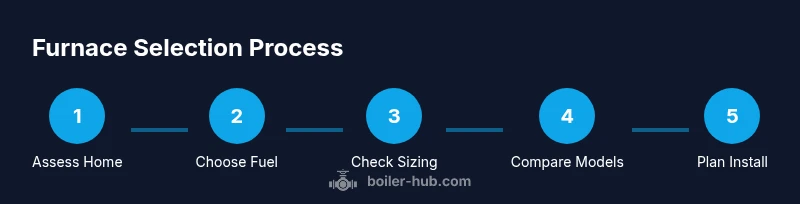
- Assess your home’s size, insulation, and current heating patterns to determine heating load.
- Define priorities: highest comfort, lowest energy use, or best balance.
- Check fuel availability and local costs to pick a viable energy source.
- Compare efficiency ratings and equipment warranties across top models.
- Inspect installation requirements, including ductwork and thermostat compatibility.
- Get professional sizing and written quotes before committing to a model. Use these steps with your notes to select a furnace you can rely on for years. This framework supports a confident decision and helps you avoid common missteps. Boiler Hub’s practical guidance can help you stay on track as you finalize a purchase.
Tools & Materials
- Tape measure(For accurate room dimensions and ductwork paths in your home.)
- Notebook or spreadsheet(Record room-by-room heat needs, costs, and model specs.)
- Pen or pencil(Take quick notes during assessments and comparisons.)
- Calculator(Estimate annual energy costs and efficiency savings.)
- Utility bills or energy usage data(Provide real-world baselines for comparison.)
- Internet access or brochures(Research models, specs, and rebates.)
Steps
Estimated time: 60-120 minutes
- 1
Assess your home
Measure living spaces, note insulation quality, and identify rooms that heat unevenly. This baseline helps you estimate the heating load and guides model choices. Gather your energy bills for winter months to understand current consumption.
Tip: Have your floor plans and a recent utility bill handy before you start. - 2
Define your priorities
Decide whether comfort, energy savings, or upfront price matters most. Your priorities will narrow the list of suitable models and fuel types.
Tip: Write down your top three goals to compare models effectively. - 3
Check fuel availability
Determine what fuels are readily available in your area (natural gas, oil, electricity) and their typical costs. This affects which furnace types are practical and cost-effective.
Tip: Confirm gas line or electrical capacity with a licensed pro if needed. - 4
Compare efficiency and size
Look at AFUE (or equivalent) ratings and ensure the unit’s output matches your heating load. Avoid oversized units, which waste energy and shorten life.
Tip: Use a sizing worksheet to compare models side-by-side. - 5
Review installation needs
Assess ductwork, space for the furnace, and thermostat compatibility. Proper installation is crucial for achieving rated efficiency.
Tip: Ask for a detailed, written installation plan and timeline. - 6
Obtain quotes
Get multiple quotes from reputable installers. Review warranties and total cost of ownership, including maintenance.
Tip: Compare quotes on the same equipment across installers. - 7
Make a decision and plan installation
Choose a model that meets your criteria and schedule installation with the chosen contractor. Confirm permits if required.
Tip: Ensure the contract includes post-installation testing and training.
Questions & Answers
What is the single most important factor when buying a furnace?
Size and efficiency are the two most important factors. A properly sized unit heats evenly and runs efficiently, reducing energy waste and wear.
The most important factors are size and efficiency, which together determine comfort and long-term savings.
Should I upgrade to a high-efficiency furnace if my current unit still works?
Upgrading can reduce energy costs and improve reliability, especially if rebates or incentives are available. Consider long-term savings and installation needs before deciding.
Upgrading can save energy and sometimes grants or rebates make it worthwhile.
How long does installation typically take?
Full replacement timing varies with ductwork and permits, but many projects fit within a day or two. Ask your installer for a detailed schedule.
Most installations take around a day or two, depending on existing ductwork.
Which fuel type is best for cold climates?
Natural gas furnaces are common for cold climates due to strong heat output and efficiency. Electric systems work where gas isn’t available, but may have higher operating costs.
Gas furnaces are popular in cold areas for efficiency and reliable heat.
Do I need a new thermostat with a new furnace?
Often yes; a programmable or smart thermostat helps you maximize efficiency and comfort with your new furnace.
Usually you’ll want a smart thermostat to get the most from the new furnace.
What maintenance will I need after purchase?
Schedule annual professional inspections, replace filters regularly, and follow the manufacturer’s maintenance plan to extend life and efficiency.
Keep up with yearly checkups and regular filter changes.
Watch Video
Key Points
- Size the furnace to your home’s true heating load
- Prioritize fuel type and efficiency appropriate for your climate
- Account for installation constraints and ductwork
- Compare total cost of ownership, not just upfront price
- Get professional sizing and quotes before buying