Oil Boiler Installation Cost: A Practical Guide for 2026
Explore realistic oil boiler installation cost ranges, key cost drivers, and budgeting tips for homeowners and facility managers. Learn how to compare quotes, avoid surprises, and plan for contingency with Boiler Hub guidance in 2026.


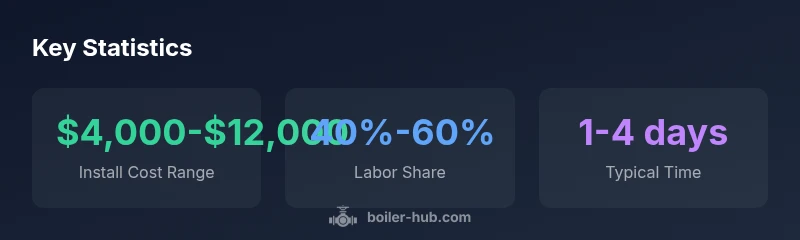
Oil boiler installation cost typically ranges from $4,000 to $12,000, depending on boiler size, venting needs, and existing fuel infrastructure. According to Boiler Hub analysis, total price includes equipment, labor, and permits, with regional variation. For homeowners and facility managers, understanding these factors helps compare quotes and plan budgets. This article breaks down the cost drivers and provides practical budgeting tips.
Understanding the price landscape
Oil boiler installation cost sits at the intersection of equipment choice, labor, and site-specific requirements. In 2026, homeowners and facility managers typically see a broad range due to boiler size, efficiency, venting needs, whether an old unit is removed, and how the fuel line and storage are configured. According to Boiler Hub, costs can swing based on regional labor rates, permitting rules, and accessibility of the installation site. When you start planning, focus on your specific scenario—new installation vs. replacement, indoors versus cramped spaces, and whether upgrades to venting or insulation are advisable. By framing the cost around these drivers, you’ll be better positioned to compare quotes and manage the project budget. The Boiler Hub team emphasizes that accuracy improves with a detailed scope and a pre-install survey.
Keywords: oil boiler installation cost, installation cost components, budgeting for boiler projects
Key cost components
A clear breakdown helps you see where the money goes. The major components typically include: (1) equipment cost (the boiler unit, indirect water heater if applicable, and controls), (2) labor (disassembly of the old unit, piping, venting, fuel line work, and commissioning), (3) permits and inspections, (4) system upgrades (tank, tankless coil, or indirect water heater integration), and (5) incidental materials (vent piping, brackets, sealing, and condensate management). Additional costs can arise from site prep (cramped spaces, crawl spaces, or basements), upgrading the flue or chimney, and installing a new expansion tank. Notably, the presence of a pre-existing oil tank can reduce some expenses, but if the existing infrastructure requires relocation, expect higher labor and materials costs. Boiling this down, the cost leans heavily on the complexity of the venting configuration and the ease of access to piping routes. The Boiler Hub analysis underscores the importance of a site survey to refine the estimate before you commit to quotes.
Takeaway: plan for both equipment and labor, with contingencies for venting and site prep.
Regional price variations and what drives them
Prices for oil boiler installations vary significantly by region due to labor rates, permitting costs, supply-chain fluctuations, and the availability of skilled technicians. In practice, a project in a high-cost urban market may push the lower end of the install cost higher than a rural or suburban area with lower labor rates. Energy policies and local codes also influence permit requirements and inspection frequency, impacting overall cost. Boiler Hub analysis shows that even within the same country, a 100-mile difference in location can alter quotes by several hundred dollars. The takeaway is to obtain multiple bids from nearby contractors and ask for a breakdown that separates equipment, labor, and permitting. A well-documented quote makes price comparisons fair and helps you identify any add-ons that could otherwise surprise you later. If you’re evaluating quotes, request a site survey to avoid sticker shock later in the project.
Note: The cost comparison should also consider long-term operating costs and potential efficiency upgrades.
Real-world cost scenarios
To illustrate how installation cost can vary, consider a few common scenarios and their typical price bands. For a replacement install with standard venting and removal of an old unit, you might see a range around $4,500 to $9,000. If you’re installing a new, higher-efficiency oil boiler in a home that previously used another fuel type, the range could extend to $7,000–$12,000 or more due to fuel-line work and tank integration. In tight spaces requiring additional piping or relocation of an oil tank, costs can climb toward the upper end of the spectrum. These scenarios reflect common patterns observed in Boiler Hub Analysis, 2026, but your actual price will hinge on the specifics of your home, existing infrastructure, and local requirements. Always insist on a detailed quote with a line-item breakdown to identify potential savings or necessary upgrades.
Tip: ask about whether the quote includes old equipment removal, disposal, and any required venting upgrades.
How to estimate for your home
Estimating oil boiler installation cost starts with a precise baseline: determine the boiler size you need based on your home’s heat load, then assess venting and fuel-line requirements. A practical approach is to obtain three written quotes from licensed installers who perform on-site surveys. Compare line-by-line and check for hidden costs such as disposal fees or permit charges. Consider requesting a cost-variance analysis that shows how changes in boiler efficiency, venting size, or tank relocation could influence total cost. Use a simple worksheet to track items from equipment cost through labor, permit, and any contingency allowance. Boiler Hub recommends cross-referencing quotes with a local cost of living and regional price data for more accurate budgeting.
Action steps: (1) Schedule a site survey, (2) Ask for a split quotation (equipment vs. labor vs. permits), (3) Confirm warranty terms, (4) Request a contingency buffer (5–15%).
Financing, incentives, and long-term operating costs
Financing options can soften upfront cost pressures, and energy-efficiency upgrades may unlock incentives from local utilities or government programs. When planning oil boiler installation cost, compare not only the upfront price but also the expected long-term operating costs. A higher-efficiency model may have a higher initial price but lower annual fuel consumption, leading to lower total cost of ownership. Additionally, consider maintenance plans that include annual inspections and potential extended warranties. Even modest efficiency improvements can yield meaningful savings over the boiler’s life, particularly in regions with long heating seasons. The Boiler Hub team advises homeowners and facility managers to quantify annual fuel bills alongside installation costs to understand the true financial impact.
What to ask your contractor before starting
Compile a checklist to ensure you’re capturing all costs and requirements upfront. Questions to ask include: (1) Is the quote itemized for equipment, labor, venting, and permits? (2) What’s included in the disposal of the old unit? (3) Are venting improvements or chimney work required? (4) Will the system be tested for safety and efficiency after commissioning? (5) What is the warranty on parts and labor? (6) Are there any fuel-line or tank relocation needs, and how do they affect price? (7) What permits are needed, and who files them? Asking these questions helps avoid scope creep and ensures you have a solid apples-to-apples comparison across bids. The Boiler Hub team recommends documenting every assumption in writing to prevent surprises during installation.
Installation timeline and what happens during the job
A typical oil boiler installation spans 1–4 days, depending on complexity. The process usually begins with a site survey and fuel-line assessment, followed by equipment delivery and setup. Next comes venting, piping, and electrical connections, then commissioning and safety testing. In some cases, additional steps such as chimney modifications, tank relocation, or water-heating integration can extend the timeline. Weather, access, and the need for code-compliant inspections can also affect scheduling. Clear communication with your contractor about milestones and access times helps minimize disruption. The Boiler Hub guidance emphasizes coordinating with your installer to align scheduling with family or facility needs and to anticipate any potential delays.
Maintenance, replacements, and long-term savings
Regular maintenance plays a crucial role in controlling long-term oil boiler installation cost and operating expenses. Scheduled annual servicing reduces the risk of unexpected failures and improves efficiency, translating into lower fuel use over time. When evaluating replacement versus repair, consider the boiler’s age, repair history, and the anticipated remaining lifespan of current components. Investing in a higher-efficiency model, while initially more expensive, can yield savings on future energy bills and improve reliability. Budget for routine parts replacement (pump seals, gaskets, filters) and potential extend warranty coverage for peace of mind. The Boiler Hub approach emphasizes a proactive maintenance plan to extend the life of your oil boiler and stabilize annual costs.
Typical cost ranges by installation scenario
| Scenario | Typical Install Cost Range | Notes |
|---|---|---|
| Oil boiler replacement with standard venting | $4,500-$9,000 | Labor, venting, and disposal included |
| New installation (no existing boiler) | $7,000-$12,000 | Includes tank and fuel line setup |
| Fuel-conversion to oil | $6,000-$14,000 | Regulatory permits may apply |
Questions & Answers
What factors influence the installation cost of an oil boiler?
Key drivers include boiler size and efficiency, venting requirements, removal of the old unit, tank relocation, and permit fees. Site access and existing piping also affect labor time and materials.
Cost depends on boiler size, venting needs, and whether the old unit must be removed or tank moved.
Is a permit required for oil boiler installation?
Permits vary by location. A licensed contractor will know local requirements and can obtain the necessary approvals as part of the project.
Permits depend on your area; your installer will handle them if needed.
How long does installation typically take?
Most installations take 1-4 days depending on complexity, access, and any required venting or tank work.
Most installs take about a day or two, sometimes longer if extra work is needed.
Can I install an oil boiler myself?
Oil boiler installation should be performed by a licensed professional due to safety and code requirements. DIY work can void warranties and create risks.
This is not a DIY job—hire a licensed pro.
How does location affect cost?
Cramped spaces, stairs, or long piping runs increase labor and material costs. Accessibility and safety considerations also influence the final price.
If space is tight or pipes must run long distances, costs go up.
“Oil boiler installation cost is influenced heavily by venting needs, tank work, and proximity to service areas; a well-scoped project minimizes surprises and protects long-term value.”
Key Points
- Know the main cost drivers before quotes
- Obtain multiple itemized bids for accurate comparison
- Plan for venting, permits, and site prep
- Consider long-term fuel savings with efficiency upgrades
- Budget a contingency of 10-15% for surprises