Oil Burner Boiler Price Guide 2026
Explore oil burner boiler price in 2026, installed ranges, price drivers, and maintenance costs. A practical Boiler Hub guide for homeowners and facilities managers budgeting upgrades.


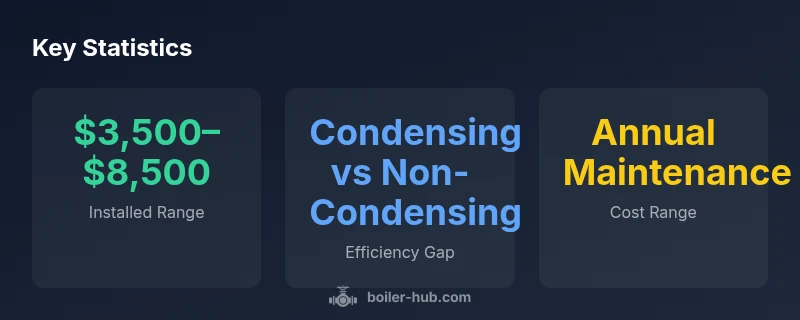
Oil burner boiler price in 2026 typically falls within a broad installed range of $3,500 to $8,500, depending on boiler type, efficiency, and installation specifics. Higher-efficiency condensing models cost more upfront but can lower annual fuel bills. When budgeting, also factor installation complexity, venting changes, and potential permits. Price sensitivity to regional labor rates and upgrades to meet code requirements can shift the total.
Understanding Oil Burner Boilers: What They Are and How They Work
Oil burner boilers power heating systems by combusting fuel oil in a burner that heats water or generates steam. In most homes, an oil-fired burner delivers heat through a heat exchanger to a closed water loop, which circulates via radiators or baseboard convectors. There are two main designs: conventional non-condensing boilers and high-efficiency condensing boilers that reclaim heat from exhaust gases. Key components include the burner, boiler, circulator, expansion tank, venting, and controls. When sized correctly and installed well, oil boilers offer reliable heat and strong response, especially in colder climates. The Boiler Hub Team notes that performance and long-term savings hinge on proper system sizing, high-efficiency selection, and professional installation.
Price Drivers: Boiler Type, Efficiency, and Installation Complexity
Prices are primarily driven by boiler type (condensing vs non-condensing), efficiency rating (AFUE), and installation complexity. Condensing oil boilers recover more heat and are more expensive upfront, but they typically lower annual fuel consumption. Higher-efficiency models often require compatible venting, upgraded controls, and in some cases, a new chimney or vent system. Other price factors include boiler size (or heating capacity), labor rates in your area, whether a conversion from an older system is needed, and whether additional equipment such as indirect water heaters or storage tanks is installed. According to Boiler Hub, the gap between mid-range and premium models can be significant, but long-term operating costs can narrow that gap if fuel prices rise. When vetting contractors, ask for a single, itemized quote that clearly separates equipment, installation, venting, and permits.
Pricing Scenarios: New Install vs Replacement vs Upgrades
A new install often costs more upfront due to the need for venting, line set replacements, and potentially chimney work, but it allows modern controls and a compact footprint. Replacement scenarios may be less expensive if an existing venting and space can be reused, though you might still face removal costs for the old unit. Upgrades to higher efficiency condensing models can deliver long-term fuel savings and rebates, but require careful planning around existing ductwork or piping. For owners upgrading from older, non-condensing units, expect higher quotes due to venting and permitting. In practice, most projects fall within the established price bands when a qualified installer is engaged.
Regional Variations and Permits
Labor rates vary by region, as do permitting requirements and insurance considerations. In some areas, replacing a boiler with a more efficient model triggers venting changes or chimney work, which can add to the price. Cities may require inspections and specific clearances, while rural areas might have fewer permit hurdles but higher travel charges for technicians. If heat distribution relies on radiators, you may also need balancing and zoning work to ensure even heating. The total price therefore becomes a function of location, code requirements, and the installer’s familiarity with local regulations.
Hidden Costs and Add-ons
Beyond the boiler itself, many homeowners encounter several additional charges. Removal of an old boiler can add to labor time, especially if the unit is heavy or located in a tight space. Venting materials, flue work, condensate drainage, expansion tanks, and new controls (thermostats, smart home integration) can all increase the budget. If you are upgrading to indirect water heating or adding a storage tank, budget for equipment and connections. Warranties, service plans, and commissioning fees at the end of installation are common, and can improve long-term reliability.
Sizing for Efficiency and Cost
Accurate sizing ensures you don’t pay for more capacity than needed or suffer short cycling from an undersized unit. A precise heat-load calculation (often a Manual J calculation) considers insulation, air leakage, window performance, and outdoor design temperatures. An oversized boiler wastes fuel and shortens equipment life, while an undersized unit struggles to maintain comfort during cold snaps. Professional estimators balance peak demand with the most efficient operating point. This is especially important in climates with hard winters, where marginal gains in efficiency can translate into noticeable annual fuel savings.
Maintenance and Total Cost of Ownership
Maintenance costs add up over the life of the system. Expect annual service visits to include burner cleaning, flame adjustment, and safety checks. Regular maintenance helps prevent unexpected breakdowns and can sustain efficiency gains from high-efficiency boilers. In the long run, better fuel efficiency and reliable maintenance plans reduce the total cost of ownership. Boiler Hub’s research emphasizes that ongoing care often has a larger impact on lifetime costs than the initial purchase price.
Financing, Incentives, and Tax Considerations
Financing options, manufacturer rebates, and regional incentives can soften the upfront price of an oil boiler. Availability varies by country, state, and utility programs. For owners, it’s useful to explore utility-based efficiency programs, federal incentives where applicable, and any local grants for energy upgrades. Always confirm current eligibility and application deadlines with the installer or program administrator. A well-structured financing plan can make a high-efficiency oil boiler economically attractive despite a higher sticker price.
Getting Accurate Quotes: Step-by-Step
- Request an on-site evaluation to determine proper boiler size. 2) Ask for itemized quotes that separate equipment, installation, venting, permits, and removal. 3) Compare energy savings from different efficiency levels. 4) Check warranties and service plans. 5) Confirm schedule, lead times, and any required gas or electrical upgrades. 6) Validate that the installer holds proper licenses and references. Following these steps helps ensure you get a fair price and a reliable system that meets your home’s needs.
Return on Investment and Long-Term Savings
High-efficiency oil boilers typically offer greater annual fuel savings, which can reduce the perceived cost premium over time. Even with higher upfront costs, a well-chosen unit paired with good maintenance can yield meaningful savings over a decade. When evaluating ROI, include potential rebates, reduced fuel consumption, extended equipment life, and improved comfort. Boiler Hub analysis indicates that the most cost-effective choice depends on local fuel prices, insulation quality, and how aggressively you pursue maintenance.
Choosing a Contractor: Qualifications and Warranty
Select a contractor with verifiable licenses, inclusive written estimates, and a solid warranty on both workmanship and parts. Look for technicians trained on high-efficiency condensing models and familiar with local venting codes. A reputable contractor should perform a thorough commissioning after installation to verify altitude, venting, and safety clearances. Clear communication about timelines, risk factors, and maintenance implications will reduce surprises and improve long-term satisfaction.
Typical price ranges by oil boiler type
| Category | Typical Price Range | Notes |
|---|---|---|
| New Condensing Oil Boiler | $5,000-$9,500 | High efficiency, best for new installs |
| Conventional Oil Boiler | $3,500-$7,000 | Lower upfront cost, moderate efficiency |
| Oil Boiler Replacement (with venting) | $6,000-$12,000 | Includes removal and venting work |
Questions & Answers
What is the typical installed price range for an oil burner boiler?
Prices vary by boiler type and installation complexity. Typical installed ranges for residential systems are broad, commonly around $3,500–$8,500, depending on efficiency and venting.
Most installations fall between three thousand five hundred and eight thousand five hundred dollars, depending on size and venting.
Is oil cheaper than gas in terms of price today?
Fuel prices vary by region and market conditions. In many areas, natural gas is cheaper per BTU, but oil boilers can be cost-effective where gas is unavailable.
Gas is often cheaper per BTU, but local costs and efficiency matter.
What adds to the price besides the boiler unit?
Labor, venting, flue alterations, removal of an old boiler, controls, and permits can all add to the total.
Labor, vent changes, and permits can add significantly.
Are there incentives or tax credits for oil boiler upgrades?
Incentives vary by region and program availability; check federal, state, and utility programs for potential rebates on high-efficiency oil boilers.
Check local incentives—they vary.
How can I size a new boiler correctly?
A proper heat-load calculation, Manual J method, and contractor recommendations ensure the boiler matches your home’s demand, preventing oversizing and wasted fuel.
Have a pro do a heat-load calculation.
“Balancing upfront price with long-term fuel savings and reliable service is essential when choosing an oil burner boiler.”
Key Points
- Compare quotes from at least 3 contractors to secure fair pricing
- Budget for installation, venting, and permits, not just the boiler price
- Prioritize high-efficiency condensing models to maximize savings
- Ask about warranties and service plans to reduce long-term costs