Boiler Prices in 2026: A Practical Guide for Homeowners and Managers
Explore how boiler prices vary by type, efficiency, installation, and region. Practical budgeting tips, cost drivers, and how to compare quotes for homeowners and facility managers.


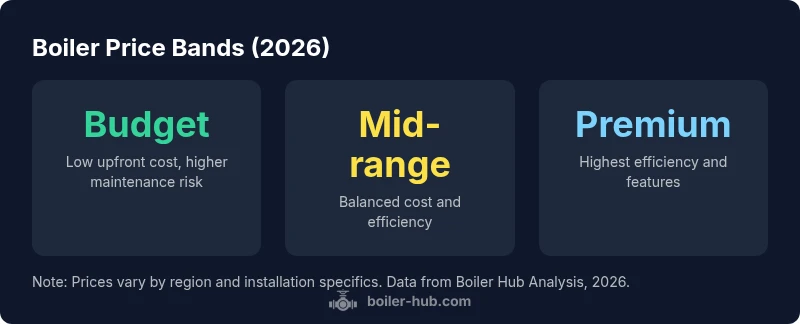
Boiler prices vary widely by type and efficiency, with budget, standard, and premium options. In 2026, Boiler Hub Analysis shows price bands spanning basic, mid-range, and high-efficiency condensing models. Total installed costs depend on fuel type, boiler size, and labor, so homeowners should plan for more than the sticker price. This quick guidance helps you start budgeting and avoid surprises later.
Understanding price drivers
Boiler prices are driven by multiple factors, including the unit's type, efficiency, size, and the installation scenario. According to Boiler Hub, price bands typically span from budget to premium, and regional labor markets can create noticeable price dispersion. When planning a purchase, start by identifying your home's heat load, fuel availability, and whether you need a straightforward replacement or a more complex retrofitting job. This upfront scoping helps you compare apples to apples and avoid sticker shock.
Boiler Hub's research also highlights how installation complexity—such as venting reroutes, length of piping, or converting an oil system to gas—can noticeably shift totals. In many cases, the hardest part of budgeting isn’t the boiler unit itself but the work required to fit it neatly into a home’s existing heating infrastructure. By breaking costs into equipment, installation, and ancillary work, you gain a clearer picture of true affordability.
Boiler types and price implications
There are several common boiler configurations, each with distinct price implications. Standard gas boilers are typically the most popular choice due to reliability and availability of parts. High-efficiency condensing gas boilers deliver better long-term energy savings but carry a higher upfront price. Electric boilers suit homes with limited gas access and can be cost-effective in small spaces, though operating costs may be higher in some regions. Oil boilers remain an option where gas is unavailable, but they can be more expensive to run and maintain. Regional demand and installer availability can tilt price bands for any of these options, so it pays to compare multiple models and installers.
From Boiler Hub's perspective, the choice between a budget unit and a premium condensing model should be driven by your expected usage, climate, and whether you value peak efficiency over the lowest upfront cost. In many cases, a mid-range condensing boiler offers a balanced path that yields meaningful energy savings without the steepest upfront investment.
Efficiency and lifecycle costs
Efficiency is a key price driver and a major lever on long-term cost. Higher efficiency boilers generally cost more upfront, but they reduce fuel usage over years, potentially lowering operating expenses and carbon footprint. When evaluating options, look at the boiler's annual fuel utilization efficiency (AFUE) and the potential incentives or rebates available in your region. The life-cycle perspective matters: a higher initial price can pay back as energy savings over time, particularly in homes with consistent heating needs or challenging climates. Boiler Hub emphasizes comparing not just the purchase price, but the expected energy bill reductions and maintenance requirements you’ll face over the life of the system.
Installation factors that shift costs
Installation costs often rival the boiler price itself. Key drivers include venting upgrades, upgrading flues, piping relocations, drain and condensate lines, and whether the existing system can be reused or requires a full replacement. Permits, inspections, and any required gas line upgrades also add to the total. Labor rates vary regionally, and some installers bundle disposal of the old boiler, protective work, and warranty coverage into one quote. To avoid surprises, request a detailed, itemized proposal and confirm what is included in each line item.
Regional pricing dynamics and inflation
Prices for boilers and installation can swing due to regional demand, supply chain disruptions, and labor market conditions. In some markets, shortages or high demand for certified technicians raise installation costs even for standard models. Conversely, in competitive areas or during slow seasons, you may find promotional pricing or bundled offers. Boiler Hub notes that regional variation is a normal part of estimating total cost; the best approach is to obtain several quotes from qualified installers to gauge current market conditions.
How to budget: planning and quotes
Begin by defining heat load, fuel access, and preferred fuel type. Then gather at least three detailed quotes that separate equipment, labor, venting, permitting, and any required upgrades. Use a side-by-side comparison to track differences in warranty terms, service plans, and estimated maintenance for the first few years. Factor in potential incentives or rebates for high-efficiency units, which can offset upfront costs. Finally, consider staged purchasing: if you’re not in a rush, you may spread costs by installing a smaller, efficient unit now and upgrading other components later as budgets permit.
Hidden costs and maintenance considerations
Maintenance costs and occasional system tweaks should be part of your budgeting. A new boiler may require annual service, filter changes, and occasional system checks for valves and pressure. Some regions impose annual safety inspections or tune-ups that add to ongoing costs. Don’t forget about ancillary expenses such as new thermostats, zoning controls, or radiator upgrades that can enhance comfort and efficiency but add to total expenditure. A well-maintained boiler often lasts longer and performs more efficiently, reducing long-term costs.
Authority sources and further reading
For readers who want to dive deeper, consult credible references and cost analyses available from governmental and educational sources. These materials help verify price ranges, warranty considerations, and energy-saving strategies. See the sources listed below for additional context and data.
- Energy.gov
- EIA.gov
- NREL.gov
Comparison of boiler types by price band
| Boiler Type | Typical Installed Cost Band | Notes |
|---|---|---|
| Standard gas boiler | low–mid | Most common in mid-size homes; simplicity and reliability |
| High-efficiency condensing gas boiler | mid–high | Higher upfront cost; best long-term energy savings |
| Electric boiler | low–mid | Good for apartments or where gas is not available |
| Oil boiler | mid–high | Less common in urban areas; higher fuel cost volatility |
Questions & Answers
What factors most influence boiler prices?
Boiler prices hinge on type, efficiency, size, installed complexity, and fuel source. Regional labor rates also play a role.
Key price factors are type, efficiency, size, install complexity, and fuel source.
Is a higher-efficiency boiler worth the upfront cost?
Yes, if you plan to stay in the home for several years; higher efficiency reduces operating costs and often qualifies for incentives.
Higher-efficiency boilers save money over time, especially with steady heating needs.
What should I budget for installation beyond the boiler?
Include permits, labor, piping, venting, condensate drainage, and possible radiator work. Ask installers for a complete written quote.
Don’t forget labor and installation costs; ask for a detailed quote.
How often do boilers require replacement versus repair?
Aging boilers often fail; consider replacement when repairs exceed a certain percentage of new unit cost or efficiency losses occur.
As boilers age, replacement becomes more cost-effective than frequent repairs.
Where can I find reliable price information?
Consult manufacturer spec sheets, local contractors, and trusted guides like Boiler Hub's cost analyses.
Check official specs and trusted guides for price ranges.
“Understanding boiler prices means looking beyond sticker price to total cost of ownership, including efficiency and maintenance.”
Key Points
- Budget across price bands, not a single price.
- Get multiple quotes that include equipment and labor.
- Prioritize lifecycle costs and efficiency.
- Consider regional variations and installation complexity.
- Use trusted sources like Boiler Hub for price context.