Boiler Installation Cost: A Practical Guide for 2026
Estimate boiler installation costs with equipment, labor, permits, and options. This Boiler Hub guide breaks down price ranges, key factors, and budgeting tips for homeowners and facility managers.


According to Boiler Hub, boiler installation cost varies by boiler type, home or facility size, and existing plumbing. The installed price typically covers equipment, professional labor, permits, and ancillary work. This quick answer highlights common price bands and the major drivers to help you budget confidently for 2026 projects.
How boiler installation costs are structured
Understanding the boiler installation cost starts with separating the bill into equipment, labor, permits, and ancillary work. The total installed price reflects a blend of the boiler type you select, the complexity of the installation (such as venting modifications or a zone-control system), and regional labor rates. When a contractor presents a proposal, you’ll typically see line items for: (1) the boiler unit itself, (2) mounting hardware and accessories, (3) any necessary new piping or radiators, (4) labor hours, (5) removal of the old unit, (6) disposal or recycling, and (7) permits and inspection fees. The precise mix shifts with your home or facility’s unique layout and local codes. As Boiler Hub Team notes, a well-planned install can minimize unnecessary repair work and reduce delays, which in turn reduces total boiler installation cost. In practice, expect clarity on scope, exact equipment model numbers, and an itemized breakdown so you can benchmark quotes fairly. The upfront planning phase is where you can influence both cost and performance long-term.
Baseline price ranges by boiler type
Prices for boiler installation vary widely based on technology, fuel type, and efficiency ratings. A typical gas-fired system boiler or combi boiler will carry a higher upfront price than a basic electric unit, but lower operating costs over time can balance the math. Oil-fired boilers, while common in some regions, often incur higher fuel costs and installation nuance. Electric boilers tend to have lower upfront costs but may require larger electrical capacity upgrades. Beyond the boiler unit, you’ll pay for labor, venting work, upgrades to piping, and thermostat or control-system integration. In many markets, installation quotes can be grouped into broad bands rather than a single number, reflecting regional differences in labor rates and permit requirements. Always request a side-by-side comparison of equipment types, including efficiency ratings (AFUE or ERP standards where applicable), projected operating costs, and warranty terms. This comparative lens helps ensure you pick a solution that balances initial outlay with long-term savings and reliability. Boiler Hub recommends anchoring decisions in total cost of ownership rather than upfront price alone.
Additional cost factors that affect total
The headline price is only part of the story. Several ancillary factors influence the final boiler installation cost: (1) System size and boiler type selected to meet actual heating demand; oversizing or undersizing can inflate costs and reduce efficiency. (2) Venting and exhaust requirements, including chimney work or direct-vent components, can add to materials and labor. (3) Electrical service capacity and potential upgrades, such as dedicated circuits or a new subpanel, add complexity and cost. (4) Modifications to piping, radiators, or underfloor heating connections can be substantial, especially in older homes with corroded or brittle lines. (5) The quality and brand of the boiler and controls, plus extended warranties, influence both the sticker price and long-term maintenance costs. (6) Accessibility and project scheduling can elevate labor costs if access is restricted or weather disrupts work. Understanding these factors helps set realistic expectations and guides you to targeted savings opportunities. Consulting with multiple certified installers can reveal cost-saving pathways you might not anticipate.
Permits, codes, and labor considerations
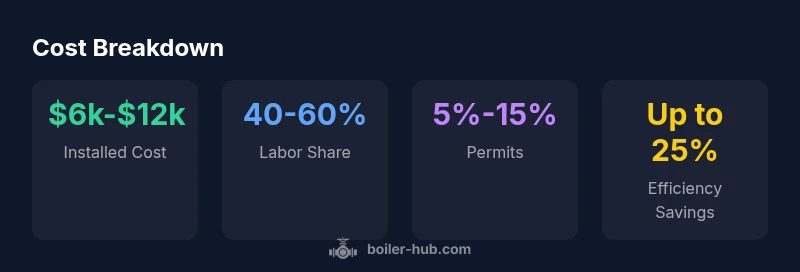
Permitting requirements vary by jurisdiction, but most boiler installations require a valid permit, an inspection, and compliance with local fuel and venting codes. Labor rates differ regionally and depend on crew availability and project complexity. Some installers bundle permitting and inspection coordination into their service package, while others bill these separately. It’s essential to confirm who handles permit applications and what documentation is needed to avoid delays or rework. Labor costs are influenced by the project timeline, accessibility of the installation site, and whether additional work (like chimney lining or floor reinforcement) is necessary. If your home or building has unique constraints (as many do), expect a broader price band and a longer lead time. Boiler Hub notes that proactive planning and a clear contract reduce the risk of hidden charges and ensure the project stays on budget and on schedule.
Hidden costs and budgeting tips
Even with a well-scoped project, hidden costs can creep in. Common culprits include asbestos abatement in older homes, upgrading electrical panels, or upgrading radiators to ensure compatibility with a high-efficiency boiler. Delivery charges for bulky units, crane or forklift rentals for tight spaces, and disposal fees for the old boiler can add up. To minimize surprises, build a contingency of 5–15% of the estimated total, depending on the project’s complexity. Request a fixed-price proposal for the core scope to lock in major costs, while keeping allowances for incidental items in a line-item budget. It’s also wise to verify whether manufacturer rebates or local utility incentives apply, as these can materially alter the net out-of-pocket. A thorough site assessment and a clear change-order process help maintain cost control throughout the project.
Financing options and incentives
Financing can smooth a sizable upfront cost. Options include lender-approved home improvement loans, manufacturer financing offers, or utility-based rebates tied to high-efficiency installations. Some regions offer tax credits or local incentives for upgrading to newer, cleaner boilers, especially those achieving substantial energy savings. When evaluating financing, compare APRs, fees, and the total cost of the loan against mechanical efficiency gains over the unit’s life. A longer-term loan can lower monthly payments, but it may increase total interest paid. Boiler Hub recommends calculating the 5- to 10-year total cost of ownership under each financing scenario and factoring in projected energy savings to identify the most cost-effective path.
How Boiler Hub analyzes cost data
Boiler Hub’s cost analysis synthesizes inputs from multiple installers, utility programs, and industry benchmarks to produce credible ranges that reflect real-world conditions in 2026. We emphasize transparency in scope, equipment choice, and project constraints. All cost points come with a clear methodology and applicable assumptions, making it easier for homeowners and facility managers to compare apples to apples. Our approach includes sensitivity analyses to show how a small change in boiler size, venting, or insulation can shift installed cost and operating costs. The goal is to empower readers with evidence-based guidance that stands up to common questions during vendor negotiations and budgeting conversations.
What to ask your installer before you buy
Prepare with a robust list of questions to avoid surprises. Ask about the exact boiler model and efficiency rating, whether the quote includes removal of the old unit and disposal, and who handles permit applications. Confirm wiring upgrades, venting requirements, and any needed insulation or piping work. Inquire about warranties, service plans, and expected maintenance costs. Finally, request a written, itemized proposal with a clearly defined scope, a project timeline, and a contingency amount. Being proactive with questions helps ensure you’re comparing quotes accurately and choosing a solution that delivers reliable comfort and predictable total costs.
Typical installed cost ranges by boiler type
| Boiler Type | Estimated Installed Cost Range (USD) | Typical Lifespan |
|---|---|---|
| Gas-fired combi boiler | ||
| Gas-fired system boiler | ||
| Oil-fired boiler | ||
| Electric boiler |
Questions & Answers
What is the typical installed cost range for a standard gas boiler?
Installed costs for common gas boilers generally fall within a broad band influenced by size and efficiency. Expect quotes to reflect equipment choice, labor, and any required venting or electrical work. Always compare total installation cost rather than just the equipment price.
Typical gas boiler installations sit within a broad price band, depending on size and efficiency. Compare total installation cost, including labor and venting, not just the boiler price.
Which factors most affect boiler installation cost?
The biggest drivers are boiler size and type, venting or chimney requirements, electrical service upgrades, piping or radiator adjustments, and any required site prep. Regional labor rates and permit fees also shape the final number.
Size, venting needs, electrical work, and site prep are the main cost drivers. Regional labor rates and permits also matter.
Are permits required for boiler installation?
Most jurisdictions require a permit and inspection for boiler installations. Your installer can handle the permit process, but confirm who pays for it and what inspections are needed to avoid delays.
Yes, most places require a permit and inspection. Check who handles it and what inspections are needed.
How can I reduce boiler installation costs?
Take advantage of multiple quotes, choose standard equipment where feasible, and plan for proper sizing to avoid oversizing. Inquire about bundled services (permit + installation) and any manufacturer rebates or utility incentives.
Get multiple quotes, pick appropriately sized equipment, and ask about bundled services and rebates.
What is the payback period for high-efficiency boilers?
Payback periods vary by climate, energy prices, and usage, but higher-efficiency models typically offer meaningful operating savings over 5–15 years. Use a life-cycle cost calculation to compare options.
Payback depends on climate and usage, usually 5–15 years with life-cycle cost calculations recommended.
How long does installation typically take?
A standard installation often spans one to three days, depending on site access, existing system complexity, and whether additional upgrades are needed. Scheduling ahead helps avoid delays.
Most installs take 1–3 days, depending on site access and needed upgrades.
“Accurate budgeting starts with a clear scope and understanding of local permitting, venting, and installation complexities. When you align quotes to total cost of ownership, you make the most informed choice.”
Key Points
- Budget for equipment, labor, and permits upfront.
- Expect price bands by boiler type, not a single number.
- High-efficiency models save operating costs over time.
- Get multiple quotes and check total cost of ownership.
- Plan for permits, venting, and potential electrical work to avoid delays.