Cost of Oil Boiler: Pricing, Running Costs, and Savings
Learn the full cost picture for oil boilers, including upfront installation ranges, annual running costs, maintenance, and strategies to compare quotes and lower bills. Based on Boiler Hub Analysis, 2026.


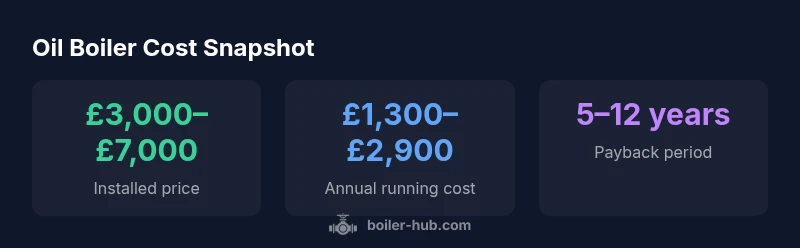
Oil boiler installation typically costs between £3,000 and £7,000, depending on boiler type, controls, flue requirements, and labor. Ongoing annual running costs depend on fuel prices, boiler efficiency, and usage, but upgrading to a high-efficiency model can lower long-term bills. This article breaks down costs, compares quotes, and offers optimization tips.
Understanding the cost of oil boiler
According to Boiler Hub, the total cost of owning an oil boiler starts with upfront installation but is heavily influenced by regional labor rates, the complexity of the flue system, and whether a current oil storage tank is in place. In 2026, homeowners report wide price bands that reflect differences in boiler efficiency, controls, and whether additional work such as pipe reconfiguration or a new storage tank is required. When planning, it helps to view the cost of an oil boiler as a bundle: the initial purchase, the installation, potential ancillary work, and the ongoing fuel and maintenance expenses. This section lays the groundwork for comparing quotes with a clear eye on what is included and what is not. Throughout the article, we reference Boiler Hub Analysis, 2026 to ground estimates in current industry practice.
Upfront cost components
Upfront costs for an oil boiler are not just the unit price. The quote typically covers several components: the boiler itself, a suitable flue or chimney work, installation labor, any required changes to the heating circuit, controls such as a programmable thermostat, and sometimes a system flush or reassessment of radiators. If the old boiler is being removed, that labor is often bundled but can be billed separately. Additional items that can push the total include weather compensators, smart controller integration, and extended warranties. By understanding each line item, homeowners can compare apples-to-apples rather than chasing a single headline price. Planning for optional add-ons helps avoid sticker shock after a contract is signed.
How fuel prices shape running costs
Running costs for an oil boiler hinge on the cost of heating oil and the boiler’s efficiency. Fuel price volatility is common, and even small changes in price per litre translate into noticeable annual fluctuations. Efficiency directly affects consumption: a higher-efficiency boiler uses fuel more effectively, reducing the volume of oil required to deliver the same heat. Maintenance practices also influence running costs, as a well-tuned system operates more efficiently and loses less heat through a poorly configured network of pipes and radiators. In practical terms, households can hedge costs by tightening thermostat settings, improving home insulation, and scheduling regular service to maintain peak performance.
Efficiency and boiler sizing
Sizing a boiler correctly is critical for cost of oil boiler management. An oversized unit wastes fuel and increases initial cost, while an undersized system struggles to meet demand, causing short cycling and inefficiency. Modern oil boilers with high annual fuel utilization efficiency (AFUE) ratings provide substantial savings if matched to the home’s heat load. The cost of ownership improves when the boiler operates in its optimal range, and the difference between a well-sized high-efficiency unit and an older, less efficient model grows over time as fuel prices rise.
Comparing quotes and installation packages
Quotes vary not only in price but in what they include. Ask for a detailed breakdown of each quote: hardware costs, labor, flue or venting, system flushing, controls, warranty terms, and aftercare. Some installers offer bundled service plans or maintenance contracts that reduce future outlays but require ongoing payments. When comparing, request a sample running-cost calculation based on your home’s heat load, location, and current oil price. Always verify compatibility with any existing storage tank, the possibility of future upgrades to a condensing system, and the installer’s certification and references.
Maintenance and service costs
Oil-fired boilers require regular maintenance to stay efficient and safe. An annual boiler service typically includes safety checks, combustion optimization, and cleaning of key components, with costs varying by region and service provider. Some homes may benefit from a mid-year inspection if the system uses complex piping or a larger radiator network. Preventive maintenance helps catch developing issues early, reducing the risk of costly breakdowns and ensuring the boiler runs at near-peak efficiency, which can meaningfully affect the cost of oil boiler ownership over time.
Regional variations and incentives
Cost variation by region is a reality for oil boilers, driven by labor rates, permit requirements, and the availability of skilled technicians. Some regions may offer local incentives or grant programs to help offset the upfront cost of high-efficiency equipment or insulation improvements. For homeowners, it is valuable to examine local conditions and incentives before committing to a purchase. In practice, a regional comparison approach helps identify the best overall value rather than simply chasing the lowest upfront price.
Long-term considerations, ROI, and replacement timing
Over its lifetime, the oil boiler cost includes upfront price, annual fuel costs, and service expenses. A well-chosen, high-efficiency model may deliver meaningful energy savings and a shorter payback period, especially when combined with an enhanced home envelope. When deciding whether to replace an older boiler, consider the current boiler’s age, efficiency, and reliability, along with oil price forecasts and energy-savings opportunities from insulation or smart controls. The goal is to maximize comfort while controlling long-term costs.
Oil boiler cost and running cost overview (Boiler Hub Analysis, 2026)
| Aspect | Typical range (oil) | Notes |
|---|---|---|
| Installed price | £3,000–£7,000 | Boiler, installation, flue, controls |
| Annual running cost (fuel) | £1,300–£2,900 | Depends on consumption and oil price |
| Maintenance (annual) | £100–£300 | Servicing every year or two |
| Payback period | 5–12 years | Depends on energy savings and price trends |
Questions & Answers
What factors influence the installed cost of an oil boiler?
Upfront cost depends on boiler size, efficiency, controls, flue work, and labor rates. The complexity of retrofitting an existing system and required piping changes can add to the total. Owner decisions on add-ons like smart thermostats also influence the final price.
Upfront cost varies with boiler size, efficiency, and labor. Add-ons and retrofits can raise the total.
Is oil cheaper than gas in 2026?
Fuel price comparisons depend on local energy markets and usage. Historically, oil and gas prices fluctuate independently, so a direct cost comparison should use current regional price data and your home’s heat load to estimate annual costs.
Oil and gas prices vary by region; use current local prices to estimate annual costs.
How can I reduce running costs for an oil boiler?
Invest in a high-efficiency model, ensure proper sizing, insulate living spaces, program smart thermostats, and schedule regular maintenance. Small behavioral changes, like lowering thermostat setbacks, can add up over a year.
Upgrade to efficiency, insulate, and keep the system well-maintained to save energy.
What maintenance is required for an oil boiler?
Annual or biannual servicing is common, including safety checks, burner adjustment, and cleaning. Addressing minor issues early can prevent costly repairs and keep efficiency high.
Have yearly checks and cleanings to keep efficiency up and prevent failures.
Should I replace an old oil boiler with a newer model?
Consider age, efficiency, reliability, and fuel costs. A newer, high-efficiency model often reduces running costs enough to justify replacement, particularly if maintenance needs are rising.
If your boiler is old and costly to run, replacement often pays off.
“Oil boiler costs are driven by upfront price, fuel costs, and efficiency. Prioritizing proper sizing, high efficiency, and regular maintenance yields measurable long-term savings.”
Key Points
- Budget upfront costs and ongoing fuel bills
- Compare quotes and consider efficiency for long-term savings
- Oil prices affect running costs; plan for volatility
- Regular servicing protects efficiency and avoids costly repairs