How Much Does It Cost to Replace a Boiler in 2026
Discover the cost range to replace a boiler in 2026, plus key price drivers, financing options, and steps to get accurate quotes from Boiler Hub.


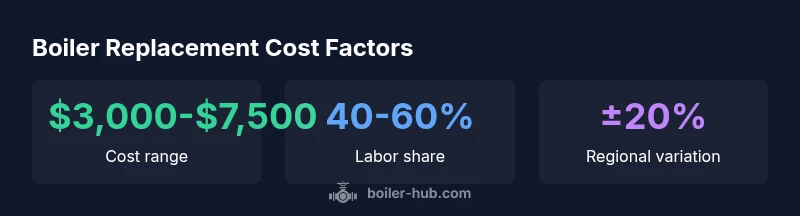
Typical boiler replacement costs range from $3,000 to $7,500, depending on boiler type, efficiency, and installation complexity. Labor, permits, and new components add to the total, with regional price variations up to about 20%. The Boiler Hub Team estimates this range based on current market data for 2026 across regions.
How much does it cost to replace a boiler? A practical way to think about this is to separate the price of the equipment from the labor and ancillary costs. Boiler replacement costs are driven by boiler type, efficiency, system size, and installation complexity. The phrase how much does it cost to replace a boiler is answered by considering not only the sticker price of the unit but also the work needed to install it safely and code-compliant. In 2026, Boiler Hub Analysis, 2026 shows a typical range that accounts for these variables, with regional differences adding further variation.
Boiler types and their cost implications
Different boiler configurations impact overall cost. A compact combi boiler may have a lower upfront price but can require more complex venting or piping changes in older homes, affecting installation time and cost. Conventional system boilers often come with larger propane or natural gas flues and storage considerations that push the total higher if retrofits are needed. System boilers with high-efficiency modulating burners generally cost more upfront but deliver better long-term energy savings. Across all types, the final price reflects not only the equipment but the labor required to ensure safe ignition, venting, and proper pressure regulation.
Efficiency, AFUE, and long-term savings
Efficiency matters beyond the initial purchase. Higher AFUE ratings reduce monthly fuel bills, shortening the payback period for the extra upfront cost. When evaluating how much does it cost to replace a boiler, homeowners should compare efficiency upgrades alongside equipment prices. It’s common to see an incremental cost for a higher efficiency unit, but utility savings, tax incentives, and utility rebates can improve the overall economics over the boiler’s lifetime. Boiler Hub’s 2026 perspective emphasizes balancing upfront price with expected energy savings.
Labor, permits, and installation complexity
Labor charges vary by region and contractor. The most significant labor costs arise from removing an old unit, upgrading venting or gas lines, and testing the system. Permits, inspections, and potential building-code upgrades add to the total. Homes with unusual layouts, limited access, or extensive piping work will see higher installation costs. Always request a detailed line-item quote that separates equipment cost, labor, permits, and disposal.
Additional upgrades that affect price
Some replacements trigger optional upgrades that raise the overall price but improve reliability and efficiency. Upgrades may include: upgrading vent pipes, installing a condensate trap, adding a zone control system, or integrating a modern smart thermostat. While not strictly required, these upgrades can enhance comfort and energy performance. If you’re budgeting, earmark a contingency for optional upgrades that could be recommended during the installation.
Regional price differences and budgeting
Prices vary by region due to labor markets, qualification requirements, and material availability. In high-cost areas, expect higher labor rates and permitting fees, while rural areas may offer savings but longer project timelines. A prudent budget model uses a baseline range and adds a regional adjustment factor—Boiler Hub analyses suggest staying within a ±20% window for planning, with the understanding that local quotes will refine the final amount.
Financing options, warranties, and incentives
Financing can make a replacement more affordable by spreading the cost over time. Many contractors offer buy-now-pay-later plans or low-interest financing, while manufacturers occasionally provide rebates for high-efficiency models. Utility programs and local incentives can also reduce the net price. When considering financing, compare total loan costs, interest, and any required maintenance agreements. A longer-term warranty on both boiler and installer work can also impact the cost-benefit balance.
Getting accurate quotes: a practical checklist
To obtain precise numbers, use a consistent quoting process. Request written, itemized quotes that include equipment cost, labor, permits, venting upgrades, disposal, and any required system upgrades. Ask for a load calculation to verify proper boiler size and a documented efficiency target. Obtain quotes from at least two licensed installers and compare not only price but also response time, warranties, and service terms.
Maintenance and lifecycle costs after replacement
Post-installation maintenance is a recurring cost that influences the long-term value of a boiler replacement. Regular servicing, filter replacements (where applicable), and periodic safety checks help protect your investment and optimize efficiency. Discuss maintenance plans with your installer to understand annual costs and service expectations.
Estimated cost breakdown for boiler replacement
| Cost Component | Typical Range | Notes |
|---|---|---|
| Boiler unit price | $1,800-$4,500 | Depends on size and efficiency |
| Labor and installation | $1,000-$2,800 | Includes removal and setup |
| Additional parts/permits | $200-$800 | Vary by locale |
| System upgrades | $300-$1,500 | Optional or required upgrades |
Questions & Answers
What is the typical cost to replace a boiler?
Boiler replacement commonly costs between $3,000 and $7,500, depending on size, efficiency, and installation complexity. Labor and permits add to the total. Get multiple quotes to confirm the range for your home.
Costs usually fall between three and seven-and-a-half thousand dollars, depending on boiler size and installation complexity. Get several quotes to be sure.
What factors most affect boiler replacement costs?
Key factors include boiler type (combi vs system), efficiency rating (AFUE), size/load calculation, labor rates, venting or piping needs, and local permit fees. Optional upgrades can also raise the price.
Boiler type, efficiency, and installation needs drive most of the cost, plus local permits and labor rates.
Should I repair my old boiler or replace it?
If the needed repairs approach or exceed a sizable portion of replacement cost, replacement is often more cost-effective and reliable. Consider age, safety, and efficiency when deciding.
If repairs would cost a lot and the unit is old, replacement is usually the smarter option.
How can I get precise boiler replacement quotes?
Request written, itemized quotes from licensed installers, include load calculations, and require a breakdown of equipment, labor, permits, and disposal. Compare warranties and service terms.
Ask for written quotes with a clear breakdown and compare warranties.
Are there financing options or incentives?
Many installers offer financing options, and manufacturers or utilities may provide rebates for high-efficiency models. Check eligibility and compare loan terms.
Look for financing options and any rebates or incentives in your area.
What maintenance should follow after installation?
Follow the manufacturer’s maintenance schedule, schedule annual service, and replace filters if applicable. Regular maintenance protects efficiency and safety.
Annual service is key to keeping a new boiler efficient and safe.
What should be included in a boiler replacement quote?
Look for equipment cost, labor, permits, disposal, venting upgrades, and any required system upgrades. Clarify warranty terms and service commitments.
Ensure the quote covers equipment, labor, permits, and warranties.
“"A thorough replacement assessment balances upfront equipment cost with long-term energy savings, proper venting, and safe installation. Size and efficiency aren’t optional details; they define the real cost over the boiler’s life."”
Key Points
- Plan for a broad price range and regional variation
- Choose boiler type and efficiency based on long-term savings
- Require itemized quotes from licensed installers
- Account for permits, venting, and potential upgrades
- Explore financing and warranty options to manage costs