How Long Does It Take to Install a Boiler? A Practical Timeline Guide
Learn how long a boiler installation typically takes, what factors affect the timeline, and how to prepare for a smooth, safe boiler installation.


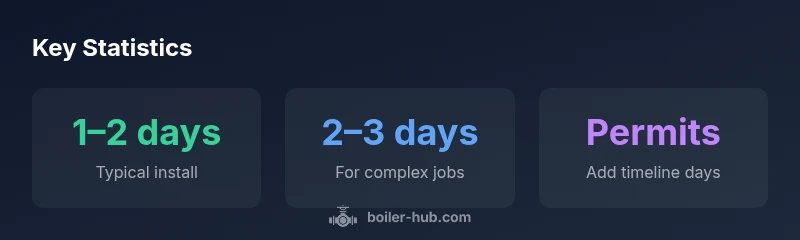
On average, a boiler installation takes about one to two days for a straightforward replacement. More complex jobs—like adding a new vent, upgrading the flue, or changing pipe layouts—can extend the timeline to 2 to 3 days. Permit requirements and access challenges may add additional time to the project. Budget for a contingency day if work expands.
Why installation duration varies
Understanding the timer begins with recognizing the main drivers: system type, home size, existing setup, and access constraints. According to Boiler Hub, the duration of boiler installation depends on whether you are replacing an existing unit with the same type, upgrading to a high-efficiency model, or performing a full heating-system retrofit. For a typical home, a standard combi-boiler replacement may require a single workday, while more complex jobs can take longer. From the initial assessment to commissioning, many variables shape the schedule. The crew will assess routing for gas supply, condensate drainage, venting, and electrical connections, all of which can add time if adjustments are needed. A clear plan with a defined scope helps minimize surprises. The goal is to ensure safety, comply with building regulations, and deliver reliable heating after completion.
When you ask how long does it take to install a boiler, remember that access to the boiler room, crawl spaces, attic, or basement can either speed things up or slow them down. If the home requires significant pipework, new radiators, or system balancing, timelines lengthen. Scheduling coordination between gas safe engineers, electricians, and vent installers also plays a key role. Quick planning with a precise scope reduces the chances of back-and-forth work and additional site visits. Boiler Hub emphasizes that reliable installations hinge on safety checks, proper venting, and verified gas pressure, all of which affect the calendar.
Typical timelines by boiler type
The duration largely depends on the boiler type and the existing heating system. A straightforward combi-boiler replacement in a small to mid-sized home often fits within one day of work, with commissioning taking place toward the end of the day. System boilers or regular/wet radiator setups typically require 1–2 days, especially if the project involves upgrading controls, replacing old piping, or relocating the boiler. In retrofit scenarios—where the current layout must be altered, or old fuel lines and venting need upgrading—the timeline commonly extends to 2–3 days. Parallel tasks, such as electrical rewiring and thermostat relocation, can sometimes run alongside boiler installation, but safety and testing steps must follow sequentially. The Boiler Hub team notes that even with efficient planning, the presence of older infrastructure or difficult-to-access boiler rooms can shift schedules by a day or two. The goal is to balance speed with safety and code compliance while minimizing disruption to daily life.
Permits, inspections, and scheduling considerations
Local building permits or gas-safety inspections can add significant time to a boiler install. If your property requires a permit, expect a window for application processing, scheduling, and potential re-inspections. In some regions, permits add 1–5 days to the timeline, depending on authority response times and whether changes are needed after the initial assessment. Scheduling awareness is also important: utility shut-offs, gas line tests, and vent/chimney assessments must align with inspector availability. To minimize delays, homeowners should obtain permits early, provide access for inspectors, and coordinate with your installer to prepare all required documentation. Clear communication with the installation team reduces the risk of hold-ups at the crucial commissioning phase. Boiler Hub reiterates that proactive permit planning can save days rather than hours of downtime.
Preparation steps homeowners can take to minimize delays
Preparation pays off. Before the installer arrives, ensure clear access to the boiler room or service area, remove obstructions, and provide a working path for equipment. Have the existing boiler’s model and any previous service records handy for the team. Confirm gas and water shut-off timing with your gas engineer and turn off any nearby electrical devices as a safety precaution. If you plan on different controls or a smart thermostat, review wiring needs in advance. Confirm ventilation and condensate drainage routes are accessible and compliant with local codes. If you anticipate changes to radiators or piping, discuss these with your installer ahead of time to prevent mid-project changes. Finally, arrange a convenient time for tenants or family members to accommodate potential days with more extended work or testing.
What to expect on install day and after
On install day, the crew will measure, disconnect, and safely remove the old boiler, then install the new unit, connect gas lines, venting, condensate drainage, and electrical supplies. A commissioning and safety test will follow to verify gas pressure, flame stability, and heat transfer performance. Expect minor disruptions—temporary plumbing adjustments, noise, and possible space reorganization. After commissioning, the system will be balanced to ensure even heating across zones, and the installer may demonstrate basic operation and safety features. You may receive a CO alarm recommendation and a maintenance plan. If the home has multiple zones or legacy radiator types, you might need additional time for system balancing and radiator bleed to ensure optimal efficiency. The key is clear communication with the installer about any comfort goals and expected use patterns.
Cost vs time: a quick note on planning
While this article focuses on time, remember that more complex installations often incur longer durations and higher labor costs. Planning for contingencies helps avoid surprises when permits, access issues, or additional piping work arises. Discuss all potential time-related variables with your installer so you can align expectations and budget accordingly. A well-planned project minimizes downtime and yields a safer, more reliable heating system in the long run.
Reference ranges for typical boiler installation timelines
| Aspect | Value | Unit |
|---|---|---|
| Typical installation duration (hours) | 8-16 | hours |
| Permit/inspection time | 1-5 | days |
Estimate installation duration based on home size, boiler type, and retrofit complexity
Calculates estimated hours based on home size, boiler type, and retrofit complexity.
Estimates; actual time may vary due to access, permits, and testing.
Questions & Answers
How long does it take to install a boiler?
Installation duration varies by system and home. A simple combi replacement may fit into a single day, while retrofits with new venting or pipework can extend to two or more days.
Typically one day for a simple replacement and up to a few days for more complex setups.
Do permits affect installation duration?
Yes. Permits and inspections can add time depending on local authorities. It's wise to start permit processes early to avoid last-minute delays.
Permits can add days; plan ahead.
Can installation be completed in a single day?
In many cases, yes, for straightforward replacements with accessible boiler rooms. More complex projects often span multiple days.
Yes, for simple jobs; longer for complex ones.
What factors most commonly cause delays?
Access issues, permit delays, venting or drainage challenges, and the need to reconfigure piping or radiators are common culprits that extend timelines.
Access, permits, and venting often delay the install.
How should I prepare my home to speed up the install?
Clear access to the boiler room, move valuables away, and have measurements and prior service records ready. Confirm turnout times with the installer and arrange for any required electricity shutdowns.
Clear access, have records, and confirm timing.
Key Points
- Plan for 1–2 days for simple replacements.
- Allocate 2–3 days for complex retrofits.
- Permits can add time; start early.
- Prepare access to minimize on-site delays.