Converting Oil Boiler to Propane: A Step-by-Step Guide
Learn how to evaluate, plan, and safely implement an oil boiler to propane conversion with professional help. Includes permits, components, installation, and maintenance tips.


In this guide, you’ll learn how to evaluate whether an oil-fired boiler can be converted to propane, what major changes are required, and why professional installation is essential. According to Boiler Hub, most conversions require a propane-compatible burner, revised fuel trains, venting adjustments, and local permits. Because conversion touches high-pressure gas systems, consult a licensed HVAC technician.
Why Homeowners Consider Oil-to-Propane Conversions
The decision to convert an oil-fired boiler to propane is not one to take lightly. Homeowners weigh the cost of a full replacement against the potential benefits of a propane system, including access to a cleaner-burning fuel and, in many regions, more stable supply. According to Boiler Hub, a thorough assessment should consider not only the boiler itself but the entire heating ecosystem: radiators or baseboards, zone controls, domestic hot water needs, and how fuel switching will affect overall home comfort. If your current oil boiler is older or showing efficiency losses, propane conversion can be appealing, especially if your home already has a propane infrastructure (tank, line, and regulator) or if you’re planning a broader fuel-transition strategy.
Key factors that push homeowners toward conversion include the availability of a ready propane supply, compatibility with existing radiators, and the willingness to invest in a professionally installed solution that meets local safety codes. It’s important to recognize that this is not a light retrofit. It involves combustion equipment, fuel trains, venting or sealed-combustion considerations, and potential emissions controls. The Boiler Hub team emphasizes that an assessment should also address insurance implications and building-code requirements to minimize risk and ensure long-term reliability.
As you evaluate feasibility, gather information about your home’s heating load, preferred comfort levels, and whether you will continue to rely on hot water from the same boiler or upgrade to a separate water heater. This initial phase sets expectations for timelines, required permits, and the kind of professional expertise you’ll need. Overall, a successful conversion hinges on careful planning, expert sizing, and strict adherence to safety standards.
Key Differences: Oil vs Propane Boilers
Oil and propane boilers operate on similar principles—burner, heat exchanger, circulator, and controls—but they diverge in fuel delivery, combustion characteristics, and venting needs. Propane burners are generally cleaner-burning and require a sealed or direct-vent configuration, while oil systems typically use a vented chimney and an oil-fired burner that can tolerate different nozzle pressures. When converting, you must consider burner replacement, fuel train compatibility, venting strategy, and condensate management, as well as the potential need for a flue liner upgrade or replacement. Propane systems often use a gas valve, regulator, and specific orifice sizing that differ from oil equipment, which affects overall efficiency and emissions.
You’ll also notice changes in maintenance demands. Propane systems typically require less frequent soot cleaning, but they demand precise gas-air mixture control and reliable shutoff devices. Response times, ignition reliability, and cold-start performance can differ between fuels, influencing how zones heat and how quickly hot water is delivered. It’s important to plan for equipment compatibility with your existing boiler location, clearance requirements, and any venting restrictions that may apply to propane installations.
From a safety standpoint, propane is a pressurized gas with specific odorization and leak-detection requirements. Oil systems, by contrast, depend on a fuel-oil supply and combustion chamber integrity. A professional assessment will map out the required safety devices, leak-check procedures, and continuous monitoring plans to prevent carbon monoxide incidents and gas leaks. The goal is a safer, more efficient heating system that fits your home’s layout and fuel preferences.
When Is Conversion Practical? Limits and Alternatives
Conversion is most practical when several conditions align. You should have (or plan for) a readily available propane supply, an existing or easily upgradeable fuel line, and a boiler that can be adequately retrofitted with a propane burner and fuel train. If your boiler is severely worn, has extensive corroded components, or cannot be sized correctly for propane, replacement with a propane-fired boiler or a modern condensing unit may be a better option. For some homes, electrification or hybrid heating solutions (combining heat pumps with auxiliary heat) could offer longer-term cost savings and system resilience.
Another major consideration is the location and accessibility of the propane tank or connection point. If your property requires a new tank installation or an extended fuel line that doubles back through living spaces, the project costs can increase significantly. In such cases, running a propane-fired boiler as part of a broader energy upgrade plan—such as adding insulation, sealing air leaks, and upgrading the thermostat/controls—can yield greater overall efficiency. Remember, a well-executed conversion should produce reliable heating, predictable fuel costs, and compliant venting as documented by the installing professional.
Consulting with a Boiler Hub-trained technician will help you compare the lifetime costs and benefits of conversion against the option of replacing with a propane boiler or adopting an alternative heating strategy. A formal assessment often uncovers hidden costs (permit fees, gas utility coordination, or venting changes) that you’ll want to budget for up front. This upfront planning minimizes surprises and ensures you select the most practical path for your home.
Planning a Conversion: Permits, Codes, and Roles
The planning phase is where many projects stall or encounter unexpected delays. A conclusive assessment begins with a review of local codes and permitting requirements for converting an oil-fired boiler to propane. In many jurisdictions, a permit is required for fuel-switching work and for any changes to venting, gas piping, or combustion equipment. The application process typically involves an inspection by the local authority having jurisdiction (AHJ) and, in some cases, a utility coordination step to ensure the propane supply is sized appropriately for the new setup.
Working with a licensed HVAC contractor is essential for code compliance and safety. The contractor will verify unit compatibility, select appropriate burner components, size the propane line and regulator, and ensure safe venting or sealed-combustion installation. They’ll also help you obtain any necessary permits and coordinate inspections. Documentation, including test results, gas-air mixture readings, and CO detector certification, should be organized and kept as part of your residence’s upgrade records.
Finally, consider updating or adding safety devices. Propane systems require proper vent piping, gas detectors, carbon monoxide alarms, and clear labeling on shutoff valves. The goal is a legally compliant installation with clear safety protocols that protect occupants and help you pass any future inspections. By planning thoroughly, you’ll avoid costly rework and ensure a reliable, compliant conversion.
Choosing Components: Burner, Fuel Train, Venting, and Safety
A successful oil-to-propane conversion hinges on selecting components that are explicitly designed for propane and the specific heat load of your home. The core components you’ll replace or retrofit include the burner assembly, fuel train (valves, regulators, and gas lines), venting or direct-vent components, and safety devices. Efficiency and performance depend on properly sizing the burner to match the heating demand, choosing an appropriate regulator for propane pressure, and ensuring the gas train is compatible with the existing fuel supply.
Ventilation strategy is critical. Sealed-combustion or direct-vent configurations reduce indoor air changes and improve efficiency but require proper intake and exhaust routing. If your system uses a chimney, a vent liner may be required or evaluated for compatibility with propane combustion byproducts. The safety package typically includes a gas shutoff valve, a combustion analyzer for proper air-to-fuel ratio, CO detectors for living areas, and a clear labeling system for controls and emergency shutdowns.
Keep in mind that some boilers may not be suitable for propane retrofits due to heat exchanger design, limits on burner replacement, or structural constraints. A qualified technician will validate compatibility, perform sizing calculations, and present a written plan that outlines the exact parts and labor required. This planning step reduces the risk of under- or over-sizing the system and helps you budget for the full project.
The Installation Process: What a Pro Does
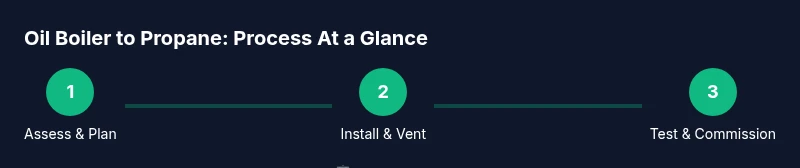
A professional installation proceeds through clearly defined stages, each with safety checks and documentation. First, the technician schedules the work, coordinates with the propane supplier, and obtains required permits. They then isolate the boiler, depressurize the fuel lines, and remove the existing oil burner and fuel train. The propane-compatible burner, fuel train, and regulator are installed, and all piping is sized and tested to the correct pressures.
Next, the venting or sealed-combustion system is installed or modified to meet propane combustion requirements. This includes checking vent terminals, gas-air ratio settings, and ensuring exhaust pathways comply with local code. The combustion analyzer is used to verify that the system achieves the prescribed efficiency and safe operating levels, and final leak testing is performed on all gas connections. The system is then purged, calibrated, and commissioned, with the installer providing a start-up procedure and safety briefing for household members.
Finally, the scope of work is finalized with permit sign-off, inspection documentation, and a detailed operation guide. The pro may also offer a recommended maintenance schedule and optional upgrades (such as a smart thermostat) to optimize performance. Throughout, safety is paramount: from pressure testing to leak checks and CO monitoring, every step centers on a compliant, reliable, and efficient heating solution.
Maintenance After Conversion
Maintenance after a conversion focuses on sustaining safe operation and consistent performance. Schedule annual professional service to inspect the burner, fuel train, valves, and venting components. Test for leaks, verify regulator pressure, and ensure the combustion analyzer readings remain within the manufacturer’s recommended range. Carbon monoxide detectors should be installed in sleeping quarters and near utility spaces, and battery backups should be checked regularly.
In between professional visits, homeowners can perform basic checks: inspect the outdoor propane storage and line for damage, listen for unusual burner noise, and monitor for signs of poor combustion such as yellow-tipped flames or soot buildup. If any abnormal readings occur, shut off the system and contact your installer promptly. Proper maintenance protects efficiency, reduces fuel costs, and extends the life of the system.
Tools & Materials
- Gas-rated manometer or pressure gauge(To verify gas pressure is within the burner’s specification)
- Propane-compatible burner kit(Includes burner head and nozzle sized for propane)
- Propane fuel train components (valves, regulators, gas line fittings)(Ensure all parts are rated for propane service)
- Orifice kit sized for propane(Correct sizing is critical for safe combustion)
- Gas leak detector solution or electronic sensor(For pre-checks and post-install checks)
- Pipe thread sealant rated for gas/propane(Use approved materials per code)
- Venting connectors and adapters(Match the venting path to the install plan)
- Combustion analyzer(To verify air-to-fuel ratio and efficiency)
- CO detector(s)(Place in living areas and near bedrooms)
- Permits and inspection documentation(Coordinate with AHJ and gas utility)
- Personal protective equipment (PPE)(Gloves, eye protection, and flame-resistant clothing)
- Fire extinguisher (class B or ABC)(Recommended as safety precaution)
Steps
Estimated time: 3-7 days
- 1
Schedule a professional assessment
Engage a licensed HVAC contractor to evaluate boiler compatibility, existing venting, and the propane supply. The assessment should include heat-load calculations and an upfront cost estimate. This initial step sets expectations for permits, timelines, and overall project scope.
Tip: Ask for a written plan with parts, labor, and inspection steps before signing. - 2
Confirm sizing and select components
The pro determines the correct burner size and fuel-train configuration based on your home's heating load. They select propane-rated components and ensure compatibility with current piping and controls.
Tip: Ensure the chosen burner matches your existing radiation system to avoid oversized or undersized performance. - 3
Obtain permits and schedule gas coordination
Submit permit applications to the AHJ and coordinate with the propane supplier for supply line installation. This step often requires drawings, energy calculations, and proof of contractor licensing.
Tip: Keep all permit numbers and inspection dates accessible for future reference. - 4
Remove the oil burner and install propane equipment
The contractor removes the oil burner, installs the propane burner kit, and reconfigures the fuel train with new valves and regulators. All connections are sealed and tested for leaks.
Tip: Do not attempt this step yourself; improper installation can cause gas leaks or explosions. - 5
Modify venting and perform safety checks
Install appropriate venting or direct-vent components for propane and run a combustion analysis to verify emissions and efficiency. Install CO detectors and test gas detectors for reliability.
Tip: Verify vent clearance and condensation management to prevent future issues. - 6
Commission the system and finalize documentation
The installer purchases a final inspection, documents test results, and provides owner training on operation and safety. Obtain sign-off from the AHJ and the propane utility if required.
Tip: Keep the final report and warranty documents in your home records. - 7
Schedule maintenance and monitor performance
Set an annual service to check burners, sensors, and venting, plus periodic CO detector tests. Track fuel usage to assess efficiency and cost savings.
Tip: Establish a maintenance reminder in your calendar for lasting performance. - 8
Review options for long-term efficiency
Consider additional upgrades like improved insulation, high-efficiency thermostats, or a hybrid system to maximize energy savings over time.
Tip: Ask the installer about compatibility with smart controls and zoning improvements.
Questions & Answers
Is converting an oil boiler to propane legal in most areas?
Most areas require permits for fuel-switching work and gas-related installations. A licensed contractor will confirm local requirements and handle the permit process. Compliance with AHJ inspections is essential for legal operation.
Yes, but you’ll need permits and an inspection from your local authority to be compliant.
Can every oil boiler be converted to propane?
Not every boiler is a suitable candidate for propane conversions. The boiler’s design, heat output, and venting constraints determine whether a retrofit is feasible. A professional assessment will identify compatible units and potential alternatives.
Compatibility varies; a professional must assess heat load and venting.
What are typical costs involved in a conversion?
Costs vary by boiler type, required components, permits, and labor. A qualified installer can provide a written estimate that breaks down parts, labor, and permit fees. Avoid DIY fixes to prevent safety and code violations.
Prices vary; get a written estimate from a licensed installer.
Are there safer or cheaper alternatives to conversion?
Yes. Alternatives include replacing with a propane boiler, upgrading to a high-efficiency oil boiler with better fuel handling, or adopting a heat-pump-based hybrid system. Each option has different upfront costs and long-term savings.
There are several alternative approaches with different costs.
Will propane reduce operating costs or emissions?
Propane can offer cleaner combustion and potentially lower maintenance costs, but fuel prices fluctuate. A professional can model annual fuel usage and emissions compared to your current oil setup to estimate outcomes.
Propane may reduce emissions and maintenance, with costs depending on fuel prices.
How long does the permit and inspection process take?
Permit timelines vary by locale, from a few days to several weeks. Factor in lead times for scheduling inspections with the AHJ and the gas utility, plus any required follow-up work.
Processing times depend on your local authority and scheduling.
Watch Video
Key Points
- Plan thoroughly with a licensed pro before starting.
- Ensure all components are propane-rated and code-compliant.
- Expect permits, inspections, and potential venting changes.
- Maintain the system with annual professional checks.