Can You Get a Free Boiler from British Gas? A Practical Guide
Find out if British Gas can provide a free boiler, how ECO and BUS schemes work, eligibility criteria, and practical paths for affordable boiler upgrades in 2026.


Can you get a free boiler from British Gas? Not guaranteed. Free or subsidized boilers are usually available only through government schemes like ECO and the Boiler Upgrade Scheme (BUS) for eligible households. British Gas may participate or offer discounts or financing, but eligibility depends on benefits, home type, and boiler condition. Start with an eligibility check through the supplier and official programs. According to Boiler Hub, most applicants benefit most when they pursue recognized government schemes rather than assuming a no-cost boiler from a single provider.
Why the idea of a free boiler persists and what it really means
According to Boiler Hub, the concept of a free boiler is often tied to government energy-efficiency schemes rather than a standard offer from a single supplier. The Energy Company Obligation (ECO) program and the Boiler Upgrade Scheme (BUS) are designed to help households improve heating efficiency. These programs typically evaluate household income, benefit status, and the current state of the boiler. Suppliers such as British Gas may participate by delivering the upgrade under the program, but the outcome hinges on eligibility, property type, and the boiler’s condition. Homeowners and facility managers should view these options as part of a broader affordability strategy rather than a guaranteed free replacement.
- Key takeaway: understand that free boiler access is conditioned on schemes, not a blanket supplier offer.
- Practical tip: gather documents showing benefits status and home details before applying.
How government schemes influence boiler upgrades in 2026
The Boiler Upgrade Scheme (BUS) and ECO are central to subsidies for heating upgrades. ECO is funded by energy suppliers and targets households in energy poverty or with lower incomes, taking into account the heating needs of the entire home. BUS, administered by the government, offers grants to eligible applicants for low-carbon heating upgrades, including boilers in many cases. The exact coverage, grant levels, and application windows shift with policy changes, so it’s essential to verify current guidelines and deadlines with official sources. Boiler Hub recommends starting with a supplier-led assessment to see which programs you qualify for.
- When to apply: begin as soon as you identify energy efficiency needs and confirm your eligibility.
- What to expect: an assessment, paperwork, and a potential installation window that varies by program and location.
What British Gas may offer today
British Gas, like other energy suppliers, may participate in ECO and BUS by coordinating assessments and installations through approved contractors. They may also present financing options or discounted packages to qualified customers. It’s important to note that even if a supplier can help, a truly free boiler is not guaranteed and depends on your eligibility and program rules. Always request a formal written quote and a detailed breakdown of how any subsidy or financing affects total cost and installation timelines.
- Tip: compare quotes from multiple suppliers to ensure you are not missing a better financing or discount option.
- Remember: a lower upfront cost can come with different long-term terms, so review the full contract.
Eligibility criteria you should know
Eligibility for ECO or BUS generally focuses on a combination of income-related benefits, energy burden, and the current boiler’s condition. Some households qualify based on benefit status or vulnerability factors, while others are linked to home type, insulation levels, and the age of the boiler. Keep in mind that eligibility does not guarantee a free unit; it often covers only part of the cost, with the remainder payable by the homeowner or through financing.
- Document readiness: benefit awards, tenancy status, and proof of occupancy can affect your case.
- Operational considerations: the boiler’s age and repair history can influence eligibility and installation prioritization.
Alternatives to a free boiler: discounts, financing, and subsidies
If you don’t meet ECO or BUS criteria, alternative avenues exist to reduce the financial burden of a boiler upgrade. Many suppliers offer promotional discounts, bundled maintenance plans, or interest-free loan options for eligible customers. Charitable programs and local authority grants can also help, depending on where you live. It’s worth asking about phased installations, extended warranty terms, and fuel-saving measures (like improved insulation) that can lower overall costs.
- Strategy: pair a boiler upgrade with insulation improvements to maximize long-term savings.
- Caution: always confirm total cost, interest rates, and any cancellation penalties before signing.
The application process: what to expect and how to prepare
The typical path involves an initial eligibility check, a home survey, a formal quote, and then the installation window. Application timelines differ depending on the program, your postcode, and contractor availability. Prepare documents such as benefit notices, proof of residence, and current boiler details. If you are in a position of urgency, communicate clearly with your supplier about scheduling constraints and any health or safety concerns that justify prioritization.
- Step 1: run an eligibility check with your energy supplier and review official program criteria.
- Step 2: obtain a formal assessment and written quote before committing to installation.
- Step 3: compare funding options, warranties, and aftercare commitments before proceeding.
Common myths and misconceptions
Many homeowners assume a free boiler is a simple, one-step grant. In reality, most options require a qualifying program, ongoing eligibility checks, and a structured process. Some myths also suggest that all boilers qualify for a large subsidy; the truth is that eligibility and coverage vary widely by program, location, and household circumstances. Always verify against current official guidance and seek independent advice if you’re unsure.
- Myth: Every household qualifies for a free boiler. Reality: eligibility is means-tested and program-specific.
- Myth: British Gas can unilaterally grant a free boiler. Reality: any free provision comes through approved schemes, not unilateral offers.
Practical steps to maximize your chances
- Start with a formal eligibility check through your energy supplier and the official ECO/BUS portals. 2) Gather all required documents and keep records of correspondence. 3) Request a written plan detailing the scope of work, costs, and any subsidies before consent. 4) Consider insulation and other energy-efficiency upgrades to improve overall eligibility and cost-effectiveness. 5) Seek alternative financing options if a full subsidy isn’t available, and compare several providers for the best terms.
- Proactive planning: document readiness reduces delays and miscommunication.
- Holistic approach: bundling upgrades often yields better energy savings and value over time.
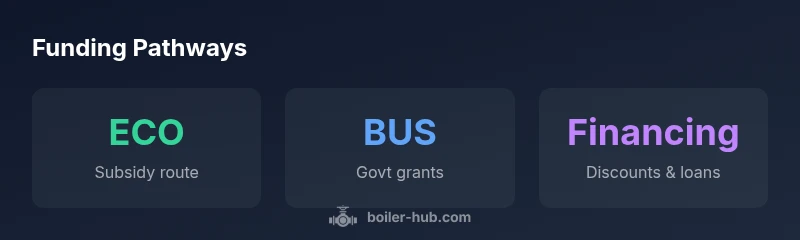
Funding pathways for boiler upgrades
| Option | What it is | Eligibility/Help |
|---|---|---|
| ECO-funded boiler upgrade | Part-cost boiler replacement funded by ECO for eligible households | Eligibility-based, administered by energy suppliers (e.g., British Gas) |
| Boiler Upgrade Scheme (BUS) | Government grant for boilers and other low-carbon upgrades | Eligibility-based, subject to annual policy windows |
| Supplier promotions or financing | Discounts or financing packages from suppliers | Site-specific, check with provider |
| Local authority or charity schemes | Grants from councils or charities | Eligibility varies by program and location |
Questions & Answers
Can I get a completely free boiler from British Gas?
Generally, no. Free or subsidized boilers come through ECO or BUS schemes for eligible households, not as a blanket offer from one provider.
Free boiler options depend on government schemes, not guaranteed by BG.
What government schemes cover boiler upgrades?
The main options are ECO and BUS. These programs are designed to subsidize parts of the upgrade for eligible homes and are administered through energy suppliers.
ECO and BUS are the big ones to check.
Who qualifies for ECO-funded boiler upgrades?
Eligibility depends on income/benefits, energy hardship, and the boiler’s condition. Not all households qualify, and coverage varies by program.
Eligibility is eligibility-based, with program-specific rules.
What if I’m not eligible for ECO?
There are still options such as supplier discounts, financing, and local grants. Compare quotes and consider combining with insulation work.
If ECO isn’t an option, look for discounts or financing.
How long does the process take?
Processing times vary by program, location, and contractor availability. Expect several weeks to months from eligibility to installation.
Timelines depend on program windows and contractor schedules.
What documents will I need to apply?
Proof of benefits or income, proof of residence, and details about the current boiler and heating system.
Be ready with benefit documents and boiler info.
“Free boiler access isn’t something a single supplier can promise; the pathway runs through government energy-efficiency schemes assessed by need and home conditions.”
Key Points
- Check ECO and BUS eligibility before assuming a free boiler
- British Gas may participate but cannot guarantee a free boiler
- Explore alternatives: discounts, financing, and subsidies if not eligible
- Prepare documents early: benefits, occupancy, boiler condition
- Always verify official sources and obtain a formal quote before committing