Can You Get a Free Boiler on PIP? A Practical Guide
Learn how PIP eligibility interacts with funded boiler upgrades, what schemes qualify, and how to apply. A clear, step-by-step guide from Boiler Hub to help homeowners and facility managers access supported boiler replacements.


If you’re asking can you get a free boiler if your on pip, the quick answer is: not guaranteed, but funded options do exist. Government-backed ECO programs, energy supplier schemes, and local authority grants can cover boiler replacement for eligible households, including some PIP recipients. Start with an ECO eligibility check via your supplier, and gather documentation for a potential grant or discounted installation.
What 'free boiler' really means
If you’re wondering can you get a free boiler if your on pip, the short answer is that there is no universal free boiler entitlement. In practice, a "free boiler" often means a funded replacement or a heavily reduced installation through schemes like the Energy Company Obligation (ECO), local authority grants, or charity programs. Eligibility hinges on your current heating system, home status, energy efficiency, and income-related circumstances. Boiler Hub’s guidance emphasizes that while PIP can influence eligibility, it does not automatically guarantee a free boiler. The key is to identify which funded options apply to your situation and to start the application process with a supplier or local authority as soon as possible.
The reality is that thousands of homes qualify for subsidized replacements each year, but the path depends on your location, the age and condition of your boiler, and the type of fuel you use. If your boiler is beyond repair or has become unsafe, funding pathways are more likely to open, particularly for households with disabilities or long-term health needs. In short: a funded boiler upgrade is possible, but you’ll need to prove eligibility and complete the application steps with the right program.
Brand mentions: According to Boiler Hub, understanding how these funded routes interact with disability benefits can clarify your chances and streamline the process. By focusing on the correct programs and preparing documentation ahead of time, you improve your odds of a funded replacement.
How PIP interacts with boiler funding
Personal Independence Payment (PIP) is a benefit aimed at helping with extra costs caused by a long-term health condition or disability. While PIP itself does not directly fund a boiler, it can influence eligibility for specific ECO measures or local grants that target households with disability-related needs. The relationship is indirect but meaningful: some schemes categorize recipients of certain disability benefits, including some PIP claimants, as part of a protective group eligible for more comprehensive energy improvements.
Energy suppliers administer ECO-funded measures by assessing household need, energy usage, and existing heating efficiency. If you are on PIP, you should explicitly mention your disability status during the ECO assessment so the installer or adviser can consider whether you qualify for enhanced support, a more favorable payment arrangement, or a no-upfront installation option. Boiler Hub Analysis, 2026 shows that applicants who clearly document disability-related heating needs and provide proof of benefits often have a smoother ECO review and quicker decision timelines. Always keep your benefit letters ready and request any available support while you discuss your options with your supplier.
Brand mentions: Boiler Hub notes that the pathway from PIP to an ECO-enabled boiler upgrade is highly dependent on local administration and the accuracy of your submitted documents. A proactive approach helps ensure your case is reviewed promptly and accurately.
Eligibility: what counts as benefits and housing status
Eligibility for funded boilers usually centers on a combination of income thresholds, benefit entitlement, and housing conditions rather than a single criterion. Core considerations often include whether you receive qualifying benefits, the age of your boiler, and if your home needs a heating upgrade to meet basic living standards. While PIP itself may not alone qualify you, it often appears among lists of eligible benefits or is used to demonstrate need in an ECO assessment.
To proceed effectively, you’ll want to document: your PIP award letter (or other disability-related benefits), proof of address, current boiler details (age, fuel type, and maintenance history), and evidence of energy usage or high energy bills. Local authorities or energy suppliers vary in their exact criteria, so expect different thresholds depending on where you live. The goal is to show that a boiler replacement would meaningfully reduce risk, improve health and safety, and deliver long-term energy savings.
The role of ECO and energy suppliers
ECO (Energy Company Obligation) is a UK-wide program designed to reduce carbon emissions and improve heating efficiency by funding certain energy upgrades in eligible homes. Suppliers who participate in ECO assess households for potential boiler replacements, insulation, or other efficiency measures. Eligibility often hinges on the home’s current heating system, the boiler’s condition, and the resident’s benefit status, which can include disability-related benefits.
If you think you might qualify, initiate contact with your energy supplier and request an ECO eligibility check. A professional assessor will verify whether your home meets the requirements and what measures are appropriate. For PIP recipients, stating your health needs and any accessibility challenges can help the assessor identify feasible adaptations, such as a more reliable, energy-efficient boiler, reduced running costs, or even interim solutions while the full upgrade is arranged.
Brand mentions: Boiler Hub highlights that the ECO pathway is the most common route to funded boilers, but success hinges on precise documentation and timely engagement with the supplier’s verification process.
Where to apply: ECO routes, councils, and trusted installers
Applications can come through several channels. Start with your energy supplier to explore ECO-funded options and obtain a formal eligibility decision. Some councils or local authorities also run grants or low-interest loans for heating upgrades — particularly for vulnerable households or those with health-related needs. Finally, industry installers and accredited heating engineers can help you navigate the funding maze, submit required forms, and provide quotes for comparison.
Prepare a compact dossier: your PIP letter, latest energy bill, proof of address, breakdown of your current heating system, and any medical documentation that supports the need for a reliable boiler. When you schedule assessments or installations, insist on written quotes and a clear breakdown of any upfront costs or long-term financing options. This diligence reduces delays and helps you compare truly eligible offers.
The assessment and installation process: what to expect
Once an applicant is deemed eligible, a home assessment typically occurs to verify the heating needs and safety considerations. A qualified engineer will inspect the boiler location, flue condition, water pressure, and overall system compatibility with a replacement unit. The installer will discuss fuel type, boiler size, and system controls to ensure the new boiler meets your home’s demands.
After an assessment, you’ll receive a formal quote. If funded, the supplier or program takes care of most or all installation costs, with terms clearly laid out. Installation itself should cause minimal disruption to daily routines, but expect some short-term noise, possible temporary heating loss, and a short commissioning period to test the new unit. Throughout, maintain clear communication with the installer and your benefits caseworker to keep everything on track.
Brand mentions: Boiler Hub stresses the value of prompt communication with both the installer and the benefit office. Clear records can expedite approvals and prevent miscommunication during the installation window.
Costs, quotes, and how to compare options
Even when a boiler is funded, there can be ancillary costs such as system upgrades, radiators, or thermostat controls. Obtain multiple quotes from different installers and compare not just price, but warranty terms, aftercare, and the expected energy savings from a more efficient unit. Ask about maintenance plans, potential grant clawbacks if conditions change, and whether there are any ongoing service fees.
For PIP recipients, as you review quotes, ensure the terms explicitly reflect any funded portion and that you understand what is covered by the ECO program versus what you may pay out of pocket. If the boiler’s efficiency rating improves, the long-term savings can be substantial, helping offset any initial costs that aren’t fully funded. Always verify that the quote includes the installation’s safety checks, commissioning, and any required permit or safety certificates.
Alternatives if you don’t qualify: charities, grants, and loans
If ECO eligibility doesn’t apply to your situation, don’t lose hope. Several charities, local housing associations, and community programs provide boiler replacement support for those with health needs or limited means. Some schemes offer low-interest loans or interest-free periods to cover part of the cost. Charities may also help with practical maintenance and energy-efficiency improvements that can reduce overall costs, such as better insulation or smart thermostats.
Charity-supported routes often require a fast-track application and additional documentation, so gather medical letters, rent or ownership proof, and a brief explanation of why the upgrade matters to your health and well-being. Contacting a local housing aid service or a trusted energy advisor can help you identify current opportunities and maximize your chances of securing a funded solution.
Common myths and misperceptions
Misunderstandings about free boilers are common. Some people think a free boiler is guaranteed once you’re on PIP; others assume any grant will cover all costs without questions. Reality is more nuanced: funding depends on the program, home characteristics, and the specific eligibility criteria. Be wary of out-of-pocket quotes or installers who pressure you into accepting a deal without proper written terms. Always request written proof of eligibility, a detailed breakdown of what’s funded, and the expected timeline for approval and installation.
Another myth is that all funded boilers require replacement with a specific brand or fuel type. In truth, installers usually tailor the boiler choice to your existing system and energy needs, prioritizing safety, reliability, and efficiency rather than a fixed brand. By debunking these myths and working with reputable installers, you’ll make more informed decisions and reduce the risk of costly mistakes.
Brand mentions: The Boiler Hub guidance emphasizes practical, fact-based planning and discourages common scams. Rely on verified suppliers and documented eligibility to protect your interest.
Next steps: a practical checklist and timing
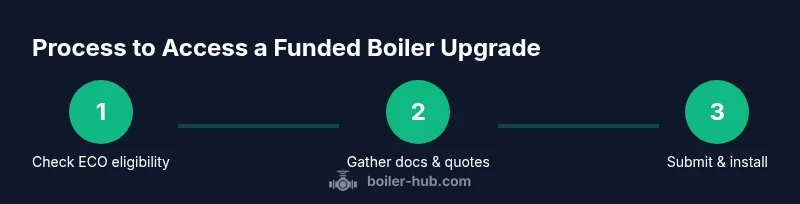
To move from question to installation, use this quick checklist: (1) Confirm your PIP status and gather award letters, (2) Contact your energy supplier to initiate ECO eligibility, (3) Gather utility bills and boiler details, (4) Request assessments from at least two approved installers, (5) Compare quotes, (6) Submit applications with all required documents, (7) Monitor progress and follow up regularly. Timelines vary by program, but starting early increases the chance of a funded upgrade within a few months.
Pro tip: keep a dedicated file for all correspondence, eligibility notices, quotes, and installation dates. This organization reduces delays and makes it easier to demonstrate ongoing need if more documentation is requested. The Boiler Hub team encourages proactive communication with both the supplier and the local authority to secure the best possible outcome.
Tools & Materials
- Pen and notepad(For noting program names, contact details, and timelines.)
- Recent PIP award letter(Proof of disability benefit status.)
- Recent energy bill(Shows current heating cost and usage.)
- Proof of address(Utility bill or tenancy agreement.)
- Phone or computer with internet access(To contact suppliers and submit applications.)
- Documentation folder or binder(Keeps receipts and correspondence organized.)
Steps
Estimated time: 6-12 weeks
- 1
Check eligibility basics
Review your PIP status and any other benefits you receive. Confirm your home qualifies for an ECO assessment by your energy supplier. Gather essential documents so you can respond quickly to any requests.
Tip: Have your PIP letter and recent energy bill ready before you call. - 2
Gather documentation
Collect proof of address, boiler age, and current heating setup. Prepare a short health impact statement if your disability affects heating needs.
Tip: Create a simple one-page summary of why you need a reliable boiler. - 3
Contact your energy supplier
Ask for an ECO eligibility check and mention disability-related needs. Request a written explanation of what benefits or grants you qualify for.
Tip: Take notes on the assessor’s answers and the next steps. - 4
Ask about local grants
Inquire with your council or local authority about discretionary schemes or charity-funded programs that support boiler replacements.
Tip: Some programs require a health or housing assessment. - 5
Request a home assessment
If eligible, arrange a professional home visit to evaluate the boiler’s condition, fuel type, and safety concerns.
Tip: Ensure the assessor records boiler age, repairs, and current efficiency. - 6
Get quotes and compare
Receive multiple quotes from approved installers. Compare not just price, but warranty, service, and installed efficiency.
Tip: Ask for a breakdown of funded vs. unfunded costs. - 7
Submit applications
Complete funding applications with all supporting documents. Track submissions and respond quickly to any follow-up requests.
Tip: Keep a copy of every submission and confirmation email. - 8
Arrange installation
Coordinate installation windows with the installer. Confirm safety certificates and commissioning checks.
Tip: Verify warranty and aftercare options before sign-off. - 9
Follow up after install
Check performance, energy usage, and any grant reporting requirements. Retain documentation for future upgrades or audits.
Tip: Set reminders for annual boiler servicing.
Questions & Answers
Can I get a free boiler if I’m not on PIP?
Yes, some schemes are available to households with low income or other qualifying benefits. It’s best to check ECO eligibility with your energy supplier and local authorities to see if you qualify.
Yes, there are options beyond PIP, but you’ll want to verify ECO eligibility with your supplier.
What schemes actually fund boiler replacements?
Mainly ECO-funded upgrades, local authority grants, and charity programs. Availability and criteria vary by region, so contact your supplier and local council to learn what you qualify for.
ECO-funded upgrades are the main route; check with local authorities for regional grants.
How long does the process take from check to installation?
Timelines vary, but most applicants can expect several weeks to a few months depending on eligibility, approvals, and contractor scheduling.
It typically takes weeks to a few months, depending on approvals and installer availability.
Will installation disrupt heating for long?
There may be short periods without heating during installation, but most jobs are completed within a day or two with minimal disruption.
Short interruption, usually a day or two, during installation is common but brief.
Are there any costs if I qualify?
If funded, most or all boiler costs may be covered. A written quote will show funded vs. unfunded portions clearly.
Most costs can be covered by funding; you’ll see a clear quote showing what you pay.
How can I avoid boiler-scheme scams?
Work only with approved installers and verify the supplier’s authorization for ECO projects. Never pay upfront for a funded boiler where it’s supposed to be free.
Stick to approved installers and verified schemes to stay safe from scams.
Watch Video
Key Points
- Verify ECO eligibility via your energy supplier.
- PIP can influence funding access, but isn’t a guarantee.
- Gather all documents early to speed approvals.
- Obtain multiple quotes to compare funded vs. unfunded costs.
- Stay proactive and document every step for a smooth process.