Can You Get a Boiler for Free? A Step-by-Step Guide
Explore legitimate paths to obtain a boiler at little to no cost through government programs, utility rebates, and refurbishments. Learn eligibility, steps, and pitfalls to avoid while saving on installation.


While truly free boilers are uncommon, there are legitimate pathways to cover or dramatically reduce the cost. Government energy programs, utility rebates, charitable grants, and refurbished boiler options can help households with limited means. Eligibility varies by location and income, and applications typically require documentation, assessments, and adherence to safety standards.
Why the question matters
For homeowners and facility managers alike, the idea of obtaining a boiler at little or no cost is appealing. The question can you get a boiler for free touches on a mix of government aid, program eligibility, and market options. This guide explains where to look, how to prove need, and what to expect during the process. According to Boiler Hub, many programs prioritize low-income households and critical facilities, but the exact criteria vary by location. This article covers practical routes, the documents you’ll need, and how to navigate common pitfalls. By understanding the landscape, you can pursue legitimate options without sacrificing safety or quality.
Boiler Hub reminds readers that any boiler installation must comply with local codes and be performed by licensed professionals to ensure safety and efficiency. Always verify program terms before starting an application, and keep records of all communications and submissions.
What counts as a “free” boiler in practice
The phrase free boiler can mean several things: a unit funded entirely by a program, a heavily subsidized installation, or a refurbished unit provided at minimal cost. In some cases, programs cover both the boiler and installation, while in others they cover only part of the expense. Real-world outcomes depend on household income, occupancy status, home type, and energy needs. The key takeaway is that “free” is often contingent on meeting strict criteria and following a formal application process. Boiler Hub’s overview suggests that the most reliable options are grants or rebates rather than unsolicited offers, and applicants should expect an assessment of energy efficiency before any decision is made.
Government, utility, and charity routes
Multiple avenues exist to reduce boiler costs, including government energy-efficiency schemes, utility company rebates, and charitable grants. Common routes include income-based subsidies, weatherization programs, and donations or refurbished boilers from non-profits. When pursuing these options, be prepared to demonstrate energy usage, household income, and residence stability. Charity programs may have long waitlists or geographic restrictions, so applying early improves your chances. Boiler Hub analysis shows that while access is growing in many regions, outreach is uneven and eligibility can be highly localized.
How the application process generally works
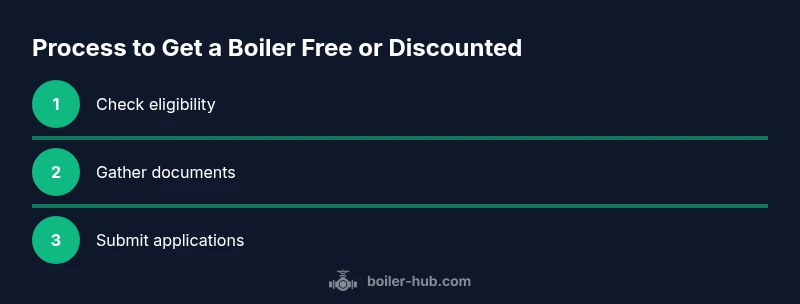
Most programs begin with an eligibility screen, followed by documentation gathering (proof of income, residency, and household size). An energy-audit or home visit often occurs to determine efficiency needs, after which a funding decision is made. If approved, the boiler and professional installation are scheduled, and you may need to sign a warranty or maintenance agreement. To maximize success, organize documents in advance, keep copies, and respond promptly to any requests for additional information. Boiler Hub emphasizes documenting every step to avoid delays or miscommunications.
Safety, quality, and warranties
A free boiler program is still subject to safety and quality standards. Ensure the installer is licensed and uses approved equipment. Verify that the boiler warranty remains valid after installation and that proper commissioning is completed. Some programs require a follow-up energy assessment to verify savings. If a supplier offers a ‘free’ boiler without a licensed installer or safe disposal of the old system, walk away and seek legitimate options. Protect yourself from scams by sticking to government, utility, or reputable charity programs and requesting written terms.
Alternatives when you don’t qualify
If you don’t meet program criteria, consider affordable routes: negotiated financing plans, reduced-price refurbished units from certified suppliers, or community-based bulk-purchase programs. Some installers offer seasonal promotions or energy-efficiency packages that lower upfront costs while preserving safety and warranty. Budget-conscious homeowners can also focus on improving insulation and thermostat efficiency to reduce overall energy demand, which can make future boiler upgrades more affordable. Boiler Hub notes that strategic planning and energy efficiency improvements often yield the best long-term value.
Real-world scenarios and caveats
In urban areas, some households report faster processing with public housing partnerships or energy-assistance offices, while rural residents may rely more on charitable programs. Always confirm the source of funds, expected timelines, and any ongoing costs (maintenance, insurance, annual inspections). Watch for overly aggressive marketing or pressure to sign immediately—reputable programs require careful review and proof of eligibility. The safest path is a transparent application process through official channels and licensed contractors.
Quick-start checklist before you apply
- Confirm your location’s eligible programs and deadlines.
- Gather income statements, residency proofs, and household details.
- Obtain a current energy bill and any prior energy-audit reports.
- Identify licensed installers and confirm they work with the program.
- Prepare questions about warranties, post-install maintenance, and energy savings expectations.
- Create a simple budget showing total costs and potential subsidies.
- Save all correspondence and obtain written terms before signing.
Tools & Materials
- Documentation package (proof of income, residency, household size)(Collect for all adults in the home, include last 2-3 pay stubs or benefits letters)
- Recent energy bill(Shows usage patterns and baseline efficiency needs)
- Proof of home ownership or lease(Some programs require stable occupancy)
- List of licensed local installers(Ensure they are approved by the program)
- Notebook or digital folder(For tracking submissions and deadlines)
Steps
Estimated time: 4-12 weeks depending on program availability and scheduling
- 1
Check eligibility and locate programs
Search for government energy-efficiency schemes, utility rebates, and local charities that fund boilers. Read criteria carefully and note application windows. This step prevents wasted effort on ineligible options.
Tip: Start with official government sites and your utility’s energy assistance page. - 2
Gather required documents
Assemble income proofs, residency, household details, and the latest energy bill. Have digital copies ready for online applications and physical copies for in-person reviews.
Tip: Create a single folder (physical or digital) to avoid misplacing items. - 3
Request an energy assessment
Many programs require an audit or home visit to determine energy needs and efficiency upgrades. Schedule promptly and prepare access to all rooms.
Tip: Ask the assessor to provide a written recommendation and potential savings estimate. - 4
Submit applications
Complete all forms accurately and attach supporting documents. Track submission dates and confirm receipt with program officials.
Tip: Keep copies of every submission and note reference numbers. - 5
Await decision and plan installation
If approved, coordinate with the program and a licensed installer to schedule the boiler installation. Confirm warranty and maintenance terms.
Tip: Don’t commit to third-party vendors outside the program’s network. - 6
Post-install verification
Ensure the installer runs the final safety checks and provides documentation of compliance. Track any required follow-up energy assessments.
Tip: Save warranty papers and keep a maintenance calendar. - 7
Budget and future plan
If the boiler is funded, plan for ongoing energy savings, insurance, and annual service. Consider efficiency improvements to maximize long-term value.
Tip: Invest in insulation and smart thermostats for ongoing savings.
Questions & Answers
Is it realistic to expect a boiler completely free of charge?
Completely free boiler programs exist but are rare; many options provide full or partial funding for units and installation. Eligibility is key and varies by location.
Full funding for a boiler is uncommon, but many programs cover all or part of the cost if you qualify.
What kinds of programs typically fund boilers?
Common programs include government energy-efficiency schemes, utility rebates, and charity grants. Some focus on low-income households or critical facilities; others require energy audits.
Most programs involve government or utility funding and require an energy assessment.
What documents are usually required?
Expect proof of income, residency, household makeup, an energy bill, and possibly a home ownership or lease document. Keep copies of everything.
Gather income proof, residency, and utility bills to support your application.
Are refurbished boilers safe to install?
Refurbished boilers can be safe when installed by licensed technicians and certified suppliers. Confirm that the unit meets current safety standards and comes with a warranty.
Refurbished units are okay if approved by the program and installed by licensed pros.
What if I don’t qualify for any program?
Consider financing options, discounts on new or refurbished boilers, or prioritizing energy-efficiency improvements that reduce future costs.
If you don’t qualify, look into financing or cheaper energy-efficiency upgrades.
How long does the process typically take?
Timelines vary by program, but expect several weeks to a few months from initial inquiry to completion, depending on eligibility checks and scheduling.
It usually takes weeks to a few months, depending on the program and scheduling.
Watch Video
Key Points
- Explore legitimate programs first before assuming a boiler is free.
- Prepare documents early to speed up the application.
- Always use licensed installers and verify warranties.
- Energy-efficiency upgrades can raise the likelihood of program approval.